

Start here
Setting Up Your Home Before Your Dog Arrives
Next
Feeding Basics: What, When, and How Much
Then
Exercise, Play, and Mental Stimulation
Keep going
Grooming, Hygiene, and Routine Maintenance
Important
Veterinary Care and Preventive Health
Long game
Building Trust and a Lasting Bond
Setting Up Your Home Before Your Dog Arrives
The hours before your dog comes home matter more than most new owners expect. A little preparation prevents chaos and sends your dog a clear message: this place is safe and predictable.
Start by identifying a quiet, dedicated space - a corner of the living room or a bedroom alcove - where your dog can retreat, rest, and decompress. A comfortable bed or crate in that spot gives them a consistent anchor. For more on how crating and free-roaming compare as housing philosophies, see the behavioral case for each approach.
Walk through your home at dog level and remove hazards: loose electrical cords, toxic houseplants (such as pothos, sago palm, and lilies), unsecured trash cans, and small objects that could be swallowed. Baby gates are useful for limiting access to areas where you cannot supervise yet.
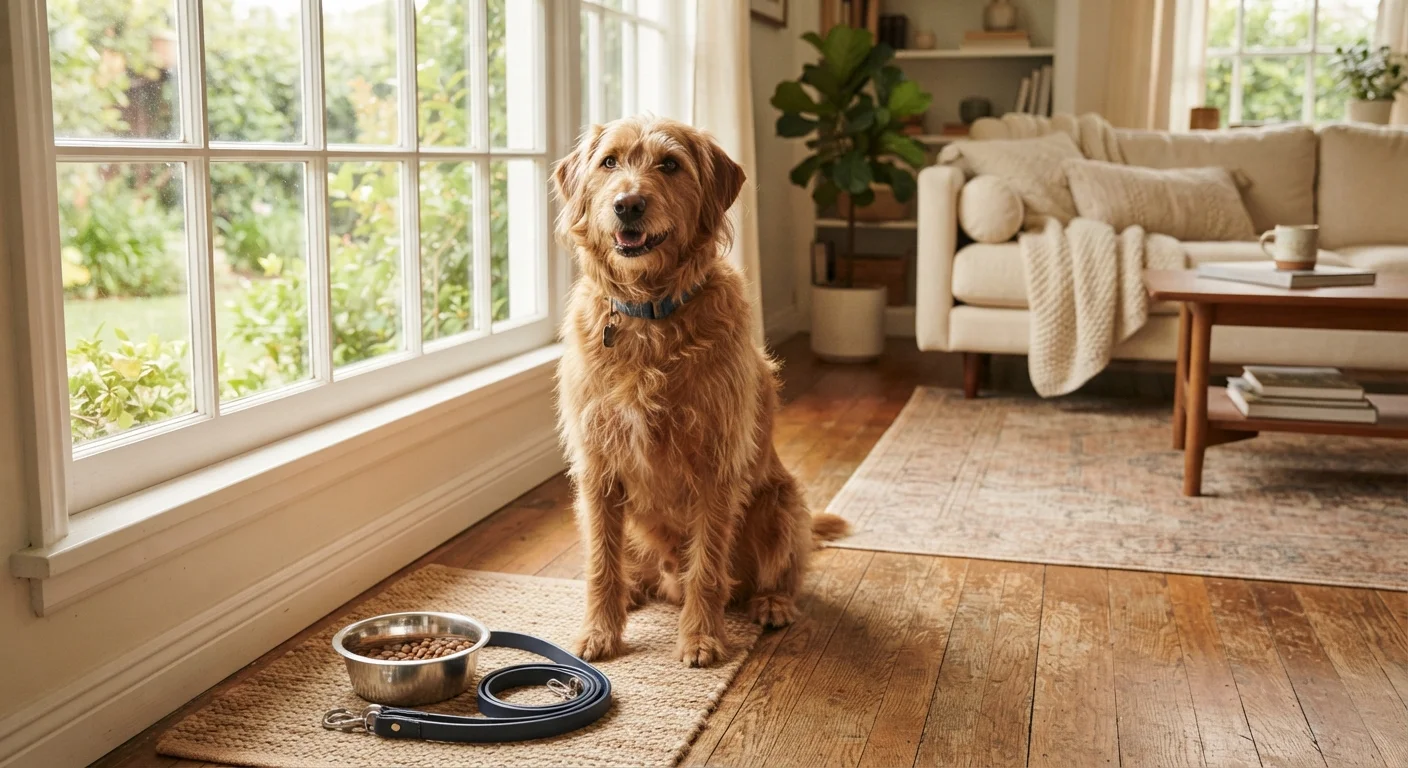
Stock essentials before pickup day: a properly sized collar with an ID tag, a leash, food and water bowls, age-appropriate food, and waste bags. Having a pet first-aid kit assembled from the start is equally wise - emergencies rarely announce themselves.
Make the First Night Easy
Place a worn T-shirt or small blanket with your scent in your dog's sleeping area on the first night. Familiar human scent can ease anxiety during the initial adjustment period. Keep the space quiet and avoid too much stimulation before bedtime.
Feeding Basics: What, When, and How Much
Nutrition is foundational. Dogs have different caloric and nutrient needs depending on their age, size, breed, and activity level - so what works for a neighbor's dog may not be right for yours.
Choose food formulated for your dog's life stage: puppy, adult, or senior. Look for products that meet the nutritional standards established by the Association of American Feed Control Officials (AAFCO). Measure portions using the feeding guide on the packaging as a starting point, then adjust based on your veterinarian's recommendations and how your dog's body condition changes over time.
Feed adult dogs twice daily on a fixed schedule. Consistent timing supports digestion and makes housetraining more predictable. Avoid feeding immediately before or after heavy exercise, as this can contribute to bloat in certain breeds.
Fresh water should be available at all times. Many new owners underestimate how quickly a dog can become dehydrated, especially in warm weather or after vigorous play.
Early nutrition choices have long-term consequences. For a deeper look at common feeding mistakes, our guide on what new pet owners often get wrong about nutrition is worth reading alongside this one.
Exercise, Play, and Mental Stimulation
A physically and mentally tired dog is a well-behaved dog. Exercise is not optional - it is a daily requirement for physical health, emotional regulation, and behavioral stability.
Most healthy adult dogs need at least 30 to 60 minutes of intentional activity each day, though working breeds and high-energy dogs often need considerably more. Structured walks are the backbone of daily exercise, but they should be supplemented with play sessions, off-leash time in a safe area, and training activities that challenge your dog to think.
Mental stimulation - puzzle feeders, nose-work games, learning new commands - is just as important as physical output. Dogs that are bored often express that boredom through chewing, barking, or destructive behavior. Building a daily routine that addresses both physical and cognitive needs makes a measurable difference.
Training sessions count as enrichment. Teaching foundational cues like sit, stay, and recall deepens your communication and gives your dog a sense of accomplishment. See teaching sit, stay, and come for a structured approach to these core skills.
Grooming, Hygiene, and Routine Maintenance
Grooming is not purely cosmetic. Regular brushing, nail trimming, ear cleaning, and dental care are health practices that prevent infections, detect lumps or skin changes early, and keep your dog comfortable.
Brushing frequency depends on coat type: short-coated breeds may need only weekly attention, while double-coated or long-haired breeds may require daily brushing to prevent painful matting. Start grooming sessions early and keep them brief and positive so your dog learns to tolerate - and ideally enjoy - the routine.
Nails should be trimmed roughly every three to four weeks. Overgrown nails alter gait and can cause joint strain over time. If you hear clicking on hard floors, it's time for a trim. Many owners find nail trimming the most stressful grooming task; a professional groomer can handle it if needed.
Dental disease is one of the most common health problems in dogs, yet it is largely preventable. Daily tooth brushing with a dog-safe toothpaste is the gold standard. Dental chews and water additives offer partial support but do not replace mechanical cleaning.
Whether you handle grooming at home or outsource it, comparing professional grooming to DIY can help you find the right balance for your household.
Ear Cleaning Requires Caution
Clean your dog's ears only when there is visible dirt or mild buildup, using a veterinarian-approved ear cleaner and soft cotton. Never insert anything into the ear canal. If you notice redness, odor, discharge, or your dog is shaking their head frequently, consult a veterinarian - these are signs of infection, not a routine grooming situation.
Veterinary Care and Preventive Health
Establishing a relationship with a veterinarian before a health problem arises is one of the most practical things a new dog owner can do. Schedule a wellness visit within the first week - even if your dog appears healthy - to establish a baseline, verify vaccination status, discuss parasite prevention, and address any questions.
Core preventive care includes vaccinations on a schedule appropriate to your dog's age and risk profile, year-round heartworm prevention, and protection against fleas and ticks. Your veterinarian will guide you on what is needed in your region.
Annual wellness exams allow your vet to catch problems that are not visible to the untrained eye - dental disease, weight creep, early organ changes - before they become serious. As your dog ages, exam frequency may increase.
Spaying or neutering, if not already done, is worth discussing with your vet. Timing recommendations vary by size and breed, so this decision is best made with professional input rather than based on general rules alone.
For a broader view of preventive care across a dog's entire life, responsible pet ownership from housing to preventive care is a thorough companion resource.
This article is for general informational purposes and does not constitute veterinary or medical advice. Always consult a licensed veterinarian for guidance specific to your dog's health needs.
Building Trust and a Lasting Bond
Trust between a dog and owner is not built in a single afternoon - it accumulates through hundreds of small, consistent interactions over weeks and months. How you handle early experiences sets the tone for everything that follows.
Dogs read your body language and emotional state. Calm, predictable handling communicates safety. Avoid reacting to accidents or unwanted behavior with anger or physical correction; these responses erode trust and can increase anxiety without teaching the dog what you actually want.
Use positive reinforcement - rewarding behaviors you want to see repeated - as the foundation of your communication. This approach is well-supported by animal behavior research and produces more reliable, confident dogs than punishment-based methods.
Some dogs, particularly those from shelters or difficult backgrounds, may show signs of separation anxiety once they've bonded with you. Recognizing early signs matters; our article on separation anxiety in dogs outlines what to watch for and evidence-informed strategies for managing it.
Daily life with a dog - the walks, the training sessions, the quiet evenings - is relationship-building in action. The Pet Training & Behavior hub and Pet Health & Wellness hub are both valuable resources as you grow into your role as an owner.
Frequently Asked Questions
Most dogs begin to settle within two to four weeks, though some take up to three months to feel fully comfortable. Consistency in routine, calm handling, and a safe space of their own helps the transition significantly. Avoid overwhelming your dog with visitors or outings in the first week.
Adult dogs generally do well on two measured meals per day, while puppies usually need three to four smaller feedings. Follow portion guidance based on your dog's weight and life stage, and confirm an appropriate feeding plan with your veterinarian.
Core vaccines typically include rabies, distemper, parvovirus, and adenovirus. Your veterinarian will recommend a schedule based on your dog's age, health status, and local disease risks. Schedule a wellness visit within the first week of bringing your dog home.
Most adult dogs benefit from at least 30 to 60 minutes of purposeful activity daily, though energy requirements vary widely by breed, age, and health. High-energy breeds often need significantly more. Puppies need shorter, more frequent play sessions to protect developing joints.
Crating can provide dogs with a secure den-like space and supports housetraining. It works best when introduced gradually and associated with positive experiences - never used as punishment. Whether crating or free-roaming suits your dog depends on temperament and your household setup.
Training can begin on the very first day, even if it's just establishing a name response and basic routines. Early, consistent reinforcement of desired behaviors sets the tone for the entire relationship. See our <a href="/pet-life/pet-training-behavior/training-your-first-pet-what-new-owners-need-to-know-before-day-one">first-pet training guide</a> for a solid starting framework.
The content provided on our blog site traverses numerous categories, offering readers valuable and practical information. Readers can use the editorial team’s research and data to gain more insights into their topics of interest. However, they are requested not to treat the articles as conclusive. The website team cannot be held responsible for differences in data or inaccuracies found across other platforms. Please also note that the site might also miss out on various schemes and offers available that the readers may find more beneficial than the ones we cover.