

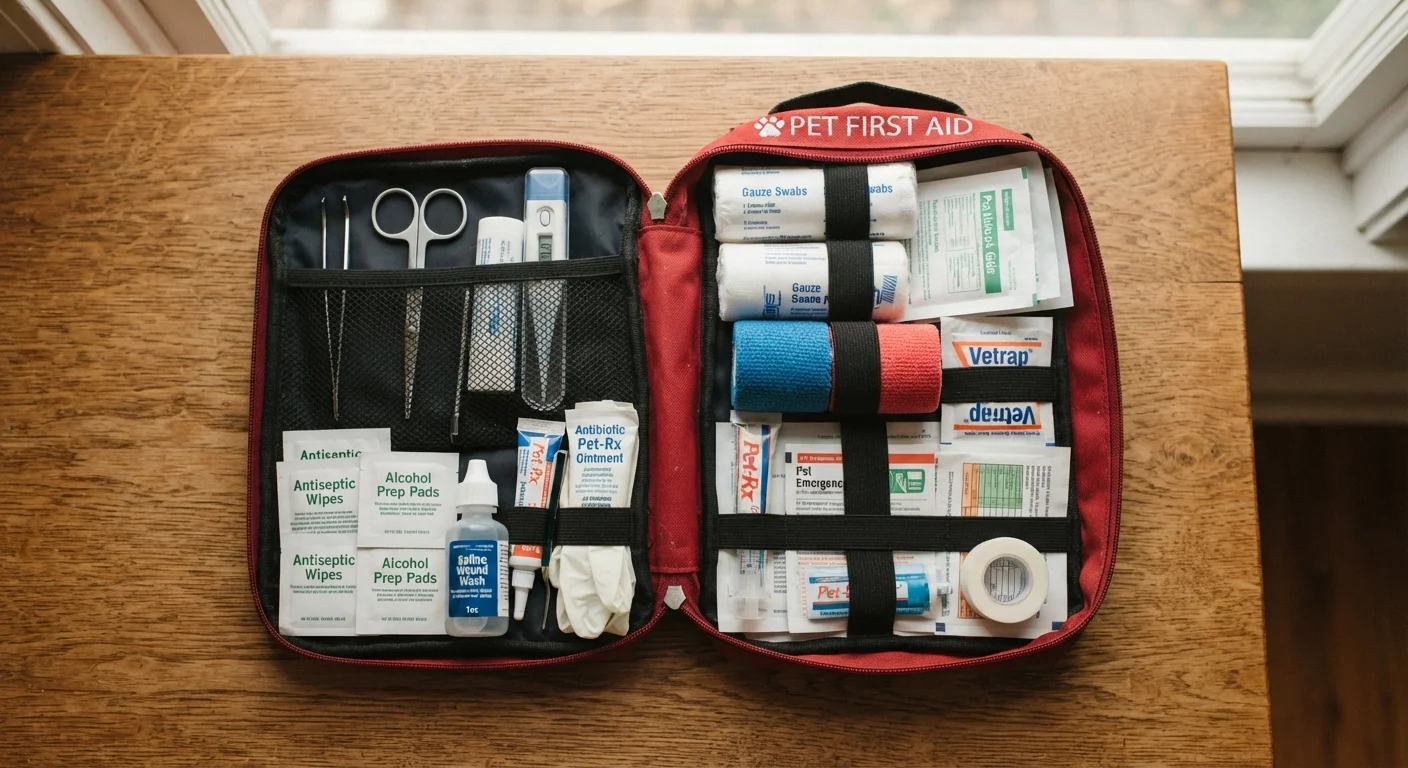
Summary
28 items · 30-60 minutes to gather and organize
Why Every Pet Owner Needs a First-Aid Kit
Accidents don't wait for convenient moments. A dog can step on broken glass at the park, a cat can get a paw caught, or a pet can ingest something suspicious while you're hours from the nearest emergency animal hospital. In those critical minutes between incident and professional care, having the right supplies on hand can reduce pain, prevent infection, and stabilize your animal.
This kit is not a replacement for veterinary care - it is a bridge to it. Every item on this checklist serves a specific purpose in that narrow window. As part of broader responsible pet ownership, assembling and maintaining a first-aid kit is one of the most practical things you can do for your animal's safety.
Use this checklist to audit what you already have, identify gaps, and organize your supplies into a dedicated, clearly labeled container that anyone in your household can find and use quickly.
Waterproof Storage Container
Keeps all supplies organized, dry, and portable - look for one with a secure latch and a handle.
Permanent Marker
Label the outside of the container clearly and mark expiration dates on individual supply packets.
Laminator or Plastic Sleeves
Protects printed emergency contacts and medical summaries from moisture and wear.
Small Notebook or Index Cards
Allows you to log the time and nature of an incident before arriving at the vet clinic.
The Complete Pet First-Aid Kit Checklist
The items below are organized by function. Work through each category systematically when stocking your kit. Keep everything in a single waterproof container, and store it somewhere accessible - not buried in a closet. If you travel with your pet, consider a smaller travel version to take along.
Before diving in, note that certain supplies - particularly any medications - should only be used under direct guidance from your veterinarian. Never administer human medications to a pet without explicit veterinary instruction, as many common drugs are toxic to animals.
Wound Care & Bandaging
Assessment Tools
Instruments & Handling Aids
Medications & Topicals (Vet-Approved Only)
Restraint & Transport Aids
Reference Materials & Emergency Contacts
Never Give Pets Human Medications Without Vet Guidance
Many medications safe for humans are toxic to dogs and cats - including common pain relievers like ibuprofen, acetaminophen, and aspirin. Before adding any over-the-counter product to your pet's first-aid kit, confirm its safety and appropriate use with your veterinarian. Administering the wrong medication, even with good intentions, can cause serious harm or death.
Reviewing and Maintaining Your Kit
A first-aid kit that hasn't been checked in two years is only marginally better than no kit at all. Supplies expire, bandages dry out, and contact information changes. Build a habit of reviewing your kit every six months - a good prompt is to tie it to your pet's routine annual wellness exam.
During each review, check expiration dates on all medications and sterile items, replace anything that's been used, and update your emergency contact list if your vet clinic or closest emergency hospital has changed. Also confirm that the kit's location is still known to everyone in your household.
If you're preparing your kit for the first time as a new pet owner, our introduction to daily dog care covers additional essentials to have in place before your first emergency. And when you do need to head to the clinic, the pre-appointment checklist can help you arrive prepared.
First Aid Is Not a Substitute for Veterinary Care
The items in this kit are designed to stabilize and comfort your pet until you can reach a professional - not to treat or diagnose a condition. If your pet has been injured, appears seriously ill, or has ingested something potentially toxic, contact your veterinarian or an emergency animal hospital immediately. Do not delay professional care in favor of home treatment.
This article is for general informational purposes only and does not constitute veterinary medical advice. Always consult a licensed veterinarian for guidance specific to your pet's health needs.
The content provided on our blog site traverses numerous categories, offering readers valuable and practical information. Readers can use the editorial team’s research and data to gain more insights into their topics of interest. However, they are requested not to treat the articles as conclusive. The website team cannot be held responsible for differences in data or inaccuracies found across other platforms. Please also note that the site might also miss out on various schemes and offers available that the readers may find more beneficial than the ones we cover.