

Summary
22 items · 20-45 minutes
Why Preparation Makes Vet Visits More Effective
A vet appointment typically lasts 20 to 30 minutes. That window is your veterinarian's best opportunity to assess your pet's overall health - but their ability to do so depends heavily on what you bring to the table. When owners arrive with organized records, specific observations, and a calm animal, the appointment becomes a genuine health conversation rather than a scramble to recall basics.
This checklist is designed to guide you through the three phases of appointment prep: what to gather and review beforehand, what to observe and document about your pet, and how to manage the physical experience of getting there. For a closer look at what the vet is actually evaluating once you arrive, see our guide to routine wellness exams.
If your pet is entering their senior years, preparation becomes even more important. Health priorities shift considerably after age seven in dogs and cats - our article on senior pet care covers what changes to watch for between visits.
Records and Documentation
Health Observations to Report
Questions and Concerns to Raise
Transport and Comfort Preparation
What to Bring and How to Communicate Clearly
Veterinarians are trained to identify health issues, but they rely on owner-reported history to fill in the gaps. A pet that behaves normally in the exam room may have been limping, refusing food, or drinking excessively at home. Written notes are more reliable than memory, particularly when a concerned owner is also managing a stressed pet in an unfamiliar environment.
Never Skip Mentioning Behavioral Changes
Behavioral changes are often the earliest and most reliable signal that something is medically wrong. A pet that has become withdrawn, unusually vocal, or suddenly reluctant to move may be experiencing pain or discomfort your vet needs to know about. Even subtle shifts that seem minor to you can be clinically significant - always mention them, even if you are not sure they are relevant.
Before the appointment, write down your questions in order of priority. Vet appointments can move quickly, and lower-priority concerns sometimes get dropped. A numbered list keeps you on track and signals to the vet that you have thought through your pet's needs systematically - a habit that mirrors the kind of structured preparation covered in broader responsible ownership resources like our full responsible pet ownership guide.
Also bring any medications, supplements, or topical treatments your pet currently uses - even over-the-counter products. Drug interactions and supplement effects are clinically relevant, and vets cannot account for them if they do not know about them.
Pet Health Record Folder
A dedicated physical or digital folder to store vaccination records, lab results, and vet visit summaries for quick retrieval.
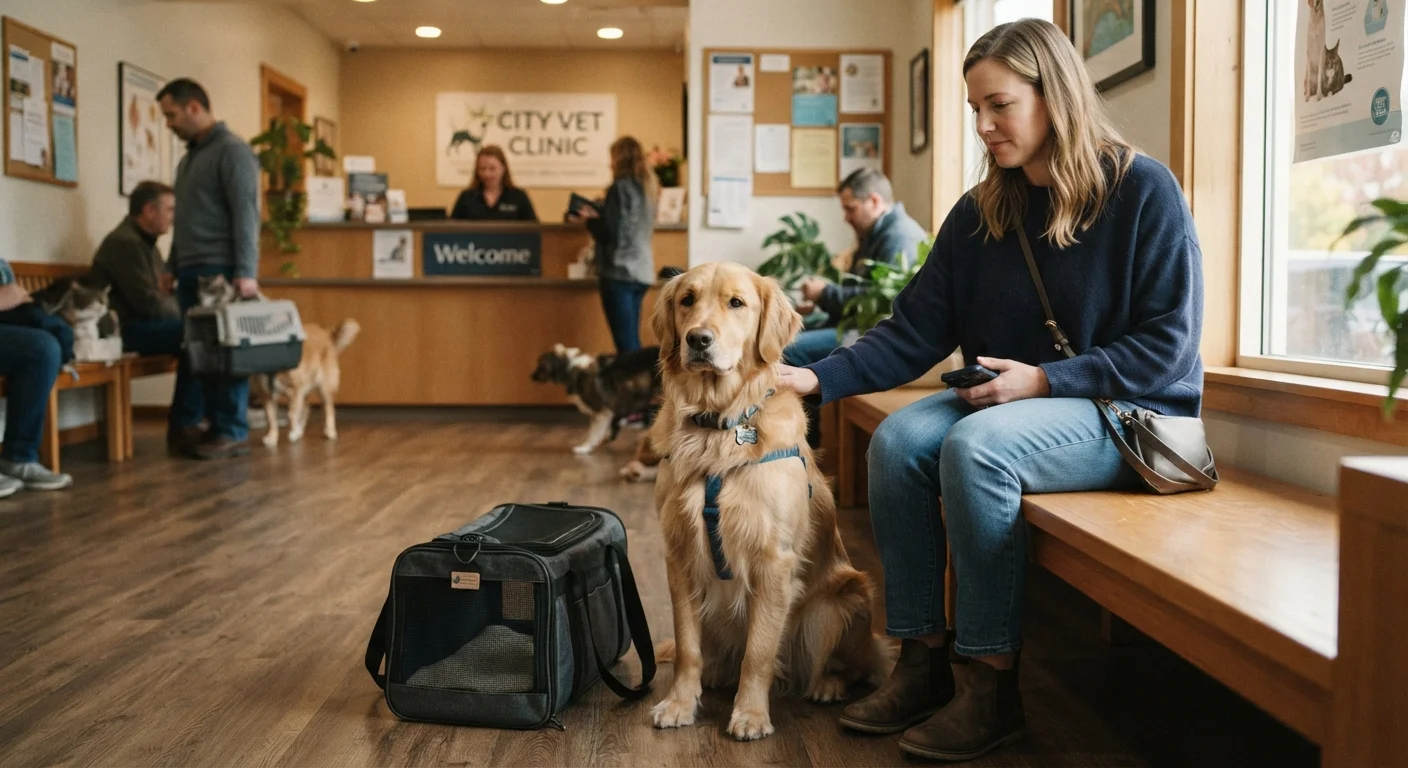
Secure Carrier or Travel Crate
A properly sized, latching carrier that safely contains your pet during transport to and from the clinic.
Smartphone or Camera
Used to capture short videos of unusual behaviors or symptoms at home that may be difficult to replicate in the exam room.
Sealed Stool Sample Container
Allows you to bring a fresh fecal sample for parasite screening if requested by your veterinarian.
Written Question List
A prioritized, handwritten or printed list of concerns ensures you do not forget important topics during a time-limited appointment.
Managing Transport and Reducing Stress
Stress during transport can temporarily alter a pet's vital signs and behavior, making it harder for a vet to get an accurate read during the exam. Heart rate, respiratory rate, and even blood pressure can spike in anxious animals, sometimes prompting unnecessary concern or re-testing.
Do Not Administer Sedatives Without Vet Guidance
Some owners consider giving human antihistamines or other substances before transport to calm anxious pets. This can be dangerous without veterinary oversight, as dosage, drug interactions, and species-specific sensitivities vary considerably. If your pet experiences severe travel anxiety, speak with your vet beforehand about safe, appropriate options for your specific animal.
The goal is not to eliminate all stress - that is often unrealistic - but to reduce it enough that your pet arrives in a manageable state. Carrier habituation is the most effective tool for cats and small animals: leave the carrier out at home as a normal resting space well before the appointment date, so it does not signal alarm on the day. For dogs, a calm, familiar car routine and a short walk before loading can help settle nervous energy.
After the appointment, building a positive association - a favorite treat or calm play session - helps prevent the vet visit from becoming a source of long-term anxiety. Between appointments, staying stocked with basic supplies is part of responsible care: our pet first-aid kit checklist outlines what every owner should have at home for minor incidents and emergencies.
This article is for general informational purposes only and does not constitute veterinary advice. Always consult a licensed veterinarian regarding your pet's specific health needs and before making changes to their care.
The content provided on our blog site traverses numerous categories, offering readers valuable and practical information. Readers can use the editorial team’s research and data to gain more insights into their topics of interest. However, they are requested not to treat the articles as conclusive. The website team cannot be held responsible for differences in data or inaccuracies found across other platforms. Please also note that the site might also miss out on various schemes and offers available that the readers may find more beneficial than the ones we cover.