

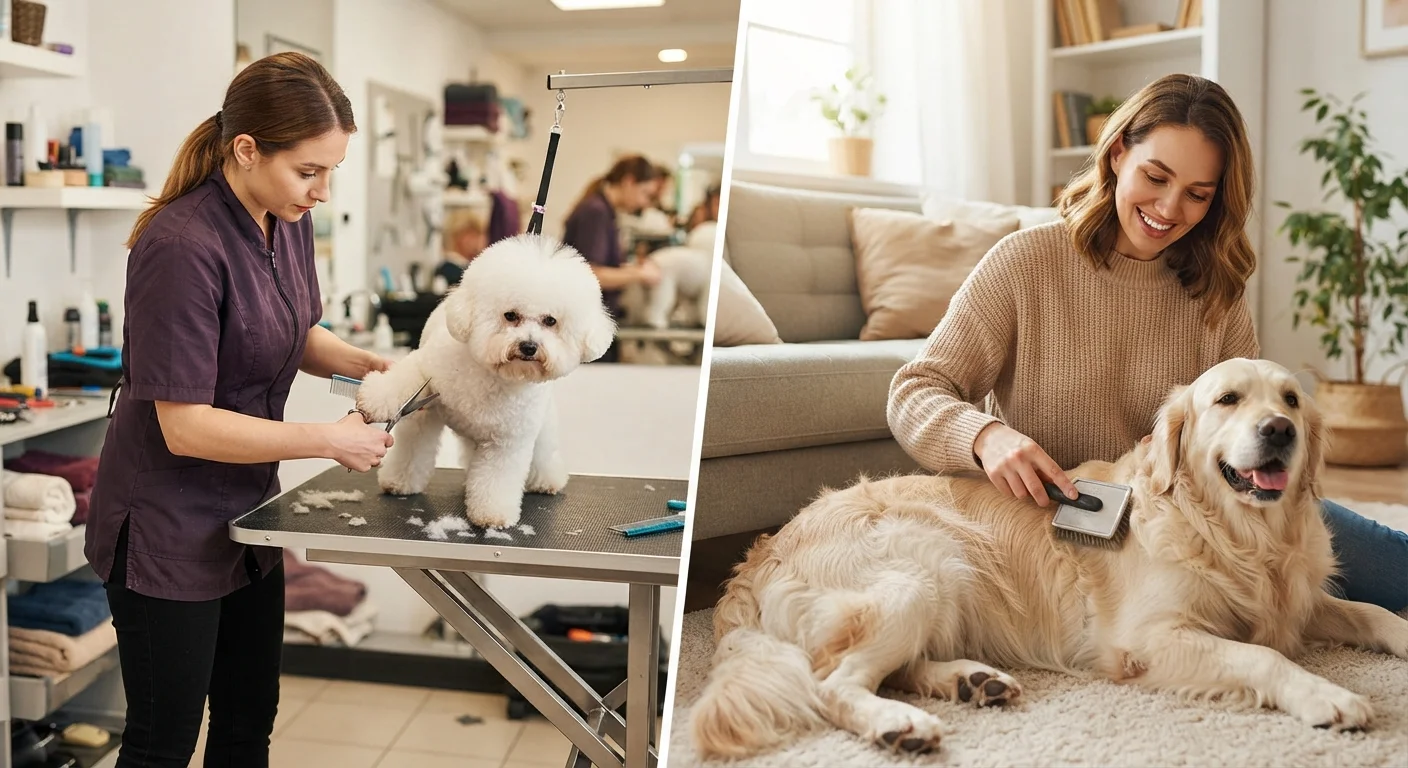
Our Verdict
Neither professional grooming nor DIY is universally superior - the right choice depends on your pet's coat, health, and temperament as well as your own schedule and comfort level. A thoughtful combination of both approaches is what most experienced owners settle on over time.
DIY grooming suits confident owners with short-coated or low-maintenance pets; professional grooming is the stronger choice for complex coats, anxious animals, or owners with limited time and handling experience.
Why the Grooming Decision Matters More Than Many Owners Realize
Grooming is rarely just about appearance. Regular coat care removes debris, reduces shedding, and - crucially - gives you or a trained professional a close look at your pet's skin, ears, eyes, and nails. Early signs of infection, parasites, lumps, or irritation are frequently spotted during grooming sessions before they escalate into veterinary concerns.
That said, there is no one-size-fits-all answer. A short-haired Beagle and a Standard Poodle have fundamentally different grooming demands. A calm, food-motivated dog is a different proposition from an anxious rescue cat. Understanding your specific pet's needs is the starting point for any honest comparison of professional versus at-home grooming. The grooming frequency by breed varies widely and should anchor your planning from the start.
Advantages and Drawbacks of Professional Grooming
Professional groomers bring training, purpose-built equipment, and practiced hands that most pet owners simply cannot replicate at home. For dogs with dense double coats, continuously growing hair, or matting problems, a groomer's knowledge of breed-standard cuts and safe dematting techniques can prevent real discomfort and skin damage.
Trained hands catch health issues early
Professional groomers regularly identify skin irregularities, ear infections, and lumps that owners may overlook. Many pet health concerns are first flagged during routine grooming appointments.
Suitable equipment for complex coats
Groomers use high-velocity dryers, professional-grade clippers, and dematting tools that are impractical or cost-prohibitive for most home setups. This makes a measurable difference for dense or continuously growing coats.
Reduces owner stress with difficult animals
Trained groomers understand safe restraint techniques and can work with anxious or reactive pets more effectively than most owners. Some facilities offer low-stress or fear-free grooming approaches.
Consistent, breed-appropriate results
For breeds requiring specific haircuts or styling, professional groomers deliver results that maintain coat health and function, not just appearance.
The downsides are worth acknowledging honestly. Cost accumulates quickly - multiple visits per year for a large breed with a complex coat adds up to a significant annual expense. Drop-off grooming also means time away from you, which can be stressful for separation-sensitive animals. Facilities vary in quality and handling style, so vetting a groomer carefully matters. If your dog already shows signs of skin irritation or persistent scratching, understanding the underlying cause before a grooming appointment is wise - see our guide on why dogs scratch constantly for context.
Cumulative cost can be significant
Depending on breed size and coat type, professional grooming appointments can range from moderate to expensive several times per year, representing a meaningful recurring household expense.
Separation stress for some animals
Drop-off grooming requires pets to spend time in an unfamiliar environment without their owner, which can be difficult for animals prone to separation anxiety.
Quality and handling vary between facilities
Unlike veterinary practices, grooming salons are not uniformly regulated across all states. Owners must research facilities and observe how staff handle animals before committing.
What DIY Grooming Offers - and Where It Falls Short
Grooming your pet yourself offers genuine advantages beyond simple cost savings. Regular at-home sessions build trust, help your pet become comfortable with handling, and give you consistent familiarity with your animal's body. Owners who brush their dogs or cats routinely are often the first to notice a new lump, a change in coat condition, or early signs of an ear problem.
~$30-$90
Typical professional grooming cost per session
Costs vary widely by breed, coat type, and geographic location; large or complex-coated breeds consistently fall at the higher end of the range.
6-8 weeks
Recommended grooming interval for many breeds
Veterinary and grooming professionals commonly suggest this interval for breeds with continuously growing or dense coats to prevent matting and maintain skin health.
The limitations are equally real. Improper nail trimming can cause pain or injury. Incorrect bathing technique or product choice can strip protective oils or trigger irritation. Cats in particular require careful handling - common errors during home grooming sessions can create lasting anxiety. The cat grooming mistakes owners make at home article outlines the most frequent missteps worth avoiding. Multi-pet households face compounded time demands, which can make consistent DIY grooming harder to sustain - a challenge explored in our piece on managing multiple pets under one roof.
A Note on Tool Investment for DIY Grooming
Starting a DIY grooming routine requires upfront investment in appropriate brushes, nail trimmers, clippers, and shampoos suited to your pet's coat type. Choosing the wrong tools can cause discomfort or coat damage. Consulting your veterinarian or a professional groomer for tool recommendations specific to your pet is a worthwhile first step before purchasing equipment.
Making the Decision: Key Factors to Weigh
Use these four variables to guide your thinking:
- Coat complexity: Long, curly, double, or continuously growing coats generally require professional intervention at least periodically. Short, low-shed coats are well-suited to DIY maintenance.
- Temperament: Anxious or reactive pets may tolerate grooming better with a trained professional who uses desensitization handling. Calm, social animals are usually fine with patient at-home sessions.
- Your skill and time: Grooming properly takes practice. If you are new to pet ownership, the first-dog care guide provides a useful foundation for understanding what consistent grooming involves day-to-day.
- Health considerations: Pets with skin conditions, ear infections, or dander concerns need grooming that doesn't exacerbate problems. Understanding what pet dander is and how it spreads can inform how you approach coat maintenance at home.
Most owners land on a hybrid routine: weekly brushing, ear checks, and spot cleaning at home, combined with professional appointments every six to twelve weeks depending on breed and season. This distributes cost, keeps the animal comfortable with handling, and ensures coat health stays professionally monitored. Grooming decisions sit within the broader picture of responsible pet ownership - one worth reviewing in full at the complete responsible pet ownership guide.
The content provided on our blog site traverses numerous categories, offering readers valuable and practical information. Readers can use the editorial team’s research and data to gain more insights into their topics of interest. However, they are requested not to treat the articles as conclusive. The website team cannot be held responsible for differences in data or inaccuracies found across other platforms. Please also note that the site might also miss out on various schemes and offers available that the readers may find more beneficial than the ones we cover.