

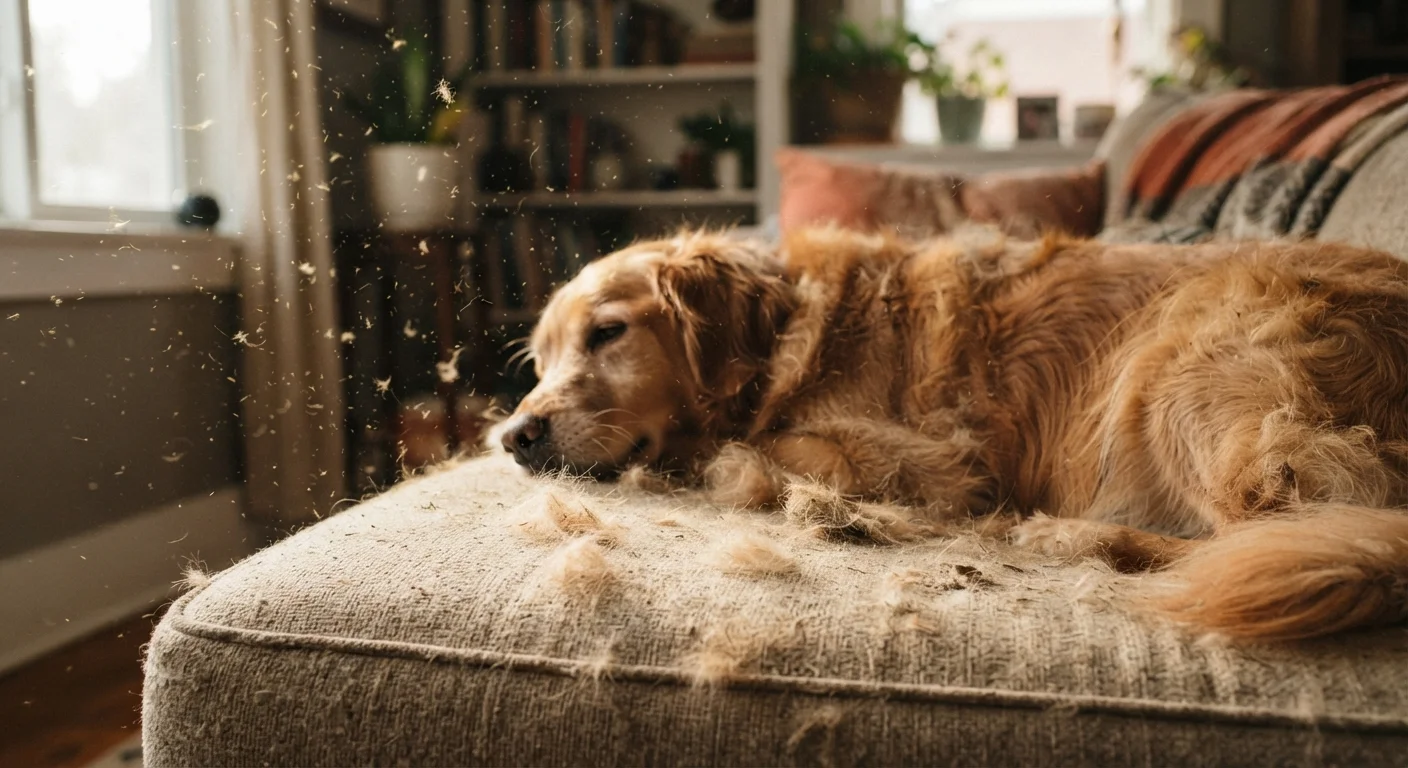
What Pet Dander Actually Is
Most people picture clumps of fur when they think about pet-related allergens, but dander is something far smaller and more pervasive. Pet dander consists of microscopic fragments of dead skin cells shed continuously by animals that have skin - which includes virtually every mammal and bird kept as a pet. A single fleck of dander can be as small as 2.5 microns, making it small enough to stay suspended in the air for hours after a pet walks through a room.
Because dander is invisible to the naked eye, it tends to accumulate unnoticed on surfaces that don't look dirty: the fibers of upholstered furniture, the weave of curtains, the surface of bedding, and inside HVAC ducts and filters. Hair carries dander with it, but dander also floats free of hair entirely, which is why even short-haired or hairless pets - including Sphynx cats and Chinese Crested dogs - still produce it.
Understanding this distinction is important for pet owners because it shifts the focus of management. Cleaning up visible hair is necessary but not sufficient. Effective dander control requires attention to airborne particles and embedded material in soft surfaces, not just what you can see on the floor.
Dander Is Not the Same as Saliva or Urine Proteins
While dander is the most commonly discussed pet allergen, it isn't the only one. Many animals produce allergenic proteins in their saliva, urine, and sebaceous secretions that can also trigger reactions. These proteins often bind to dander particles and become airborne with them, which is why dander is such an efficient allergen carrier. Managing dander helps reduce overall allergen load, but it addresses only part of the picture for highly sensitive individuals.
Why Dander Spreads So Easily - And So Far
The physical properties of dander make it unusually mobile in a home environment. Its low mass means it becomes airborne with minimal agitation - a pet settling onto a sofa, a person walking through a room, or a heating system turning on is enough to send dander particles circulating through the air. Once airborne, dander travels between rooms and attaches to clothing, making it easy to carry outside the home entirely.
This is why pet dander is routinely detected in homes and buildings that have never housed a pet. Visitors, secondhand furniture, and even outdoor air can introduce trace amounts. For households with pets, dander is present in every room regardless of where the animal spends most of its time, because particles migrate through ventilation systems and on the clothes and skin of people moving through the space.
2-4 hours
Time dander stays airborne after disturbance
Research on indoor allergen behavior shows that lightweight particles like pet dander can remain suspended in air for several hours following agitation such as sitting on furniture or vacuuming.
~62%
U.S. households with at least one pet
According to the American Pet Products Association's National Pet Owners Survey, roughly six in ten American households include at least one pet, making dander a widespread indoor air quality consideration.
6+ months
How long dander persists after a pet leaves
Studies on allergen persistence indicate pet dander embedded in carpets and upholstery can remain detectable for six months or longer without active remediation efforts.
The practical consequence is that dander management needs to be home-wide, not room-specific. Restricting a pet to one area of the house reduces - but does not eliminate - dander exposure in other rooms. Responsible pet ownership includes thinking about how your living environment interacts with your pet's biology, and dander is one of the clearest examples of that relationship.
What Produces Dander - and What Affects the Amount
Dander production is a normal biological process. As skin cells mature and die, they flake off and are replaced - this happens in all warm-blooded animals. The rate at which an animal sheds dander is influenced by several factors, including skin health, diet, grooming habits, and underlying medical conditions.
Animals with dry or irritated skin tend to shed more dander. Poor nutrition - particularly diets deficient in essential fatty acids - can compromise skin barrier function and increase shedding. Stress also plays a role: chronic stress in dogs and cats can affect skin health as part of a broader pattern of physiological disruption. Conditions like allergic dermatitis, mange, or hormonal imbalances can dramatically increase dander output.
This means dander management isn't only about cleaning - it's also about the pet's overall health. A well-nourished animal with healthy skin sheds fewer allergens than one with unresolved skin issues. Regular veterinary check-ups, a nutritionally complete diet, and appropriate grooming are all part of reducing the dander burden in your home. For a closer look at grooming strategies, comparing professional grooming with DIY options can help you decide what works best for your household.
Managing Dander: Practical, Evidence-Based Approaches
No method eliminates dander entirely, but a layered approach significantly reduces concentration levels in the home. The most effective strategies work on three fronts: reducing production at the source, removing airborne particles, and minimizing accumulation on surfaces.
- Regular bathing and grooming: Bathing removes surface dander from the coat. The frequency depends on the animal, but most dogs tolerate monthly bathing well, and many cats that are introduced to water gradually can be bathed occasionally. Brushing removes loose hair - and the dander on it - before it disperses into the air. Doing this outdoors or in a well-ventilated space prevents redistributing particles inside.
- HEPA air purification: High-efficiency particulate air (HEPA) filters capture particles as small as 0.3 microns, making them effective at removing airborne dander. Running a HEPA air purifier in the rooms where your pet spends the most time - and where people sleep - makes a measurable difference in particle counts. Home HVAC filters should also be checked and replaced regularly; a clogged filter recirculates rather than captures dander. This is comparable in principle to how vehicle cabin filters protect air quality in an enclosed space.
- Surface and fabric management: Dander embeds quickly in carpets, rugs, and upholstered furniture. HEPA-filter vacuuming twice a week, washing pet bedding weekly in hot water, and using washable furniture covers all help. Hard flooring and leather or vinyl furniture accumulate less dander than textile surfaces and are easier to wipe clean.
- Ventilation: Increasing fresh air exchange through open windows - when outdoor air quality and season allow - dilutes indoor dander concentration.
Start With Your Pet's Skin Health
Before investing heavily in air purifiers and cleaning equipment, talk to your veterinarian about your pet's skin condition and diet. A pet with well-supported skin health sheds significantly less dander, making every other management strategy more effective. Omega-3 fatty acid supplementation is sometimes recommended for coat and skin quality, but always consult your vet before adding any supplement to your pet's diet.
Frequently Asked Questions
Pet hair is the visible strand of fur that animals shed. Pet dander is microscopic flecks of dead skin that cling to that hair but are also released independently into the air. Dander is far smaller than a strand of hair and can remain airborne for hours, making it harder to remove with vacuuming alone.
No pet is completely free of dander, since all animals with skin shed it continuously. Certain breeds - like Poodles or Sphynx cats - may produce lower levels of specific allergenic proteins or shed less overall, which can reduce reactions in sensitive individuals. However, the term 'hypoallergenic' is not standardized and should not be taken as a guarantee.
Pet dander can persist in a home for months or even years after a pet has been removed. It embeds in carpets, upholstery, mattresses, and HVAC ductwork. Thorough cleaning, HEPA vacuuming, and replacing or cleaning air filters all help accelerate removal, but complete elimination takes dedicated effort.
Yes. Fine particulate matter from pet dander contributes to indoor air pollution, which can affect respiratory comfort for anyone - not just allergy sufferers. Homes with pets consistently show higher concentrations of airborne biological particles. Managing dander is a general indoor air quality issue, not purely an allergy concern.
A combination of approaches works best: regular bathing and grooming of the pet, HEPA-filter vacuuming at least twice a week, using a HEPA air purifier in frequently used rooms, washing pet bedding weekly in hot water, and keeping pets out of bedrooms where possible. No single method eliminates dander entirely.
Yes, bathing removes surface dander from the pet's coat and skin, which temporarily reduces how much is shed into the environment. The effect is short-lived since dander production is continuous, but regular bathing - ideally every one to four weeks depending on the animal - is considered one of the more effective reduction strategies.
The content provided on our blog site traverses numerous categories, offering readers valuable and practical information. Readers can use the editorial team’s research and data to gain more insights into their topics of interest. However, they are requested not to treat the articles as conclusive. The website team cannot be held responsible for differences in data or inaccuracies found across other platforms. Please also note that the site might also miss out on various schemes and offers available that the readers may find more beneficial than the ones we cover.