

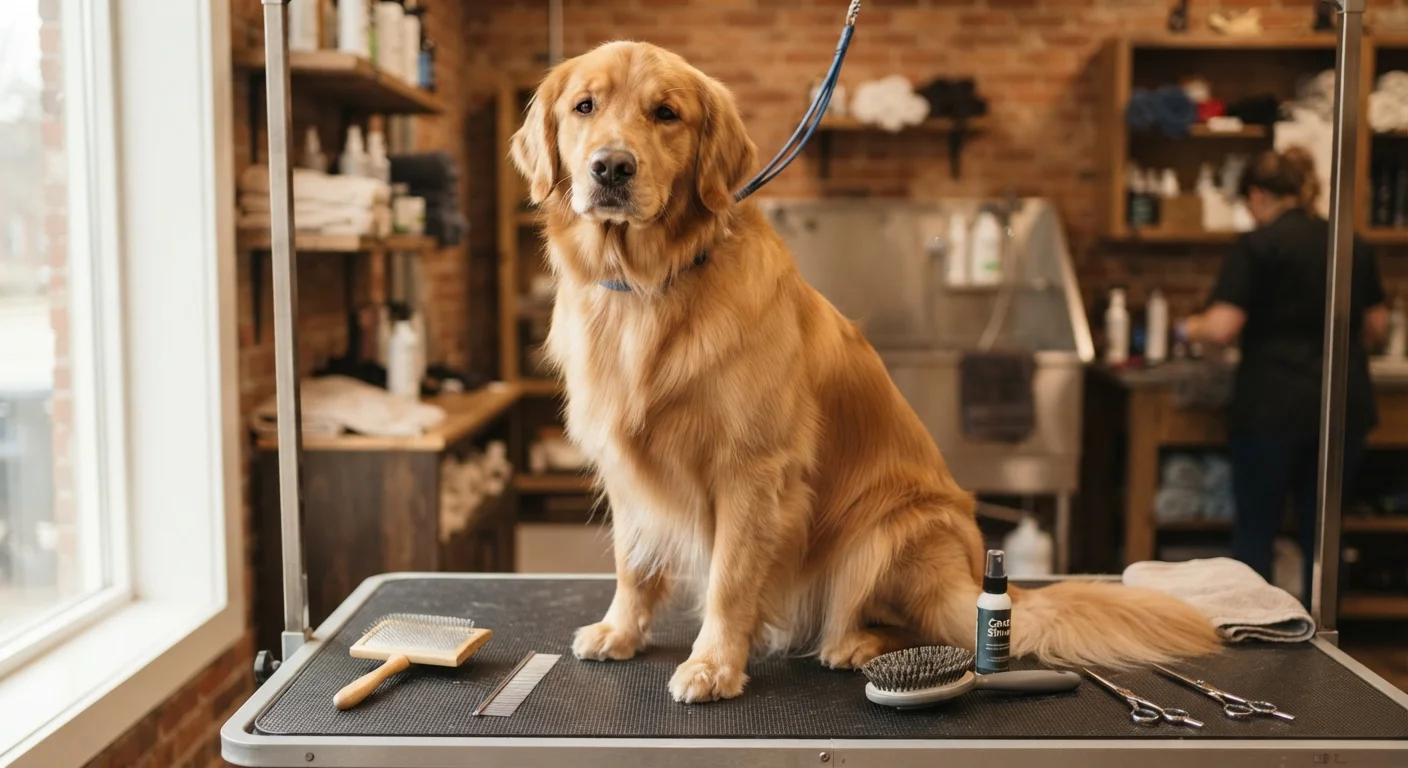
Why Grooming Frequency Isn't One-Size-Fits-All
A Labrador Retriever and a Standard Poodle may both need weekly attention, but for entirely different reasons and with entirely different tools. Coat type - not breed size - is the primary driver of how often a dog needs brushing, bathing, trimming, and professional grooming. Understanding the underlying logic makes it easier to build a realistic care calendar rather than guessing.
Grooming isn't cosmetic maintenance alone. Regular brushing distributes natural skin oils, prevents painful matting, allows owners to spot lumps, rashes, or parasites early, and reduces shedding around the home. Skipping grooming routines can lead to skin infections, ear problems, and discomfort - especially in dogs with heavy or dense coats. See our guide to persistent scratching in dogs if you notice skin or coat issues between sessions.
| Most grooming-intensive coat type | Corded and long/silky coats |
| Lowest-maintenance coat type | Short/smooth coats |
| Recommended nail trim frequency | Every 3-4 weeks |
| Ideal teeth-brushing frequency | Daily (minimum 3-4× per week) (American Veterinary Medical Association guidance) |
| Ear check frequency | Weekly for most breeds |
| Professional grooming interval (curly coats) | Every 6-8 weeks |
Grooming Schedules by Coat Type: Quick-Reference Chart
The table below groups common breeds by coat category and provides general grooming frequency ranges. These are guidelines - individual dogs may need adjustments based on activity level, environment, and health conditions. Always confirm specifics with your veterinarian or a certified professional groomer.
| Coat Type | Example Breeds | Brushing | Bathing | Professional Grooming |
|---|---|---|---|---|
| Short / Smooth | Beagle, Boxer, Dalmatian, Vizsla | Weekly | Every 4-6 weeks | As needed / minimal |
| Double Coat (shedding) | Labrador, German Shepherd, Husky, Golden Retriever | 2-3× per week; daily during shedding season | Every 4-8 weeks | Seasonal deshedding (2-4× per year) |
| Long / Silky | Yorkshire Terrier, Maltese, Afghan Hound, Shih Tzu | Daily | Every 2-3 weeks | Every 6-8 weeks |
| Curly / Wavy (low-shed) | Poodle, Bichon Frise, Portuguese Water Dog, Labradoodle | Daily to every other day | Every 3-4 weeks | Every 6-8 weeks |
| Wiry / Rough | Wire Fox Terrier, Scottish Terrier, Airedale | 2-3× per week | Every 4-6 weeks | Every 8-12 weeks (hand-stripping or clipper trim) |
| Corded | Puli, Komondor | Cord maintenance weekly | Every 6-8 weeks (long dry time) | Specialized groomer recommended |
Double coat
A coat consisting of a dense, insulating undercoat beneath a coarser outer layer of guard hairs. Double-coated breeds shed heavily, especially during seasonal coat changes, and require regular deshedding.
Deshedding
A grooming process - using specialized brushes, rakes, or professional tools - designed to remove loose undercoat before it sheds around the home. Particularly important for heavy-shedding double-coated breeds.
Hand-stripping
A grooming technique used primarily on wiry-coated terriers and some spaniels, in which dead outer coat is manually pulled rather than clipped. This preserves coat texture and color in show dogs and working breeds.
Matting
Tangled clumps of fur that form when loose hair binds together, often close to the skin. Matting can restrict movement, trap moisture, cause skin irritation, and harbor parasites if left untreated.
Cord maintenance
The process of separating and shaping the rope-like cords that form naturally in breeds like the Puli. Without regular separation, cords fuse together and may require shaving to resolve.
Keep in mind that puppies benefit from being introduced to grooming routines early, even before extensive coat maintenance is needed. Short, positive sessions build the tolerance that makes adult grooming far easier - something worth incorporating into a broader daily routine for your dog.
Beyond Brushing: The Full Grooming Checklist
Coat care is the most visible part of grooming, but a complete schedule also includes ears, nails, teeth, and paws. Neglecting any of these can create health problems over time.
- Nails: Trim every 3-4 weeks for most dogs. Nails that click on hard floors are overdue. Dogs that walk frequently on concrete may naturally wear nails down and need less frequent trimming.
- Ears: Check weekly for odor, redness, or discharge. Floppy-eared breeds (Cocker Spaniels, Basset Hounds) and dogs that swim are prone to ear infections and may need more frequent cleaning. Never insert anything deep into the ear canal - consult your vet if you see signs of infection.
- Teeth: Daily brushing with pet-safe toothpaste is the veterinary gold standard. Aim for a minimum of 3-4 times per week. Dental disease is one of the most common preventable health issues in dogs.
- Paws: Inspect pads monthly for cracking, cuts, or foreign material. Trim fur between paw pads in breeds with heavy foot feathering (Golden Retrievers, Bernese Mountain Dogs) to prevent matting and ice ball accumulation in winter.
Whether you handle grooming at home or rely on a professional, consistency matters more than perfection. Our article on professional grooming vs. DIY can help you decide the right balance for your household. For new owners building their overall care plan, the ground-up introduction to daily pet care is a strong starting point.
The content provided on our blog site traverses numerous categories, offering readers valuable and practical information. Readers can use the editorial team’s research and data to gain more insights into their topics of interest. However, they are requested not to treat the articles as conclusive. The website team cannot be held responsible for differences in data or inaccuracies found across other platforms. Please also note that the site might also miss out on various schemes and offers available that the readers may find more beneficial than the ones we cover.