

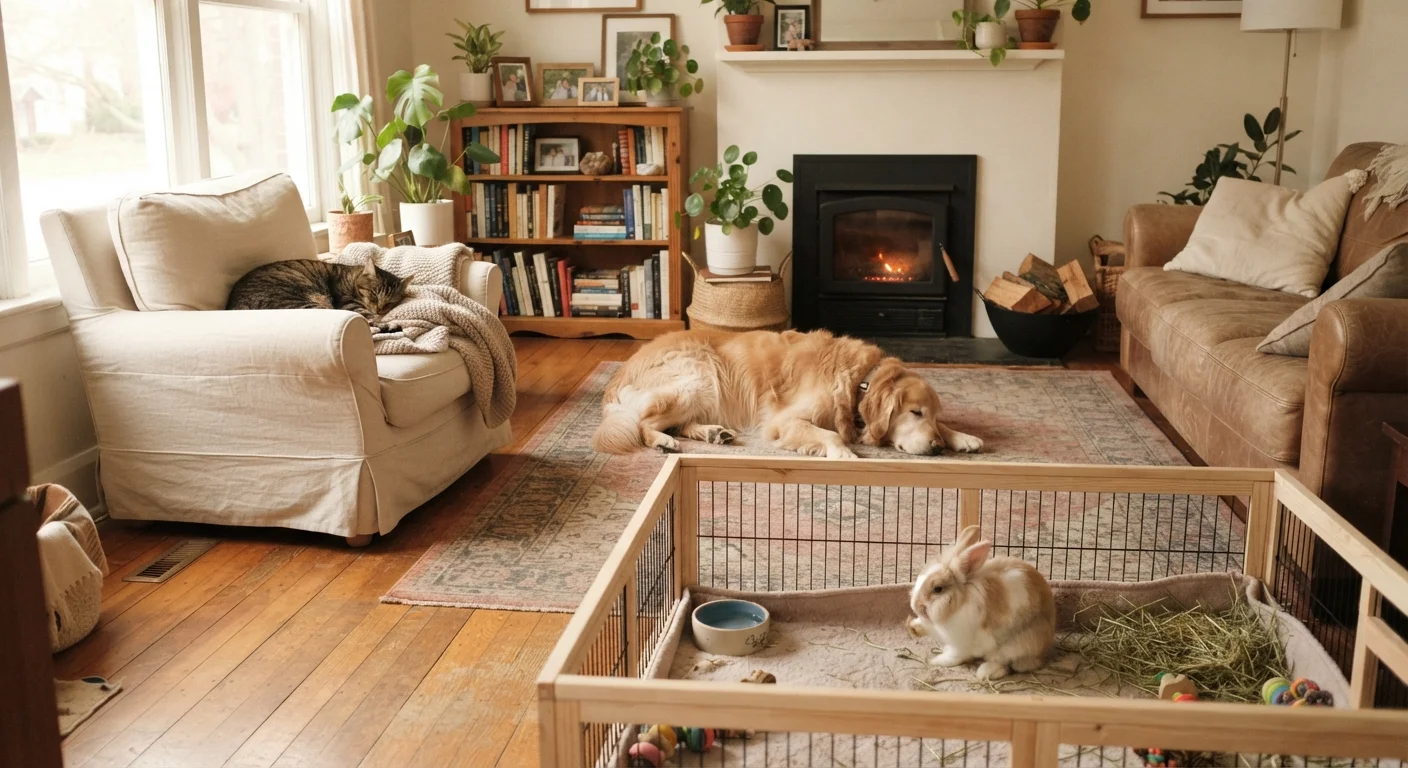
Why Multi-Pet Households Need Active Management
Sharing a home with more than one pet is deeply rewarding - and genuinely demanding. Animals bring their own histories, instincts, and stress thresholds into a shared space, and assuming they will simply sort things out on their own is one of the most common mistakes owners make. For a thorough look at what responsible ownership entails, the groundwork starts well before a second or third animal arrives.
The strategies below address the real friction points in multi-pet homes: feeding, space, behavior, and daily routine. None of them require elaborate setups - just consistent application of a few well-established principles.
Feed pets separately - every single time
Food is the most reliable trigger for conflict in multi-pet households. Even animals that coexist peacefully under normal conditions may guard food bowls, eat faster to prevent theft, or steal from a slower housemate. Over time this creates chronic stress and, in some cases, redirected aggression.
The fix is straightforward: feed in separate rooms or on opposite sides of a barrier, and pick up bowls once mealtime is over. This is especially important when pets are on different diets - a cat eating high-calorie kitten food alongside a dog on a weight-management formula creates both tension and a nutrition problem. Staggering mealtimes by a few minutes while keeping animals physically separated removes the competition entirely.
Food is the most reliable trigger for conflict, even in otherwise peaceful multi-pet homes.
Create retreat spaces that belong to each animal
Every pet needs somewhere it can go that the others cannot follow. For cats, this typically means elevated surfaces or rooms behind baby gates that dogs cannot pass. For dogs, a crate or a dedicated room provides the same function. For small mammals like rabbits or guinea pigs, their enclosures must be genuinely inaccessible - not just difficult to reach.
Retreat spaces reduce the pressure on animals to constantly manage proximity to housemates. When a cat can leave an interaction on its own terms, it is less likely to escalate to a swat or a hiss. The behavioral case for crate training versus free-roaming is worth understanding here, as the right setup depends heavily on the individual dog's temperament and history.
When animals can leave an interaction on their own terms, they are less likely to escalate conflict.
Maintain consistent daily routines across all pets
Predictability reduces anxiety. Animals that know when walks, meals, and play sessions happen are less likely to compete for attention or act out when resources feel scarce. In a multi-pet home, routine also helps owners distribute attention equitably - a detail that is easy to overlook when one pet is louder or more demanding than another.
Build a schedule that accounts for each animal's needs independently rather than treating the household as a single unit. A senior dog may need shorter, more frequent walks while a younger cat needs structured play sessions to burn off energy that might otherwise be directed at the dog. Consistent structure across the household creates a calmer baseline for everyone.
Predictable routines reduce anxiety and help owners distribute attention fairly across all pets.
Read and respond to body language before tensions peak
Most inter-pet conflicts are preceded by a sequence of low-level signals that owners miss: a stiffened posture, a flattened ear, a slow tail movement, prolonged staring. By the time growling or hissing begins, the animal has already been uncomfortable for some time. Learning to recognize these earlier cues - and intervening calmly before they escalate - prevents the reinforcement of conflict as a communication strategy.
Intervention does not mean punishment. Calmly redirecting attention, creating physical distance, or ending an interaction that is becoming tense is sufficient. Punishment in this context can increase anxiety and worsen inter-animal relationships over time. The Pet Training & Behavior hub covers the behavioral science behind positive, effective management in more depth.
Intervening at early warning signs prevents conflict from becoming a learned pattern between pets.
Manage shared spaces with structure, not luck
Common areas - living rooms, hallways, outdoor spaces - are where most multi-pet friction happens. Rather than hoping animals will self-regulate, use environmental management: baby gates, room rotations, leashes indoors during adjustment periods, and designated resting zones for each animal. The organizational habits that keep homes running smoothly apply here too - a cluttered, disorganized space amplifies stress for animals and owners alike.
Shared spaces work best when each pet has a clearly defined spot within them: a mat, a bed, a perch. Animals that have their own defined areas tend to respect boundaries more readily than those navigating open, undefined space. Reinforcing calm behavior in shared zones consistently - rather than only addressing problems - helps pets associate common areas with neutral or positive experiences.
Defined zones within shared spaces give animals clear boundaries and reduce spontaneous friction.
Schedule individual time with each pet
In households with multiple animals, individual attention often becomes unintentionally uneven. The most assertive pet - the one that greets most loudly, nudges most persistently - tends to absorb the most interaction time. Quieter or less demanding animals may receive far less, which can manifest as withdrawal, subtle behavioral changes, or declining welfare over time.
Building one-on-one time into each day for every pet in the household helps owners notice changes in health or behavior that might be masked in group settings. It also reinforces that each animal's relationship with its owner is separate from household dynamics. Even fifteen minutes of focused, uninterrupted interaction per pet can make a meaningful difference in their overall wellbeing and your ability to monitor their condition.
Individual attention helps owners detect health or behavior changes that group settings can obscure.
Building a Household Where Every Pet Feels Secure
The goal in a multi-pet home is not perfect harmony at all times - that is an unrealistic standard even between well-matched animals. The goal is a stable baseline where each pet feels safe, has predictable access to what it needs, and knows its place in the household is not under constant threat.
Watch for subtle stress signals
Chronic low-level stress in multi-pet homes often goes unnoticed until it surfaces as illness or a behavioral breakdown. Hiding more than usual, changes in appetite, excessive grooming, or unusual elimination patterns can all indicate that an animal is struggling with household dynamics. If you notice these signs in any of your pets, a veterinary consultation is a sensible first step before assuming the cause is behavioral.
If you are still navigating an introduction phase, the step-by-step integration plan for multi-animal households offers a structured approach that avoids the rushed timelines most conflicts stem from. For the long haul, enrichment is as essential as food and water - mentally stimulated animals are less likely to redirect frustration toward housemates.
Managing a multi-pet home is ongoing work, not a one-time configuration. Check in regularly, adjust when something stops working, and consult your veterinarian or a certified animal behaviorist if tension between animals persists despite structural changes.
This article is for general informational purposes only. For concerns about your pets' health or persistent behavioral issues, consult a qualified veterinarian or certified animal behavior professional.
The content provided on our blog site traverses numerous categories, offering readers valuable and practical information. Readers can use the editorial team’s research and data to gain more insights into their topics of interest. However, they are requested not to treat the articles as conclusive. The website team cannot be held responsible for differences in data or inaccuracies found across other platforms. Please also note that the site might also miss out on various schemes and offers available that the readers may find more beneficial than the ones we cover.