

Why Integration Needs a Plan
Bringing a new animal into a home where pets already live is one of the most behaviorally complex events in a pet's life. Resident animals have established territories, routines, and social hierarchies. An incoming animal arrives already stressed from a shelter, transport, or an unfamiliar environment. Placing them together without a structured plan doesn't just risk a bad first meeting - it can create lasting fear, aggression, and resource-guarding patterns that are difficult to undo.
Animal behaviorists broadly agree that the pace of introduction should be set by the most anxious animal in the situation, not by the owner's schedule. This guide applies whether you're introducing dogs to dogs, cats to cats, a dog to a cat, or even small mammals to larger household pets. The principles remain consistent: control the environment, build positive associations gradually, and never force an interaction.
For more on managing the daily realities of a multi-pet home, see Keeping Multiple Pets Under One Roof Without the Chaos.
What you will need
The Step-by-Step Integration Plan
Follow these steps in order. Do not skip phases even if your animals seem relaxed - stress can be subtle and cumulative. A smooth early phase prevents setbacks later.
Set Up a Separate Base Camp for the New Animal
Before the new animal arrives, designate a room or large space exclusively for them. This space should contain everything they need: food, water, bedding, enrichment, and for cats, a litter box. Close the door so resident pets cannot enter. This gives the newcomer time to decompress and begin associating their new environment with safety and comfort.
This phase typically lasts two to five days. Do not rush it based on the newcomer appearing calm - they may simply be in a suppressed, overwhelmed state rather than genuinely relaxed.
Begin Scent Swapping
While the animals remain physically separated, introduce their scents to one another. Take a soft cloth or small blanket from each animal's sleeping area and place it near (not under) the other animal's food bowl. The goal is to associate the unfamiliar scent with something positive - mealtime - without forcing proximity.
Observe how each animal responds to the scented item. Calm investigation is a good sign. Sustained freezing, growling, or avoidance signals you need more time at this stage before moving forward.
Introduce Shared Scent Through the Door
Feed both animals on opposite sides of the closed door separating them. Initially, place the bowls several feet away from the door. Over several sessions, gradually move both bowls closer until each animal is eating calmly right at the door. This builds a positive, appetite-linked association with the other animal's proximity and scent.
Allow Visual Contact Without Physical Access
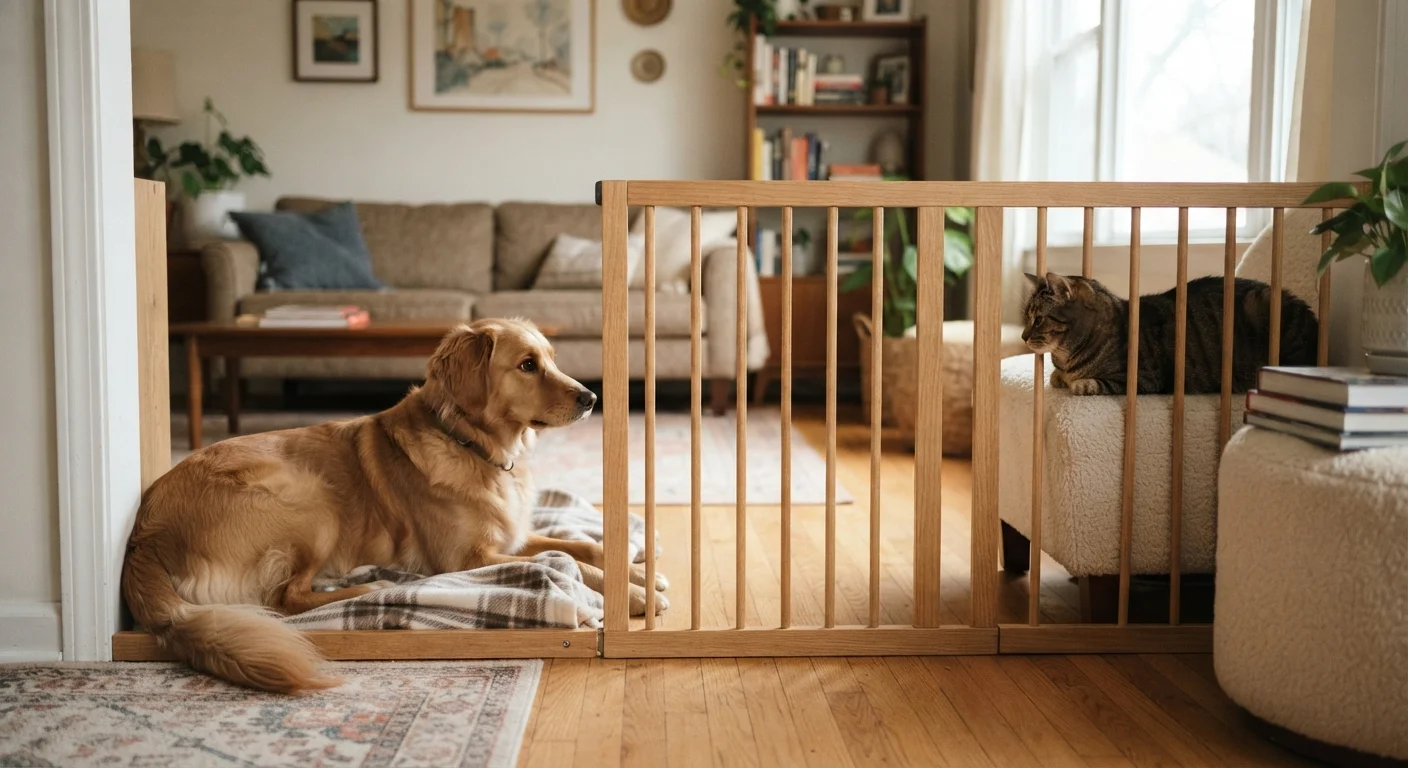
Once both animals are eating calmly near the door, replace the closed door with a baby gate, a cracked door secured with a door stop, or a mesh barrier. This allows the animals to see, smell, and hear each other while remaining physically separated. Keep initial visual sessions short - five to ten minutes - and end them before either animal shows stress.
Reward calm behavior on both sides of the barrier with high-value treats. You want each animal building a mental association: the other animal's presence predicts good things.
Conduct Supervised, Loose Introductions in a Neutral Space
When both animals are showing relaxed, curious behavior at the barrier, allow them into the same space under close supervision. Choose a larger area where neither animal's primary resources (bed, favorite resting spot) are located. Keep initial sessions brief and positive. Have a second person present if possible so each animal can be monitored and redirected individually.
Do not hold or restrain animals during this phase, as it can increase stress and provoke defensive responses. Allow natural movement and investigation. End the session before either animal escalates.
Gradually Expand Shared Access Over Time
As positive interactions accumulate and tension decreases, extend the duration and frequency of supervised time together. Begin allowing access to shared spaces incrementally - common areas first, then areas closer to each animal's core resources. Continue to provide each animal their own retreat space where they can opt out of social interaction at any time.
Full, unsupervised cohabitation should only happen once you have observed consistently relaxed or friendly behavior over multiple sessions spanning at least several days.
Integration Timeline Varies Widely
Some animals reach relaxed cohabitation within a week; others need a month or more of gradual steps. Both timelines are normal. The process should be driven by the animals' behavior, not a set number of days. Patience at each phase consistently produces better long-term outcomes than pushing forward too quickly.
Reading the Animals and Knowing When to Pause
Stress signals differ by species. In dogs, watch for stiff posture, sustained hard staring, raised hackles, low growling, or refusal to eat. In cats, flattened ears, a tucked or lashing tail, hissing, and hiding beyond their normal pattern all indicate the pace is too fast. If either animal shows these signs consistently, return to the previous phase for several more days before progressing.
Never punish stress signals - growling or hissing is communication. Suppressing those signals through punishment removes the warning system, making a sudden bite or swipe more likely. Instead, calmly separate the animals, give each space, and reassess your timeline.
If introductions plateau despite patient effort - for instance, one animal refuses to eat, loses weight, or shows prolonged hiding - consult a veterinary behaviorist or certified animal behavior consultant. Some combinations require professional support, and seeking it early is far more effective than waiting through weeks of escalating conflict. You may also want to prepare for a vet visit if any animal shows signs of stress-related illness during the process.
For broader guidance on daily pet care routines, the Bringing Home Your First Dog guide covers foundational habits that support long-term adjustment. General health and wellness resources are also available through Pet Health & Wellness.
This article provides general educational guidance on animal behavior and is not a substitute for professional veterinary or behavioral advice. If you have concerns about your pet's health or behavior during any stage of introduction, consult a qualified veterinarian or certified animal behaviorist.
The content provided on our blog site traverses numerous categories, offering readers valuable and practical information. Readers can use the editorial team’s research and data to gain more insights into their topics of interest. However, they are requested not to treat the articles as conclusive. The website team cannot be held responsible for differences in data or inaccuracies found across other platforms. Please also note that the site might also miss out on various schemes and offers available that the readers may find more beneficial than the ones we cover.