

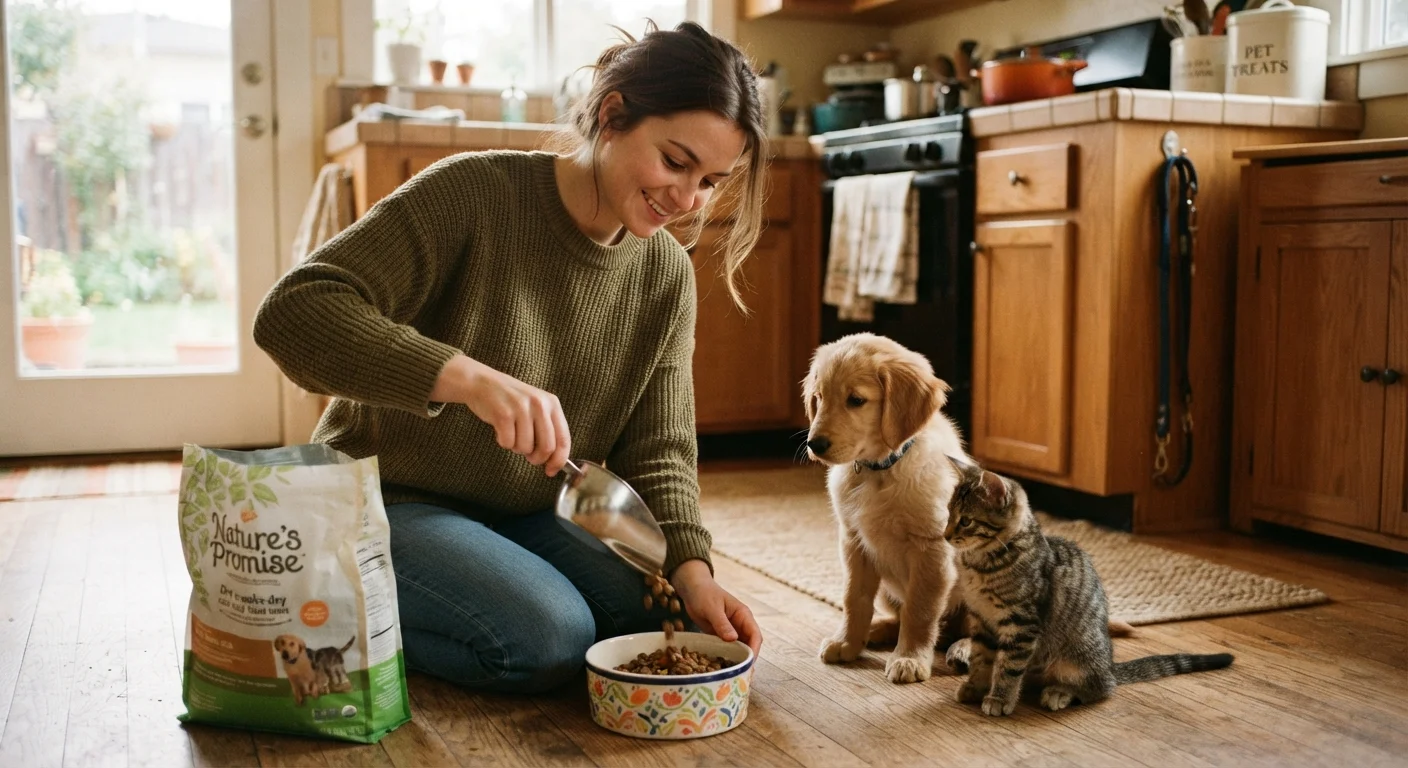
Why the First Year Sets the Foundation
The first twelve months of a pet's life are nutritionally critical. Puppies and kittens grow rapidly, their organ systems are still maturing, and the dietary choices made during this window can influence body composition, immune function, and long-term health. Yet this is also when new owners are most likely to rely on guesswork, well-meaning advice from friends, or marketing language on packaging rather than sound nutritional principles.
Understanding where mistakes commonly happen - and why - puts owners in a far better position to make informed decisions. If you're just getting started, our first-year guide for new dog owners offers a broader framework for building healthy daily routines alongside good feeding habits.
Feeding adult food to puppies or kittens, or vice versa.
Why it happens: Labels can be confusing, and some owners assume all pet food within a species is interchangeable. 'Complete and balanced' language on packaging doesn't automatically mean the food is appropriate for every life stage.
Overfeeding by relying on visual estimation rather than measured portions.
Why it happens: Owners often equate a full bowl with a healthy, happy pet. Packaging feeding guidelines are also frequently printed for larger animals than the one being fed, leading to habitual overfeeding.
Treating treats as extras rather than part of the daily calorie budget.
Why it happens: Treats feel like rewards or bonding tools, so it's easy to overlook their caloric contribution. Small treats seem insignificant, but they add up quickly, particularly for smaller breeds.
Switching foods abruptly when changing brands or formulas.
Why it happens: New owners may not realize that a pet's gastrointestinal system needs time to adapt to a new food. A switch is often triggered by a sale, a stockout, or a recommendation without any transition plan.
Sharing human foods without verifying their safety for pets.
Why it happens: Some human foods that appear benign - grapes, onions, xylitol-sweetened products, certain nuts - are actually toxic to dogs or cats. Owners often share scraps without realizing the risk.
Choosing a diet based on trends rather than veterinary nutritional standards.
Why it happens: Raw diets, grain-free formulas, and homemade meals generate strong enthusiasm online. Marketing often frames these as more 'natural' or superior, which can be compelling to owners who want the best for their pets.
The Mistakes That Matter Most
Each of the errors below is common, often starts with good intentions, and is entirely correctable once you know what to look for. Addressing even one or two of these early can meaningfully improve your pet's trajectory.
~60%
Pet dogs and cats estimated to be overweight or obese
According to the Association for Pet Obesity Prevention's annual surveys, roughly 60% of dogs and cats in the U.S. are classified as overweight or obese by their veterinarians.
10%
Maximum recommended daily calories from treats
Most board-certified veterinary nutritionists recommend treats make up no more than 10% of a pet's total daily caloric intake to avoid unbalancing the diet.
It's also worth remembering that nutrition doesn't operate in isolation. As your pet ages, their needs will shift considerably - our article on how health needs change in senior pets is useful reading for thinking ahead.
This article provides general educational information about pet nutrition and is not a substitute for guidance from a licensed veterinarian. Always consult your vet before making significant changes to your pet's diet.
The content provided on our blog site traverses numerous categories, offering readers valuable and practical information. Readers can use the editorial team’s research and data to gain more insights into their topics of interest. However, they are requested not to treat the articles as conclusive. The website team cannot be held responsible for differences in data or inaccuracies found across other platforms. Please also note that the site might also miss out on various schemes and offers available that the readers may find more beneficial than the ones we cover.