

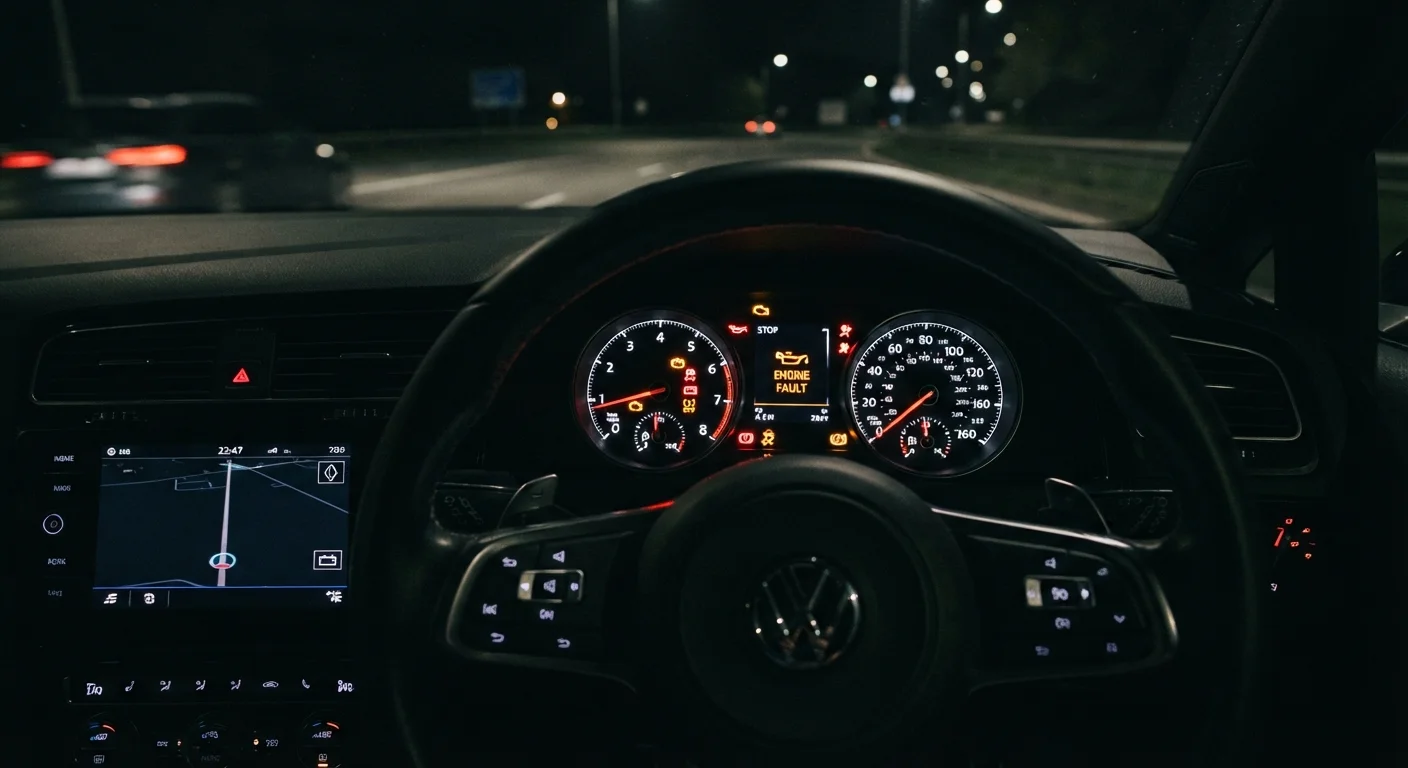
Color Is the First Thing to Read
Before you can decode any specific icon, understand the color system your vehicle uses. It works much like a traffic light and is consistent across virtually all modern vehicles sold in the U.S.:
- Red: Urgent. Stop driving as soon as it is safe to do so, or act immediately. Red lights often signal conditions that can cause serious engine damage or create a safety hazard if ignored.
- Amber or yellow: Caution. Something needs attention, but you typically have a window to get it checked without stopping immediately. Don't put it off longer than a day or two.
- Green or blue: Informational. These indicate an active system - high beams on, cruise control engaged, or a turn signal working. No action needed beyond awareness.
If you're a newer driver, the full picture of your instrument panel is covered in our first-time car owner's orientation.
Keep Your Owner's Manual Accessible
Your glove box is the right place for your owner's manual - not the recycling bin. It contains a complete, vehicle-specific key to every warning symbol on your dashboard, which generic online guides can't fully replicate. If yours is missing, most manufacturers offer a free digital version on their official website.
The Lights You're Most Likely to See
While every vehicle has its own full set of indicators, these are the warning lights drivers encounter most often - and what they're actually communicating.
Check Engine (Malfunction Indicator Lamp)
This amber engine-shaped icon is the most misunderstood light on the dashboard. It activates when the OBD-II system detects a fault affecting your engine or emissions controls. Causes range from a loose or missing gas cap to a failing oxygen sensor to serious misfires. A steady light means get it diagnosed soon; a flashing light means reduce speed and seek service immediately.
Battery Warning
A red battery symbol means your charging system isn't keeping up with electrical demand. This could point to a failing alternator, a worn drive belt, or a dying battery. Electrical systems can fail quickly - don't expect to drive far on battery power alone once this light appears.
Oil Pressure Warning
One of the most critical red lights. Low oil pressure means your engine's moving parts may not be getting adequate lubrication. Pull over safely and shut off the engine. Check the oil level; if it's fine, do not restart without a mechanic's assessment - driving with low oil pressure can destroy an engine within minutes.
Temperature Warning
A red thermometer in liquid indicates your engine is overheating. Pull over, turn off the engine, and let it cool. Never open the radiator cap while hot. This is often related to coolant levels - our guide to fluids under the hood explains what coolant does and how to check it safely.
When in Doubt, Don't Drive
If a red warning light appears and you're unsure what it means, treat it as a stop-now signal until you can identify it. The cost of a tow is almost always far less than the cost of engine or transmission damage caused by continuing to drive. Roadside assistance through your insurance or an auto club can get help to you without risking further damage.
Amber Lights That Deserve Prompt Attention
These warnings don't always require you to pull over immediately, but they shouldn't be ignored for days on end.
TPMS (Tire Pressure Monitoring System)
An amber icon of a tire cross-section with an exclamation point means one or more tires is significantly under- or over-inflated. Proper inflation affects handling, braking distance, and tire wear. Check pressure before your next highway drive. For a complete walkthrough, see our tire pressure field guide.
Brake System Warning
This one deserves special attention. If it appears alongside your parking brake being off, release the brake and see if the light goes out - that's normal. If it stays on, it may indicate low brake fluid or a hydraulic issue. Given what's at stake, treat any persistent brake warning as urgent. Our article on brake noise and safety complements what the warning light alone can tell you.
Traction Control / Stability Control
A flashing traction control light during acceleration or cornering is normal - it means the system is actively working. A steady light usually means the system has been disabled or has detected a fault. Both traction and stability control are critical safety systems, particularly in wet or icy conditions.
What to Do When a Light Comes On
Stay calm and follow a straightforward process:
- Identify the color. Red means assess whether you need to stop now. Amber means note it and plan for service.
- Check your owner's manual. Every icon is documented for your specific vehicle. Don't rely solely on memory or generic internet searches.
- Address obvious quick checks first. Gas cap tight? Parking brake fully released? Sometimes the fix is that simple.
- Get a diagnostic scan. Most auto parts stores offer free OBD-II code reads. A mechanic can give you a fuller picture, including codes that didn't trigger a light.
- Don't ignore it. Warning lights rarely resolve themselves. Delaying often turns a minor service need into a major repair.
Staying on top of your vehicle's overall maintenance schedule reduces how often these lights appear. Our maintenance schedule decoder can help you understand what service milestones actually involve. And before any road trip, a quick review of pre-trip checks can catch issues before a warning light does.
1 in 3
U.S. drivers with an active check engine light
CarMD's Vehicle Health Index has consistently found that roughly one-third of vehicles on U.S. roads have an active check engine light at any given time.
~1 PSI
Tire pressure lost per 10°F temperature drop
This well-established principle from tire industry guidance explains why TPMS warnings spike during cold-weather months.
Minutes
Time before engine damage from no oil pressure
Automotive engineers note that an engine running without adequate oil pressure can suffer irreversible damage in just a few minutes of operation.
Frequently Asked Questions
It depends on whether the light is steady or flashing. A steady check engine light suggests a non-emergency fault that should be diagnosed soon. A flashing check engine light indicates a more serious problem - often engine misfires - and you should reduce speed and get to a mechanic as soon as possible to avoid catalytic converter damage.
Intermittent warning lights often mean a sensor detected a condition that then resolved - or the fault is inconsistent. Even if the light disappears, the vehicle's computer usually stores a fault code. Having a mechanic read those codes can reveal whether there's an underlying issue worth addressing.
Multiple simultaneous warnings can indicate a significant system failure, a low battery, or a sensor malfunction. It can also happen after a battery disconnect as systems reinitialize. If multiple red lights appear while driving, pull over safely and do not continue driving until the cause is identified.
Your owner's manual has a dedicated section listing every warning light for your vehicle - it's the most accurate source. If you don't have the manual, the manufacturer's website or a reputable automotive reference can help, but always cross-reference with your specific make, model, and year.
Some warning lights - like the oil life reminder - can be reset following a procedure in the owner's manual. However, resetting a light without fixing the underlying cause only hides the problem. Warning lights tied to emissions or safety systems should be diagnosed and repaired before being cleared.
The content provided on our blog site traverses numerous categories, offering readers valuable and practical information. Readers can use the editorial team’s research and data to gain more insights into their topics of interest. However, they are requested not to treat the articles as conclusive. The website team cannot be held responsible for differences in data or inaccuracies found across other platforms. Please also note that the site might also miss out on various schemes and offers available that the readers may find more beneficial than the ones we cover.