

Summary
22 items · 20-45 minutes
Why Pre-Trip Inspections Matter More on Long Drives
A quick run to the grocery store rarely exposes a vehicle's weak spots. A 400-mile highway stretch is another matter entirely. Extended driving puts sustained stress on tires, cooling systems, brakes, and belts - turning a minor issue into a roadside breakdown or, in serious cases, a safety hazard.
The good news: most pre-trip checks require nothing more than your eyes, a few basic tools, and 20 to 45 minutes. This checklist is organized so you can work through it systematically, from the ground up. For broader context on how seasons affect these same systems, see our guide on seasonal car maintenance.
Work through the checklist below at least the day before departure so any issues found leave time for a mechanic visit. The evening before is ideal - not the morning you're wheels-up.
Don't Wait Until the Morning of Departure
Completing this checklist the evening before you leave gives you time to respond to anything you find - whether that's a slow tire leak that needs a patch or a low brake fluid level that warrants a quick mechanic visit. Discovering a problem at 6 a.m. on departure day rarely leaves enough time to address it safely.
What You'll Need
Gather these basic tools before you start. Most are inexpensive and worth keeping in your vehicle permanently.
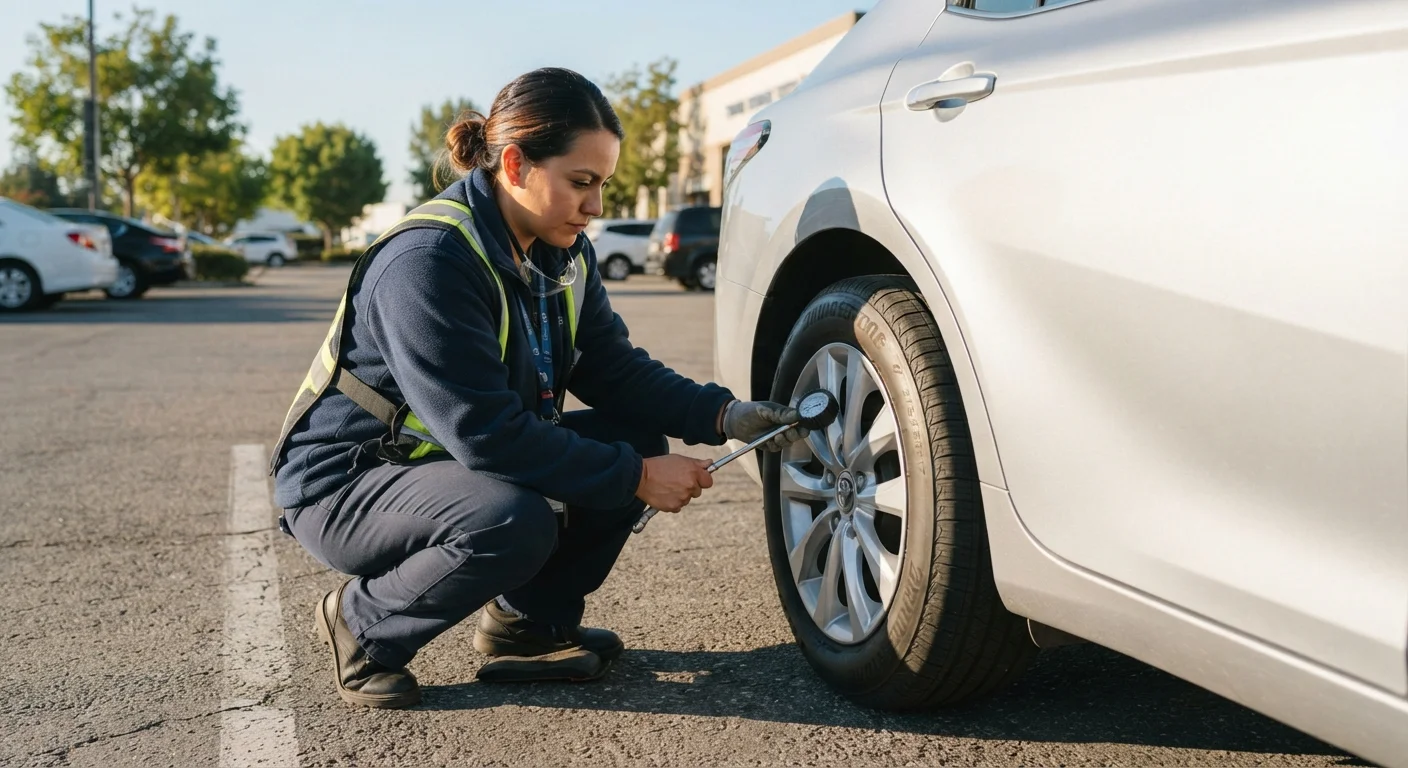
Tire pressure gauge
Accurately measure PSI in each tire so you can inflate or deflate to the vehicle manufacturer's specified pressure.
Tread depth gauge or penny
Measure remaining tire tread depth to confirm tires are safe for highway use.
Flashlight or work light
Illuminate the engine bay, undercarriage, and wheel wells during the inspection, especially in low-light conditions.
Owner's manual
Reference the correct fluid types, capacities, and inspection procedures specific to your vehicle.
Funnel and relevant fluids (oil, coolant, washer fluid)
Top up any fluid that reads below the recommended level during inspection.
Portable tire inflator or compressor
Inflate tires to the correct PSI at home rather than searching for an air station en route.
The Full Pre-Trip Checklist
Work through each group in order. Items marked must are non-negotiable for safe travel. Should items are strongly recommended. Nice-to-have items add convenience or extra peace of mind.
Tires
Fluids
Lights and Visibility
Dashboard and Systems
Under the Hood
Emergency Kit and Cargo
Brake and Steering Issues: Stop, Don't Go
If your inspection reveals soft or spongy brake pedal feel, a steering pull, or a significantly low brake fluid level with no obvious cause, do not proceed with the trip until a qualified mechanic has evaluated the system. Brake and steering failures at highway speeds are among the most dangerous mechanical events a driver can experience. These are not issues to monitor while traveling - they require resolution first.
After You've Checked the Car - Don't Forget the Trip Itself
Vehicle readiness is only half of pre-trip preparation. Before you leave home, confirm your route, share your itinerary with someone you trust, and know where rest stops and fuel stations fall along the way. Our pre-departure planning checklist covers the personal logistics side of any trip in useful detail.
If fuel economy matters to you - and on a long drive it should - note that correct tire inflation alone can meaningfully improve your mileage. For a deeper look at what a road trip actually costs beyond the pump, see everything that goes into road trip costs. And if your drive includes night hours, review the visual and cognitive challenges of night driving before you go.
Taking an hour to inspect your vehicle before departure is one of the highest-return habits any driver can develop. Safe travels.
The content provided on our blog site traverses numerous categories, offering readers valuable and practical information. Readers can use the editorial team’s research and data to gain more insights into their topics of interest. However, they are requested not to treat the articles as conclusive. The website team cannot be held responsible for differences in data or inaccuracies found across other platforms. Please also note that the site might also miss out on various schemes and offers available that the readers may find more beneficial than the ones we cover.