

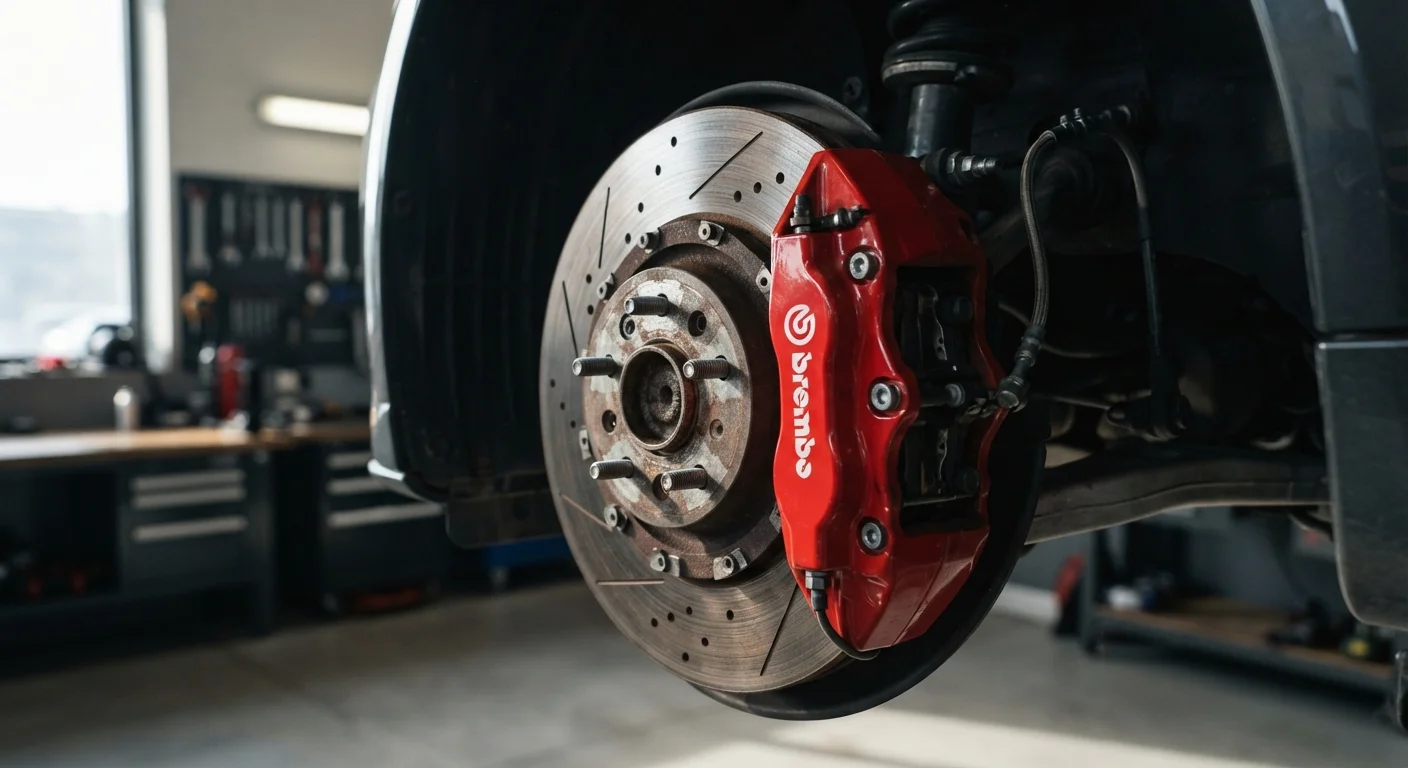
What Brake Squealing Actually Tells You
Brake noise is your vehicle's way of communicating. The sound itself - a high-pitched squeal, a low groan, or a grinding scrape - carries different meanings depending on when it occurs, how long it lasts, and whether it's getting worse over time.
The most common and intentional cause of squealing is the wear indicator, a small metal tab built into most brake pads. When the pad material wears down to a certain thickness, this tab contacts the rotor and produces a consistent squeal while braking. That sound is a feature, not a defect - it's engineered to give you a warning window before the pad is fully depleted.
Other causes are less serious. Overnight moisture on rotor surfaces commonly produces a brief squeal on the first few stops of the morning, then disappears. Fine dust, light surface rust from sitting overnight, or even the composition of certain aftermarket brake pads can all generate noise without signaling any safety problem. The key question is always: does the noise go away, or does it persist and intensify?
If you've also noticed a dashboard warning light, it may be worth reviewing what your dashboard warning lights are actually telling you alongside any brake symptoms.
~$300
Typical brake pad replacement cost (per axle)
Industry repair estimates consistently show that delaying pad replacement until rotor damage occurs can double or triple total repair costs.
25%
Brake-related crashes linked to poor maintenance
According to NHTSA research on pre-crash vehicle conditions, brake system issues are among the most common vehicle-related factors in traffic crashes.
Common Mistakes Drivers Make With Brake Noise
Understanding the noise is only half the battle. How drivers respond - or fail to respond - often determines whether a minor issue stays minor or escalates into a genuine safety problem.
Waiting weeks or months to have persistent brake squeal inspected.
Why it happens: Because squealing doesn't always feel dangerous, drivers often assume it can wait until the next oil change or convenient appointment.
Assuming all brake noise is the same and requires the same urgency.
Why it happens: Without knowing the difference between a squeal and a grind, drivers may either panic unnecessarily or dangerously under-react.
Ignoring brake noise because it seems to come and go.
Why it happens: Intermittent noise feels less alarming, and drivers rationalize it as a quirk or weather-related issue.
Attempting to diagnose or fix brake issues based solely on internet searches without a hands-on inspection.
Why it happens: DIY culture and the availability of information online lead some drivers to self-diagnose and purchase parts before understanding what's actually wrong.
Overlooking brake noise on a vehicle that sits unused for extended periods.
Why it happens: Drivers assume surface rust from sitting is harmless and that the noise will simply clear up on its own.
Grinding Brakes Are Not a "Wait and See" Situation
If your brakes are grinding rather than squealing, the protective pad material is likely gone. Driving on metal-to-metal contact reduces stopping ability and can cause rotor and caliper damage rapidly. Have the vehicle inspected by a qualified mechanic before driving it further whenever possible.
When to Stop Driving and Get Help Immediately
While squealing often allows time to schedule a routine appointment, certain sounds and sensations cross a line where continued driving becomes unsafe. Grinding or growling - a deep, metallic sound during braking - typically means the pad material is gone and metal is contacting metal directly. At this stage, stopping power is compromised and rotor damage is already occurring.
Combine any of the following with brake noise and treat it as urgent:
- The vehicle pulls noticeably to one side when braking
- The brake pedal feels soft, spongy, or travels further than usual before engaging
- You feel pulsation or vibration through the pedal
- The brake warning light is illuminated on your dashboard
Any combination of these symptoms means the vehicle should be inspected by a qualified mechanic before your next significant drive, not at your next scheduled oil change.
It's also worth knowing that certain driving habits accelerate brake wear. Habits that quietly strain your brakes - like resting your foot on the brake pedal - can shorten pad life well beyond what normal mileage would suggest.
This article is for general informational and educational purposes only. Brake system diagnosis and repair should always be performed by a qualified automotive technician. Do not attempt brake repairs without proper training, tools, and safety precautions.
The content provided on our blog site traverses numerous categories, offering readers valuable and practical information. Readers can use the editorial team’s research and data to gain more insights into their topics of interest. However, they are requested not to treat the articles as conclusive. The website team cannot be held responsible for differences in data or inaccuracies found across other platforms. Please also note that the site might also miss out on various schemes and offers available that the readers may find more beneficial than the ones we cover.