

Why Everyday Habits Add Up to Expensive Repairs
Most drivetrain damage isn't caused by a single dramatic event - it's the result of small, repeated habits that each extract a little more wear than necessary. Brakes, transmission, and engine components are engineered for specific loads and operating conditions. When driving patterns routinely push outside those parameters, wear accelerates in ways that don't show up immediately but do show up eventually, often as a repair bill that feels sudden.
Understanding which habits cause which type of strain is the first step to changing them. For a broader look at how routine maintenance connects to long-term reliability, our car maintenance hub covers the essentials every driver should build into their schedule.
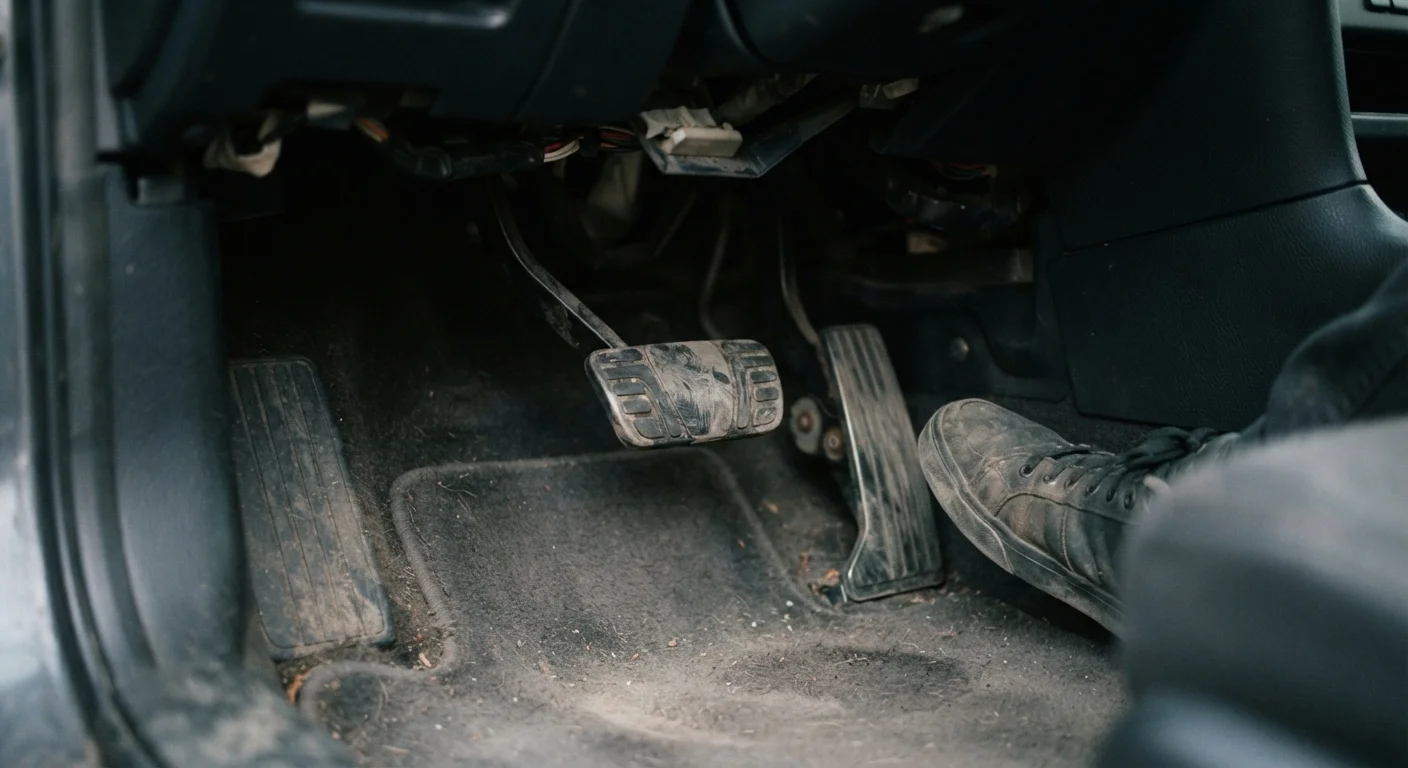
Resting a foot lightly on the brake pedal while driving, sometimes called 'brake riding.'
Why it happens: Many drivers do this unconsciously - especially in stop-and-go traffic - as a readiness habit or out of foot fatigue.
Riding the clutch by keeping the pedal partially depressed between gear changes in a manual transmission vehicle.
Why it happens: Drivers learning on manuals often use partial clutch engagement to smooth out gear transitions or hold position on a hill, turning a momentary technique into a persistent habit.
Accelerating hard immediately after a cold start before the engine oil has fully circulated.
Why it happens: Modern engines start quickly and feel ready, so drivers assume they are. The connection between oil pressure and mechanical readiness is invisible.
Shifting an automatic transmission into park or reverse before the vehicle has come to a complete stop.
Why it happens: Impatience in tight parking situations leads drivers to shift before stopping, relying on the transmission to finish the job.
Coasting downhill in neutral under the assumption it conserves fuel.
Why it happens: The logic seems intuitive: no gear engagement should mean lower engine load. But this reflects how older carbureted vehicles worked, not modern fuel-injected engines.
Overloading the vehicle regularly beyond its rated payload capacity.
Why it happens: Drivers underestimate how quickly passengers, cargo, and towing weight accumulate, and payload ratings are rarely top of mind.
Protecting Your Brakes, Transmission, and Engine Going Forward
The habits above share a common thread: they feel harmless because the feedback is delayed. Brakes don't fail the day you start riding them; the clutch doesn't slip on the first hill. That lag between cause and consequence is what makes these patterns so easy to overlook.
Cold-Engine Revving Causes Measurable Damage
Oil pressure takes several seconds to reach all engine components after a cold start. Pushing hard on the accelerator before the engine has warmed even slightly forces metal parts to work against each other with minimal lubrication. Keeping throttle input gentle for the first few minutes of driving - rather than idling for extended periods - is the approach most engine engineers recommend.
If any of these habits sound familiar, the good news is that most of their effects are reversible when caught early. Addressing brake wear before it reaches the rotor, for instance, is far less costly than a full brake job. Our guide on what brake noises mean can help you gauge whether existing wear already needs attention.
Similarly, maintaining correct fluid levels plays a critical role in buffering the damage these habits can cause. Checking and understanding your car's vital fluids regularly is one of the simplest ways to stay ahead of hidden wear. For drivers building better habits from scratch, this introduction to maintenance habits for new drivers lays out a clear foundation. And if fuel efficiency is also a priority, smooth driving techniques deliver benefits beyond just the pump.
Brake Fade Is a Safety Risk, Not Just Wear
Constantly applying light brake pressure - especially on long descents - builds heat that can cause brake fade, where stopping power drops significantly. Unlike worn pads, fade can occur even on a healthy braking system and may catch drivers off guard. If you notice a spongy pedal or reduced stopping response after sustained braking, pull over safely and allow the brakes to cool before continuing.
This article provides general educational information about driving habits and vehicle maintenance. Always consult a qualified mechanic for diagnosis or repair guidance specific to your vehicle.
The content provided on our blog site traverses numerous categories, offering readers valuable and practical information. Readers can use the editorial team’s research and data to gain more insights into their topics of interest. However, they are requested not to treat the articles as conclusive. The website team cannot be held responsible for differences in data or inaccuracies found across other platforms. Please also note that the site might also miss out on various schemes and offers available that the readers may find more beneficial than the ones we cover.