

Start here
Why Maintenance Habits Matter From Day One
Next
The Checks You Can Do Yourself
Then
Understanding Your Owner's Manual and Service Schedule
When you're ready
When to Involve a Mechanic
Finish strong
Keeping Records and Staying on Track
Why Maintenance Habits Matter From Day One
A car is one of the most complex machines most people will ever own - and one of the most expensive to repair if neglected. New drivers often focus entirely on learning to drive safely, which makes sense, but the habits you build around caring for your car are just as consequential as the habits you build behind the wheel.
Preventive maintenance isn't about being mechanically gifted. It's about consistency. Small, regular checks catch problems before they escalate into breakdowns. A tire that's slowly losing pressure, an oil level that's dropped, a coolant reservoir that's running low - none of these announce themselves loudly until something goes wrong. Catching them early is almost always cheaper and safer than dealing with the consequences later.
It's also worth understanding that certain everyday driving habits affect your vehicle's wear in ways that aren't obvious. See our guide to habits that strain your brakes, transmission, and engine for a closer look at how behavior behind the wheel connects directly to maintenance costs.
Make a Quick Weekly Walkaround a Habit
Before you drive off, take 60 seconds to walk around your car. Glance at tire condition, check that all lights are working, and look for anything unusual under the vehicle. This simple habit catches minor issues - a soft tire, a fluid drip, a burned-out light - before they become larger problems.
The Checks You Can Do Yourself
You don't need a garage full of tools to keep a car in reasonable shape. Several important checks require nothing more than your eyes, a tire gauge, and a few minutes.
Tire tread depth
The thickness of the rubber grooves on your tire that grip the road. When tread wears too low, wet-weather traction drops significantly and stopping distances increase.
Tire pressure (PSI)
The amount of air inside your tires, measured in pounds per square inch. Correct pressure keeps tires wearing evenly and helps maintain fuel efficiency and handling.
Coolant
A fluid that circulates through your engine to regulate temperature, preventing it from overheating in summer and freezing in winter. Also called antifreeze.
Service interval
The mileage or time period between scheduled maintenance tasks, such as oil changes or tire rotations, as specified by the vehicle manufacturer.
Dipstick
A long, thin metal rod inserted into your engine's oil reservoir that lets you check the oil level and condition without any tools.
Severe-duty schedule
A more frequent maintenance timeline recommended by manufacturers for vehicles regularly used in demanding conditions, like heavy traffic, towing, or extreme temperatures.
Tires
Check tire pressure monthly using a simple gauge - the correct pressure is listed on the sticker inside your driver's door jamb. Inspect tread depth by placing a quarter into the tread groove: if you can see the top of the head, the tread is getting low. Also scan for visible damage like bulges or embedded objects.
Fluids
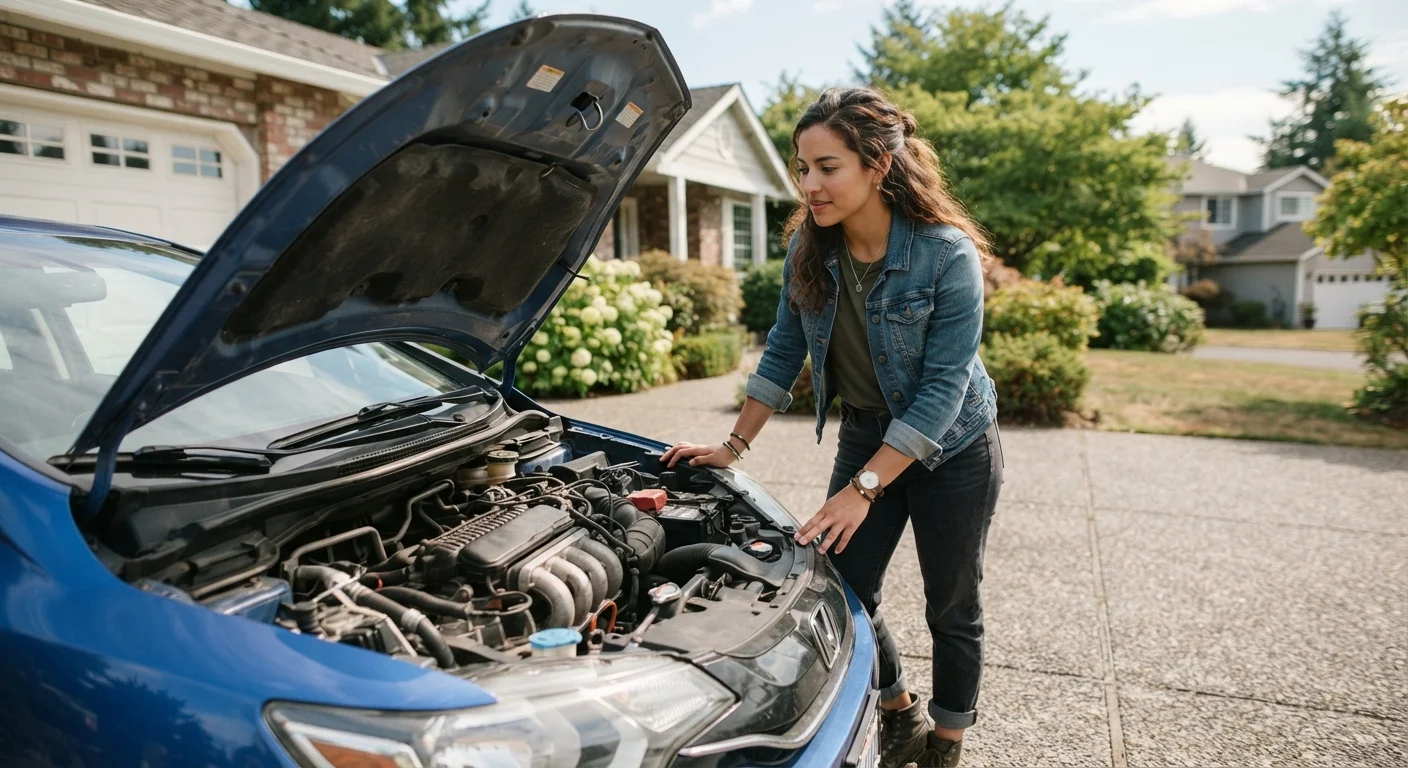
Engine oil, coolant, brake fluid, power steering fluid, and windshield washer fluid all have reservoirs or dipsticks you can check without opening anything pressurized. Refer to your owner's manual for the location of each and the correct levels to maintain. Never open the coolant reservoir cap when the engine is hot.
Lights and Wipers
Walk around your car periodically to confirm all exterior lights work - headlights, taillights, brake lights, and turn signals. Replace wiper blades when they start streaking or skipping, typically once a year or when performance drops noticeably.
Understanding Your Owner's Manual and Service Schedule
Your owner's manual is the most authoritative maintenance guide available for your specific vehicle. It outlines service intervals by both mileage and elapsed time, specifies fluid types, and tells you what your car's warning lights actually mean. Many new drivers never open it - that's a missed opportunity.
Most manufacturers provide two maintenance schedules: a standard schedule and a severe-duty schedule. Severe duty applies if you frequently drive in stop-and-go traffic, tow loads, drive in extreme temperatures, or make many short trips where the engine doesn't fully warm up. If any of those conditions describe your driving, the more frequent service intervals may be appropriate.
For a broader view of the annual tasks and milestones that apply to vehicle ownership, the annual car ownership checklist is a useful reference to keep on hand alongside your manual.
Be aware that some popular maintenance beliefs don't hold up under scrutiny. Our overview of car care myths covers common misconceptions - like unnecessary premium fuel upgrades - that can cost drivers money without any benefit.
When to Involve a Mechanic
Knowing your limits is a genuine skill. Some tasks - checking fluids, swapping wiper blades, inflating tires - are straightforward and low-risk. Others involve safety-critical systems where an error carries real consequences.
Brake service, suspension work, wheel alignment, timing belt replacement, and anything involving the fuel or electrical system should generally be handled by a qualified mechanic. If a warning light appears and you're unsure what triggered it, a professional diagnostic scan is the right first step rather than guessing.
For a clear breakdown of what's genuinely manageable at home versus what warrants a shop visit, see our guide to DIY tasks vs. mechanic jobs. The goal isn't to do everything yourself - it's to know when each approach makes sense.
Don't Delay on Warning Lights
Dashboard warning lights are your car's way of flagging a condition that needs attention. Driving for extended periods with an illuminated oil pressure, brake, or engine temperature warning can cause damage that's far more expensive than whatever prompted the alert. When in doubt, have the vehicle inspected sooner rather than later.
Keeping Records and Staying on Track
Every service your car receives - oil changes, tire rotations, brake inspections, fluid flushes - is worth recording. A maintenance log doesn't have to be elaborate; a notebook in the glove compartment or a notes app on your phone works fine. Record the date, mileage, what was done, and where.
This record protects you in several ways. It helps mechanics diagnose problems faster by showing what's already been addressed. It demonstrates proper care if warranty coverage is ever questioned. And when it comes time to sell the vehicle, documented service history meaningfully supports the car's value in the eyes of a buyer.
Our guide to keeping a maintenance log explains exactly how to build and maintain this habit from the start. It takes minimal effort per entry and pays dividends over the life of the vehicle.
Finally, remember that maintenance needs shift with the seasons - summer heat stresses cooling systems and tires differently than winter cold stresses batteries and wipers. See seasonal car maintenance guidance to understand what to inspect as conditions change throughout the year.
Frequently Asked Questions
A good habit is to check your oil level about once a month and before any long trip. Pull out the dipstick, wipe it clean, reinsert it, then read the level against the marked indicators. Your owner's manual will tell you the correct oil type and the manufacturer's recommended change interval.
The correct tire pressure for your vehicle is listed on a sticker inside the driver's door jamb - not on the tire sidewall, which shows the maximum pressure, not the recommended one. Check pressure when tires are cold, ideally once a month, using a simple tire gauge.
The check engine light, oil pressure warning, coolant temperature warning, and brake system light all signal conditions that can worsen quickly if ignored. If any of these illuminate, have the vehicle inspected promptly rather than continuing to drive as normal.
Yes - checking fluids, inspecting tire pressure and tread depth, replacing wiper blades, and checking exterior lights are all tasks most drivers can learn to do safely. More complex work involving brakes, electrical systems, or anything under the vehicle should generally go to a qualified mechanic.
Your owner's manual outlines a scheduled maintenance timeline by mileage and time intervals. Many modern vehicles also have a built-in service reminder system on the dashboard. Following the manufacturer's schedule - rather than guessing - is the most reliable approach.
Over time, yes. Old oil loses its ability to lubricate engine components effectively, increasing friction and wear. Consistently delayed oil changes can contribute to premature engine wear. Sticking to your vehicle's recommended interval is one of the simplest ways to protect engine longevity.
The content provided on our blog site traverses numerous categories, offering readers valuable and practical information. Readers can use the editorial team’s research and data to gain more insights into their topics of interest. However, they are requested not to treat the articles as conclusive. The website team cannot be held responsible for differences in data or inaccuracies found across other platforms. Please also note that the site might also miss out on various schemes and offers available that the readers may find more beneficial than the ones we cover.