

What a Maintenance Log Actually Is
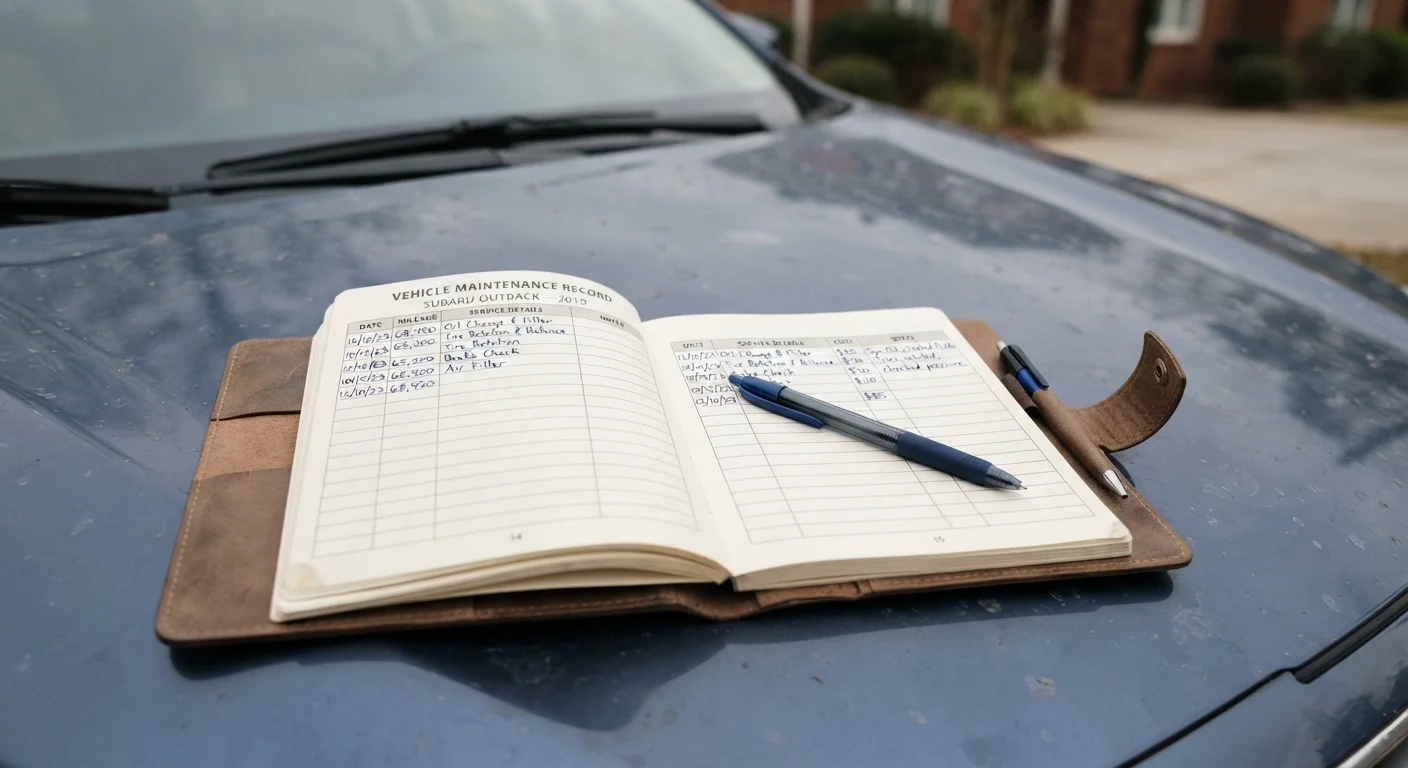
A maintenance log is a running record of every service, repair, and inspection your vehicle receives - oil changes, tire rotations, brake pad replacements, fluid top-offs, and anything in between. It's not a complex document. At its most basic, it's a list of dates, mileage readings, services completed, and who performed them.
What makes it powerful is consistency. A single entry isn't worth much. A complete chronological record, stretching back years, tells a story about how a vehicle has been cared for. That story matters to mechanics, potential buyers, warranty administrators, and you as the owner trying to remember when you last changed the cabin air filter.
If you're building foundational habits around vehicle upkeep, the maintenance habits guide for new drivers is a useful companion to understanding what services actually belong in your log and when.
Five Best Practices for Keeping a Reliable Log
Knowing you should keep a log is easy. Doing it well requires a few deliberate habits. The practices below reflect how professional mechanics and experienced vehicle owners approach service documentation.
Record every service immediately after it's completed, not days later from memory.
Details like exact mileage, the specific fluid brand used, or a technician's note about a worn component are easy to forget within 24 hours. Immediate logging ensures accuracy and completeness, which is what makes a log defensible in a warranty dispute or a diagnostic conversation.
Include the odometer reading with every entry, not just the date.
Maintenance intervals are mileage-based, not calendar-based. Knowing that your last oil change was six months ago tells a mechanic less than knowing it was done at 47,200 miles when you're now at 52,800. Mileage makes the log actionable for scheduling future services.
Attach or file receipts alongside your log entries.
A log entry is your record; a receipt is third-party confirmation. Together they create verifiable documentation. For warranty claims, receipts showing the correct oil specification or OEM parts can be the difference between an approved and a denied claim.
Note what was inspected and found acceptable, not just what was replaced.
Mechanics often check components without replacing them. Documenting that brakes were inspected and had adequate life remaining, for instance, gives you a baseline for the next inspection and shows a pattern of proactive attention to the vehicle.
Choose a format you'll actually maintain - paper, spreadsheet, or app - and stick with it.
The most sophisticated logging system is worthless if it's abandoned after two entries. Consistency matters far more than format. A simple notebook kept reliably for five years is more valuable than an app used for three months.
Where the Log Pays Off
The return on a well-kept log shows up in three concrete situations.
Warranty Claims
Many powertrain and extended warranties require documented evidence that scheduled maintenance was performed on time and with approved materials. Without records, a claim can be denied even if the work was actually done. Your log - supported by receipts - is your evidence.
Resale Value
A vehicle with a complete service history commands more buyer confidence than an identical one with no documentation. Private buyers and dealers alike view a log as proof that the car wasn't neglected. This is especially relevant for high-mileage vehicles, where maintenance history is often the deciding factor in a buyer's willingness to purchase.
Faster, More Accurate Diagnosis
When a mechanic can see that a vibration started shortly after new tires were installed, or that coolant has been topped off three times in six months, they can zero in on the likely cause much faster. A log turns a guessing game into a targeted diagnostic process.
“A vehicle's service history is one of the clearest indicators of how it's been treated. When owners bring in a log, the diagnostic process becomes a collaboration instead of a guessing game.”
— Automotive Service Excellence Advisory Panel, Industry body representing certified automotive technicians
For a year-by-year framework of what services to track and when, see the annual car ownership checklist.
Start Today: Quick Actions That Build the Habit
You don't need to reconstruct years of history before the log becomes useful. Starting now, even with incomplete past records, creates value going forward. The actions below require minimal time and no special tools.
If you want to understand what each maintenance interval in your owner's manual actually requires, the maintenance schedule decoder breaks it down service by service.
The content provided on our blog site traverses numerous categories, offering readers valuable and practical information. Readers can use the editorial team’s research and data to gain more insights into their topics of interest. However, they are requested not to treat the articles as conclusive. The website team cannot be held responsible for differences in data or inaccuracies found across other platforms. Please also note that the site might also miss out on various schemes and offers available that the readers may find more beneficial than the ones we cover.