

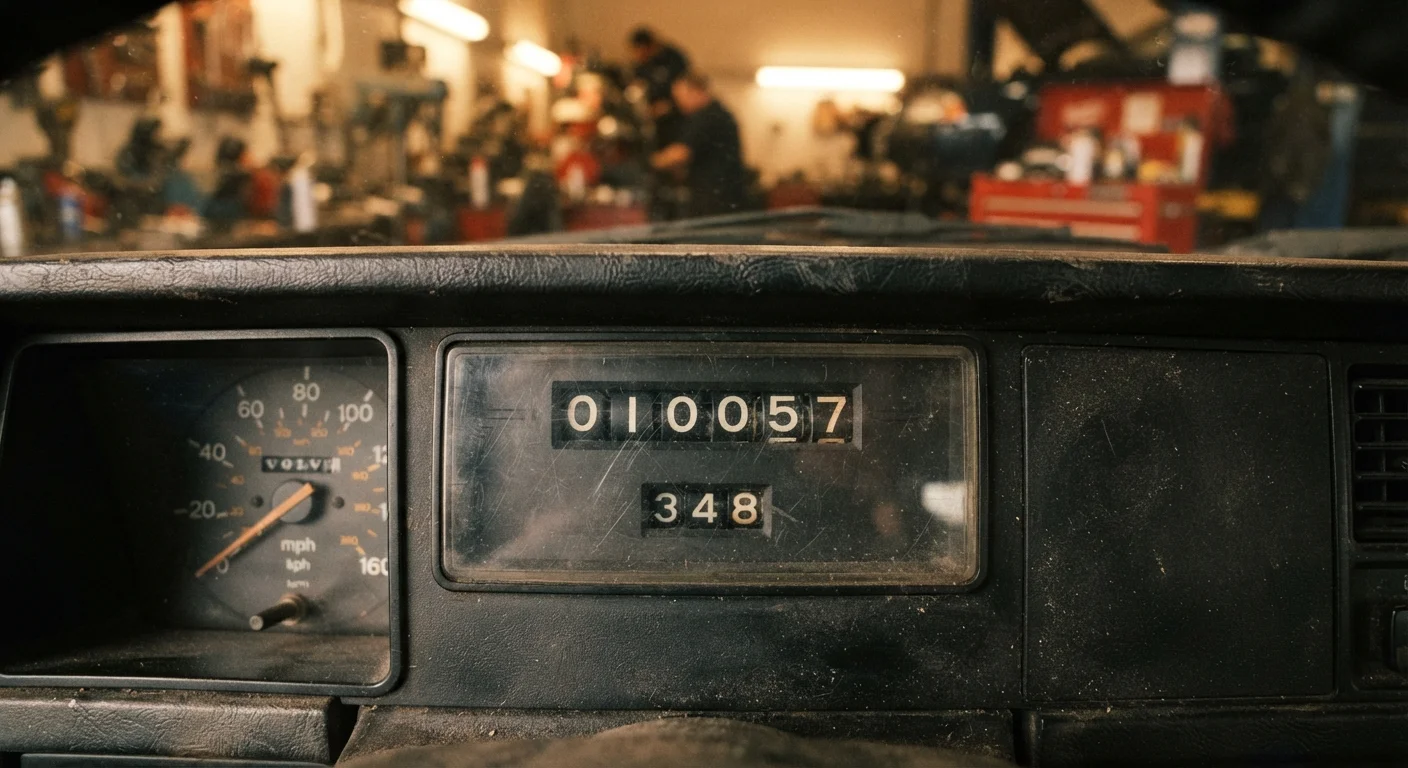
Why 100,000 Miles Is a Real Turning Point
The 100,000-mile mark isn't just a psychological milestone - it reflects genuine changes in how a vehicle wears. Most factory maintenance schedules are written with the first 60,000-100,000 miles in mind. After that threshold, the same intervals and assumptions no longer apply equally to every system on the car.
Rubber components - gaskets, seals, hoses, and belts - lose elasticity over time and mileage. Metal surfaces experience microscopic wear that accumulates into measurable play in joints and bearings. Fluids that once lasted their full service interval may need more frequent changes because the systems they protect are working harder to compensate for wear.
None of this means a high-mileage vehicle is unreliable. Many well-maintained cars reach 200,000 miles and beyond. What it does mean is that maintenance priorities shift, and drivers who recognize that shift early tend to catch problems before they become expensive failures. Pairing this knowledge with a structured approach - like reviewing your annual ownership checklist - keeps the routine from becoming reactive.
Fluids and Filters: Stricter Schedules Required
Fluid quality degrades faster in an older, higher-friction engine. Engine oil, transmission fluid, power steering fluid, and brake fluid all deserve more frequent attention after 100,000 miles.
- Engine oil: Many mechanics recommend switching to a high-mileage oil formulation at this stage. These blends typically contain seal conditioners that can reduce minor leaks and help restore some flexibility to aging gaskets. Check your dipstick more often - consumption may increase slightly even without a visible leak.
- Transmission fluid: Automatic transmissions in particular accumulate heat damage in the fluid over time. If the fluid hasn't been changed by 100k, it should be inspected and likely replaced. Dark, burnt-smelling fluid is a warning sign.
- Brake fluid: Brake fluid is hygroscopic - it absorbs moisture from the air over time, lowering its boiling point. Most manufacturers recommend a flush every two to three years regardless of mileage, but high-mileage vehicles benefit from sticking to that cycle faithfully.
- Air and cabin air filters: These aren't fluid, but clogged filters force other systems to work harder. At higher mileage, check them every oil change rather than every other one.
Start a Dedicated Maintenance Log
At 100,000 miles, a written service record becomes especially valuable. Note the date, mileage, and work performed for every service - including fluid top-offs. This log helps you spot patterns (such as rising oil consumption) before they become failures, and it adds resale value if you eventually sell the vehicle.
See our guide on DIY vs. mechanic tasks to understand which fluid services you can handle at home safely.
Wear Components That Demand Closer Attention
Several mechanical components have finite lifespans tied directly to mileage and use cycles. Past 100,000 miles, these warrant proactive inspection rather than waiting for obvious symptoms.
Brakes
Brake pads and rotors should be measured at every tire rotation. High-mileage driving patterns - especially stop-and-go commuting - accelerate pad wear. Rotors that have been resurfaced once are often near minimum thickness by 100k and may need replacement rather than another turn.
Tires and Suspension
Inspect shocks and struts carefully. Worn struts don't just affect ride comfort - they extend braking distances and affect handling. Look for fluid leakage on the strut body and bounce-test each corner of the vehicle. Tire wear patterns can also reveal suspension problems: cupped or scalloped tread often points to worn shock absorbers.
Spark Plugs and Ignition Components
Even long-life iridium or platinum plugs reach their service limit around 100,000 miles. Worn plugs cause misfires, reduced fuel economy, and added strain on the catalytic converter. Inspect plug condition and replace as needed - this is a task many capable drivers handle themselves.
When replacing spark plugs on a high-mileage engine, apply a small amount of anti-seize compound to the threads - plugs that have been in place for 100,000 miles can bond to the cylinder head and snap if removed dry.
Broken plugs in the cylinder head are a costly repair that requires extraction tools or professional intervention; a small preventive step avoids a straightforward job becoming a major one.
Check the PCV (Positive Crankcase Ventilation) valve at your next oil change - a clogged PCV valve causes pressure buildup that accelerates seal and gasket failures in higher-mileage engines.
The PCV valve is inexpensive and easy to replace, yet it's frequently overlooked in standard service intervals; its failure can create oil leaks that are mistakenly attributed to more serious internal wear.
Cooling System and Belts: High-Stakes Intervals
Two systems deserve special urgency past 100,000 miles: the cooling system and the timing belt (on vehicles equipped with one).
Timing Belt vs. Timing Chain
If your vehicle uses a rubber timing belt, check your owner's manual for its replacement interval - many manufacturers specify 90,000-105,000 miles. A broken timing belt can cause catastrophic engine damage. This is emphatically a job for a qualified mechanic. Vehicles with a timing chain are more durable, but chains should still be inspected for stretch if the engine makes a rattling noise on startup.
Coolant and Hoses
Coolant (antifreeze) breaks down chemically over time, losing its corrosion-inhibiting properties. Flush and replace it per the manufacturer's specification - often every 5 years or 150,000 miles for extended-life coolant, but check your vehicle's documentation. Squeeze the upper and lower radiator hoses: they should feel firm and pliable, not mushy, brittle, or swollen at the clamp ends.
Water Pump and Thermostat
Both components are statistically more likely to fail after 100,000 miles. Many shops recommend replacing the water pump simultaneously with a timing belt service since the labor overlaps - this is a practical cost-saving approach worth asking your mechanic about. Seasonal temperature extremes add additional stress; for more on that, see seasonal maintenance guidance.
~12 years
Average age of vehicles on US roads
According to S&P Global Mobility data, the average age of registered light vehicles in the US has steadily climbed, meaning more drivers are managing higher-mileage cars than ever before.
200,000+
Miles many modern vehicles can achieve
Consumer automotive research consistently shows that modern vehicles, when properly maintained, are capable of exceeding 200,000 miles before requiring major drivetrain work.
Up to 25%
Fuel economy loss from worn components
The U.S. Department of Energy notes that factors like worn spark plugs, clogged filters, and underinflated tires can collectively reduce fuel economy by a notable margin in older vehicles.
Building a High-Mileage Maintenance Routine
The most effective approach for a high-mileage vehicle is a shorter inspection loop combined with a written log. Rather than trusting memory, track every service - date, mileage, and what was done - in a simple notebook or app.
Consider scheduling a comprehensive inspection with a trusted mechanic at the 100,000-mile mark specifically, even if nothing seems wrong. A technician can identify seal leaks, worn mounts, and marginal components that aren't yet causing symptoms but will become problems within the next 10,000-20,000 miles. Catching them in sequence - rather than as a cascade of simultaneous failures - is significantly less expensive.
For ongoing structure, the seasonal maintenance framework pairs well with high-mileage care: each season becomes a built-in checkpoint for fluids, tires, battery, and belts. The broader principles of driving smarter - smooth acceleration, avoiding hard stops, letting the engine warm up before pushing it - also reduce wear on systems that are already accumulating age.
A well-maintained high-mileage vehicle isn't a liability. It's proof that consistent, informed care extends the useful life of any machine.
The content provided on our blog site traverses numerous categories, offering readers valuable and practical information. Readers can use the editorial team’s research and data to gain more insights into their topics of interest. However, they are requested not to treat the articles as conclusive. The website team cannot be held responsible for differences in data or inaccuracies found across other platforms. Please also note that the site might also miss out on various schemes and offers available that the readers may find more beneficial than the ones we cover.