

Summary
24 items · 20-40 minutes to review; tasks spread across the year
Why a Year-Round Checklist Matters
Car ownership responsibilities don't arrive in a neat bundle once a year - they're spread across calendar deadlines, odometer milestones, and seasonal conditions. Without a structured reference, it's easy to let registration lapse, miss an emissions window, or defer maintenance until a minor issue becomes an expensive repair.
This checklist consolidates the core annual obligations every U.S. driver faces into one organized reference. Use it at the start of each year to map out what's coming, and revisit it each quarter to stay on track. For a broader picture of what car ownership actually costs, see the full annual cost breakdown.
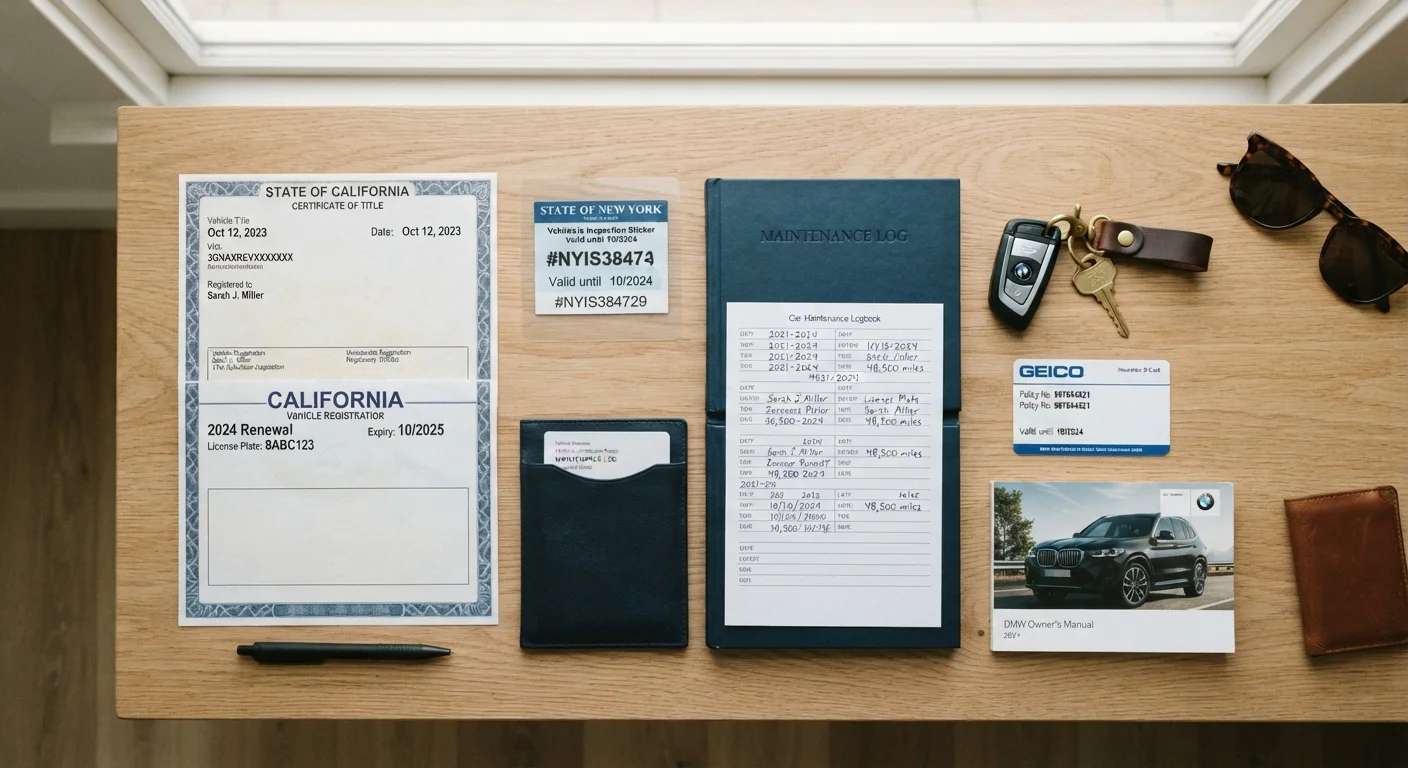
Before diving in, gather your current registration certificate, insurance card, owner's manual, and any past service records. If you don't yet have a maintenance log, now is a good time to start one - here's why that paper trail matters more than most drivers realize.
Owner's Manual
The definitive source for your vehicle's specific maintenance intervals, fluid specifications, and tire pressure requirements.
Maintenance Logbook or App
Used to record every service event with date, mileage, and work performed - essential for warranty protection and resale.
Tire Pressure Gauge
Allows accurate monthly tire pressure checks against the manufacturer's recommended PSI.
Tread Depth Gauge
Provides a precise measurement of remaining tire tread to determine when replacement is necessary.
State DMV Website Bookmark
Your state's motor vehicle authority is the authoritative source for registration deadlines, emissions testing rules, and inspection requirements.
NHTSA VIN Lookup Tool (nhtsa.gov)
Used to check whether any open safety recalls apply to your specific vehicle using its Vehicle Identification Number.
Digital Calendar or Reminder App
Helps schedule recurring maintenance tasks, registration deadlines, and inspection windows so nothing slips through the cracks.
Legal and Administrative Obligations
These are the non-negotiable compliance tasks. Failing to complete them on time can result in fines, vehicle impoundment, or gaps in your insurance coverage. Requirements differ by state, so treat the items below as a framework - always verify the specifics with your state's DMV or motor vehicle authority.
Registration and Legal Renewals
Fluid and Filter Maintenance
Tires, Brakes, and Safety Systems
Documentation and Record-Keeping
Lapses Can Void Your Coverage
In many states, driving with an expired registration or a lapsed inspection sticker is not merely a citation risk - it can also give an insurer grounds to dispute a claim. Check your policy language and state regulations to understand exactly when your obligations reset each year. Never assume a grace period exists without confirming it with your DMV.
For a plain-language explanation of how vehicle titles and registration paperwork interact, this reference on titles and registration walks through the key documents and what happens when something goes wrong.
Scheduled Maintenance: Mileage and Time Intervals
Most factory-scheduled maintenance is triggered by mileage, not the calendar - but since many drivers cover a predictable annual distance, planning by month is a practical approach. Always cross-reference with your owner's manual, which is the authoritative source for your specific vehicle. If you need help interpreting those intervals, this decoded guide to maintenance schedules explains what each service milestone actually means.
Drivers with vehicles past the 100,000-mile mark should note that additional components - timing belts or chains, water pumps, suspension bushings, and transmission fluid - often warrant closer attention. See how maintenance needs shift after 100,000 miles for a targeted high-mileage review. Seasonal conditions also affect maintenance timing - preparing your vehicle for changing seasons covers what to inspect as conditions shift.
Don't Rely Solely on Mileage Estimates
Manufacturer maintenance intervals are calibrated for average driving conditions. If you frequently drive in stop-and-go traffic, tow loads, operate in extreme temperatures, or take many short trips (under 5 miles), your vehicle may need more frequent service than the standard interval suggests. Your owner's manual typically includes a 'severe duty' schedule for these conditions - check it and apply the appropriate interval.
Getting the Most from Every Service Visit
Showing up prepared to a service appointment helps you avoid unnecessary work and understand what's actually being done. Before each visit, review your maintenance log to note what was last completed and at what mileage. Bring a written list of any symptoms - unusual sounds, warning lights, or handling changes - that appeared since the last service.
This guide to service appointments covers which questions to ask, how to read a service estimate, and how to recognize common upsell tactics. If you're newer to ownership and still building your maintenance habits, this introduction for new drivers is a solid foundation alongside this checklist.
The content provided on our blog site traverses numerous categories, offering readers valuable and practical information. Readers can use the editorial team’s research and data to gain more insights into their topics of interest. However, they are requested not to treat the articles as conclusive. The website team cannot be held responsible for differences in data or inaccuracies found across other platforms. Please also note that the site might also miss out on various schemes and offers available that the readers may find more beneficial than the ones we cover.