

Start here
The Paperwork You Need to Handle Immediately
Next
Understanding Your Dashboard and Owner's Manual
Then
Insurance: What You Actually Need and Why
Going deeper
Your Real Cost of Ownership Beyond the Car Payment
Build your routine
Your Maintenance Baseline: The First Year
The Paperwork You Need to Handle Immediately
Driving off the lot is exhilarating, but the first 30 days of car ownership are largely administrative. Getting the paperwork wrong - or ignoring it - can result in fines, lapses in legal protection, or complications if you ever need to sell.
Your most immediate priorities are:
- Title transfer: The title is the legal document proving you own the vehicle. If you bought from a dealership, they typically handle the transfer on your behalf. Private-party purchases require you to file the transfer yourself at your state's DMV. Learn the full details of titles and registration before your grace period expires.
- Registration: Most states issue a temporary permit at the point of sale, giving you 30 to 60 days to complete registration and obtain plates. Fees vary widely by state and vehicle value.
- Proof of insurance: You are legally required to carry minimum liability insurance in nearly every U.S. state before operating the vehicle. Confirm coverage is active on day one.
Store your registration and insurance card in the glove compartment. Keep a photo of both on your phone as a backup.
Vehicle title
A legal document issued by the state that identifies who owns a vehicle. It must be transferred into your name whenever a car changes hands.
Liability coverage
Auto insurance that pays for damage or injuries you cause to others in an accident. It does not pay for repairs to your own vehicle.
Depreciation
The gradual decrease in a vehicle's market value over time. Cars typically lose value fastest in their first few years of ownership.
Comprehensive coverage
Auto insurance that covers damage to your vehicle from events other than a collision - such as theft, weather, or animal strikes.
Owner's manual
A booklet provided by the manufacturer that contains vehicle-specific information including maintenance schedules, warning light explanations, and fluid specifications.
Tire rotation
Moving tires from one position on the vehicle to another at regular intervals so they wear evenly and last longer.
Understanding Your Dashboard and Owner's Manual
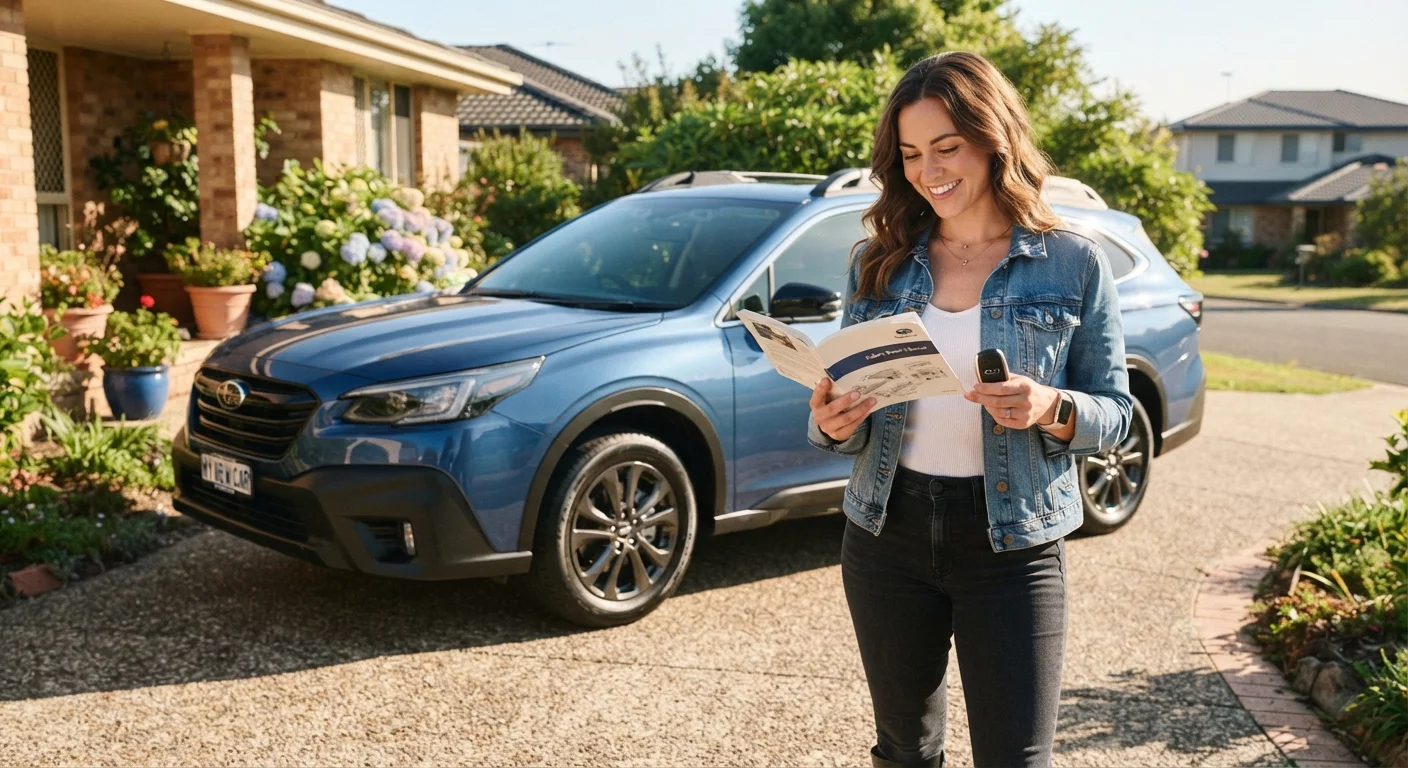
The owner's manual is the most underused document in most people's glove compartments. It contains the correct maintenance schedule for your specific engine, the meaning of every warning light on your instrument cluster, and the proper tire inflation specifications - none of which are guesswork when the manual is in hand.
A few dashboard basics worth knowing immediately:
- Red warning lights indicate urgent conditions - low oil pressure, overheating, or brake system faults. Pull over safely and address these before continuing to drive.
- Amber or yellow lights signal issues that need attention but are not immediately dangerous - a low fuel level, tire pressure alert, or a service reminder.
- Blue or green lights are generally informational, such as high beams being active or a turn signal indicator.
Do not assume a warning light will resolve itself. Even a check engine light triggered by something as minor as a loose gas cap should be confirmed and cleared. Decode your maintenance schedule to understand what the manual is actually telling you to do and when.
Insurance: What You Actually Need and Why
Auto insurance is not one-size-fits-all, and the legal minimum is rarely sufficient protection for most drivers. Understanding the coverage types helps you make an informed decision rather than just picking the cheapest option.
Get Quotes Before You Finalize the Purchase
Insurance premiums vary significantly based on your vehicle type, location, driving history, and the coverage levels you choose. It is worth requesting insurance quotes during the car-shopping process - not after - so monthly insurance cost is factored into your total budget. A vehicle that seems affordable may carry higher insurance costs than expected.
- Liability coverage pays for damage and injuries you cause to others. It does not cover your vehicle.
- Collision coverage pays to repair or replace your vehicle after a crash, regardless of fault.
- Comprehensive coverage covers non-collision events - theft, weather damage, a fallen tree, or animal impact.
- Personal injury protection (PIP) or medical payments coverage helps pay for your own medical bills after an accident, regardless of who caused it.
- Uninsured/underinsured motorist coverage protects you when the at-fault driver lacks adequate insurance - a more common scenario than most drivers expect.
If your vehicle is financed, your lender will typically require both collision and comprehensive coverage. Understand what each policy type actually covers before deciding what to carry. Consult a licensed insurance professional for guidance specific to your situation.
Your Real Cost of Ownership Beyond the Car Payment
The monthly payment gets most of the attention during the buying process, but it represents only a portion of what you will actually spend. New owners are often caught off guard by the full picture.
Typical ongoing costs to budget for include:
- Fuel: Varies by vehicle efficiency, driving habits, and regional gas prices.
- Insurance premiums: Billed monthly, semi-annually, or annually depending on your policy.
- Routine maintenance: Oil changes, tire rotations, filters, and wiper blades add up across the year.
- Registration renewal: Annual fees that vary by state and vehicle age or value.
- Depreciation: Not a cash expense, but a real financial consideration - especially if you plan to sell or trade within a few years. Understand how depreciation works so it does not catch you off guard.
- Unexpected repairs: Even new vehicles develop issues. Building a small monthly buffer into your budget prevents a repair bill from becoming a crisis.
For a comprehensive view of what to track and when, the annual car ownership checklist provides a structured year-round reference.
Your Maintenance Baseline: The First Year
Consistent maintenance in year one builds the habits and vehicle history that protect your investment long-term. You do not need to become a mechanic - you need to know what to monitor and when to act.
Your first-year checklist should include:
- Oil and filter changes at intervals specified in your owner's manual. Synthetic oil typically extends intervals compared to conventional oil, but your manual is the authority.
- Tire pressure checks monthly and before long trips. Correct inflation affects fuel efficiency, handling, and tire lifespan. Learn how to check tire pressure and tread depth without needing a shop visit.
- Tire rotation every 5,000 to 7,500 miles to ensure even wear across all four tires.
- Fluid levels - coolant, brake fluid, windshield washer fluid, and power steering fluid (if applicable) - checked periodically.
- Air filter inspection at the first oil change interval to assess replacement need based on your driving environment.
Building these habits early makes them second nature. The maintenance habits guide for new drivers offers a grounded starting point for anyone just getting into a routine.
Frequently Asked Questions
Most states give you a temporary operating permit valid for 30 to 60 days after purchase, during which you must complete registration. Check your specific state's DMV requirements because deadlines and fees vary. Driving an unregistered vehicle past the grace period can result in fines.
The check engine light, oil pressure light, temperature warning, and brake system light all warrant prompt attention. Red lights generally signal urgent issues that can cause vehicle damage or a safety risk if ignored. Yellow or amber lights typically mean something needs attention soon rather than immediately.
State minimum liability coverage protects other people if you cause an accident but provides no protection for your own vehicle. Most financial advisors suggest carrying higher liability limits and adding collision and comprehensive coverage, especially if your vehicle is newer or financed. Review your situation with a licensed insurance professional.
The interval depends on your vehicle and the oil type used. Many modern vehicles using full synthetic oil can go 7,500 to 10,000 miles between changes, but your owner's manual specifies the correct interval for your engine. Do not rely solely on the old rule of every 3,000 miles - it may not apply to your car.
Depreciation is the loss in a vehicle's market value over time. New vehicles typically lose a significant portion of their value in the first few years of ownership, which affects how much you could recover if you sold or traded in the car. Understanding depreciation helps you make informed decisions about insurance coverage and future purchases.
Keeping basic supplies on hand is a widely recommended safety practice. A typical kit includes jumper cables or a jump starter pack, a flashlight, basic hand tools, a reflective triangle or flares, a first-aid kit, and a phone charger. Check your kit periodically to replace expired items.
The content provided on our blog site traverses numerous categories, offering readers valuable and practical information. Readers can use the editorial team’s research and data to gain more insights into their topics of interest. However, they are requested not to treat the articles as conclusive. The website team cannot be held responsible for differences in data or inaccuracies found across other platforms. Please also note that the site might also miss out on various schemes and offers available that the readers may find more beneficial than the ones we cover.