

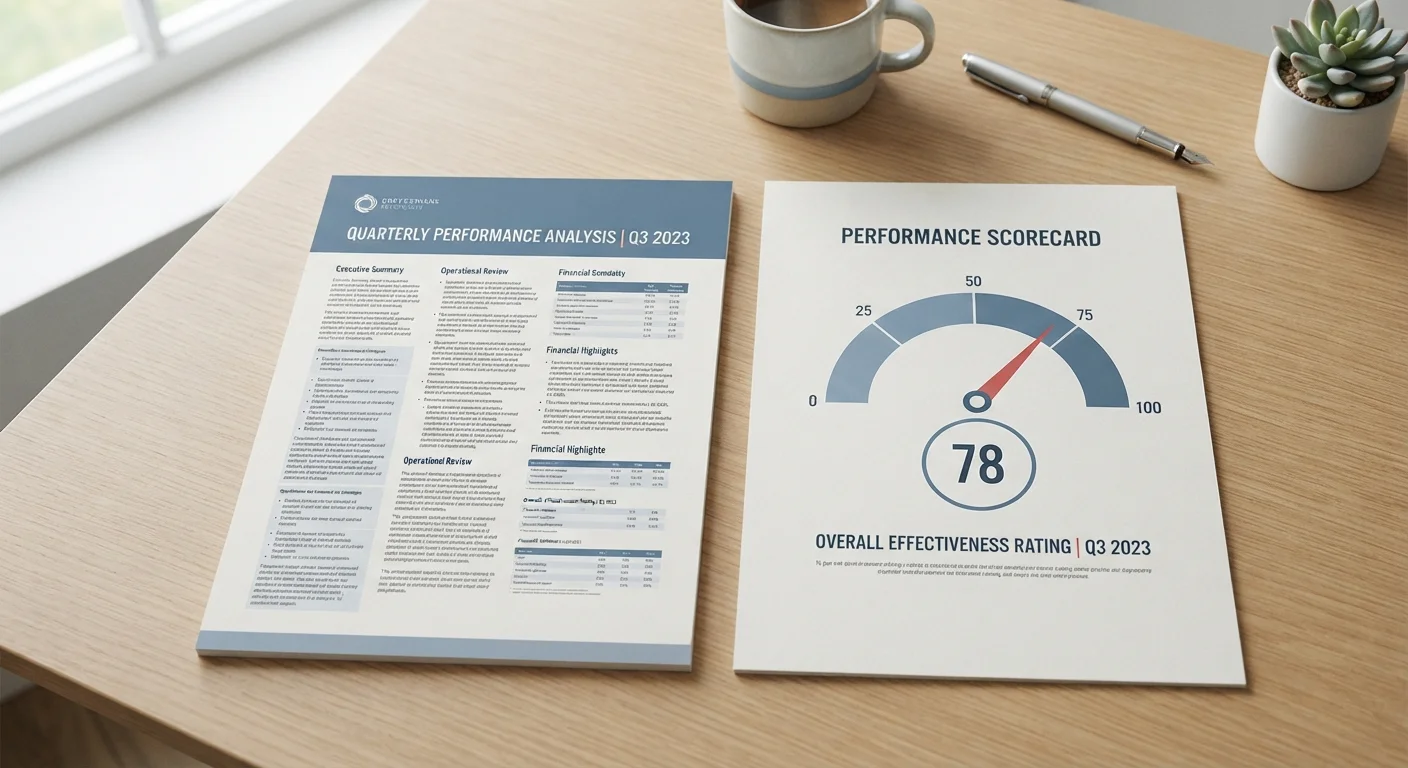
Option A
Credit Report
The full financial history - every detail, in writing.
Best for: Reviewing the accuracy of your credit history, spotting errors, and understanding what lenders actually see.
Option B
Credit Score
The three-digit summary lenders use at a glance.
Best for: Quickly gauging your creditworthiness and tracking progress as you manage debt and payments.
What Each One Actually Is
Despite being used interchangeably in everyday conversation, a credit report and a credit score are fundamentally different documents that serve different purposes - and confusing them can leave you managing your credit blindly.
A credit report is a detailed record maintained by the three major credit bureaus: Equifax, Experian, and TransUnion. It lists every credit account you've opened, your payment history on each, outstanding balances, credit inquiries, and public records like bankruptcies. Think of it as a financial biography - a line-by-line account of how you've handled borrowed money over time. For a practical walkthrough of how to read this document, see Reading Your Credit Report for the First Time.
A credit score, by contrast, is a three-digit number - typically ranging from 300 to 850 - generated by a scoring model such as FICO or VantageScore. These models analyze the data inside your credit report and compress it into a single figure that lenders use to quickly evaluate lending risk. The score doesn't exist independently; it is calculated from your report. No report, no score.
| Criterion | Credit Report | Credit Score |
|---|---|---|
| What it is | Detailed written record of credit history | Three-digit number summarizing that history |
| Who creates it | Equifax, Experian, TransUnion | FICO, VantageScore, and others |
| What it contains | Accounts, balances, payments, inquiries, public records | A single numerical risk rating |
| Free access | Yes, via AnnualCreditReport.com | Varies - sometimes free via card issuers or apps |
| Can you dispute errors | Yes, directly with each bureau | Not directly - fix the report to fix the score |
| How often it updates | As creditors report (typically monthly) | Recalculated each time it's requested |
| Primary use | Error review, fraud detection, account audit | Lender eligibility screening, rate determination |
How They're Generated and Who Controls Them
Your credit reports are assembled by the three bureaus based on information that lenders, creditors, and other data furnishers voluntarily report. Because each bureau collects data independently, your reports can differ slightly - an account may appear on one report but not another, or a balance might lag by a billing cycle. That's why it's worth checking all three.
Credit scores are produced by separate companies - most commonly Fair Isaac Corporation (FICO) and VantageScore Solutions - using proprietary algorithms. Lenders typically pay to access scores, and different lenders may use different scoring models. That means you can have multiple scores simultaneously, all technically valid, yet slightly different. For a deeper look at the five factors that drive your score, see Credit Scores Explained: What the Number Actually Measures.
Your Right to Free Credit Reports
Federal law grants every U.S. consumer the right to request a free credit report from each of the three major bureaus. AnnualCreditReport.com is the official, government-authorized source for these requests. Be cautious of third-party sites with similar-sounding names that may charge fees or require subscriptions. Reviewing all three reports - not just one - gives you the most complete picture of what lenders see.
Under federal law, you're entitled to one free report per year from each bureau through AnnualCreditReport.com. Score access is separate - some credit card issuers and financial apps provide it free, but always confirm what scoring model is being used.
Why Errors on One Directly Damage the Other
Here's where the relationship between the two becomes most consequential: because your score is calculated from your report, any inaccuracy on the report immediately distorts your score. A medical bill incorrectly marked delinquent, a fraudulent account opened in your name, or a paid-off debt still showing an outstanding balance - all of these silently drag your number down.
This is why monitoring only your score misses the point. A score of 680 tells you there's a problem; your report tells you what the problem is and gives you the data to dispute it. The Federal Trade Commission has documented that a meaningful share of consumers find errors on at least one credit report - errors that can affect loan approval odds and the interest rates lenders offer.
How Credit Utilization Works-and Why Most People Mismanage It covers one of the most common report-level factors people overlook when trying to understand a score that seems lower than expected.
1 in 5
Consumers with a credit report error
A Federal Trade Commission study found that approximately one in five consumers had an error on at least one credit report that was corrected by a bureau after dispute.
3
Separate credit reports per consumer
Equifax, Experian, and TransUnion each maintain an independent file, meaning your data - and any errors - can vary across all three.
Using Both Together to Make Smarter Decisions
The most effective approach is to treat your credit report as the source of truth and your credit score as the summary indicator. Use your score to track general direction - is it trending up or down quarter over quarter? Use your report to diagnose why.
Before a major financial move - applying for a mortgage, financing a car, or taking on a personal loan - pull all three reports, review them for accuracy, and dispute any errors before a lender runs a hard inquiry. A single reporting error corrected before application can meaningfully affect the rate you're offered. For context on how different types of debt interact with your credit profile, Secured vs. Unsecured Debt: How the Distinction Shapes What You Owe is worth reading alongside your report.
If you've ever been surprised by your score or wondered why it doesn't reflect your behavior accurately, Credit Score Myths That Lead People into Poor Financial Decisions addresses the most common misunderstandings that lead people to inadvertently hurt their own numbers.
This article is for general informational purposes only and does not constitute personalized financial or legal advice. Consult a qualified financial professional regarding your specific situation.
The content provided on our blog site traverses numerous categories, offering readers valuable and practical information. Readers can use the editorial team’s research and data to gain more insights into their topics of interest. However, they are requested not to treat the articles as conclusive. The website team cannot be held responsible for differences in data or inaccuracies found across other platforms. Please also note that the site might also miss out on various schemes and offers available that the readers may find more beneficial than the ones we cover.