

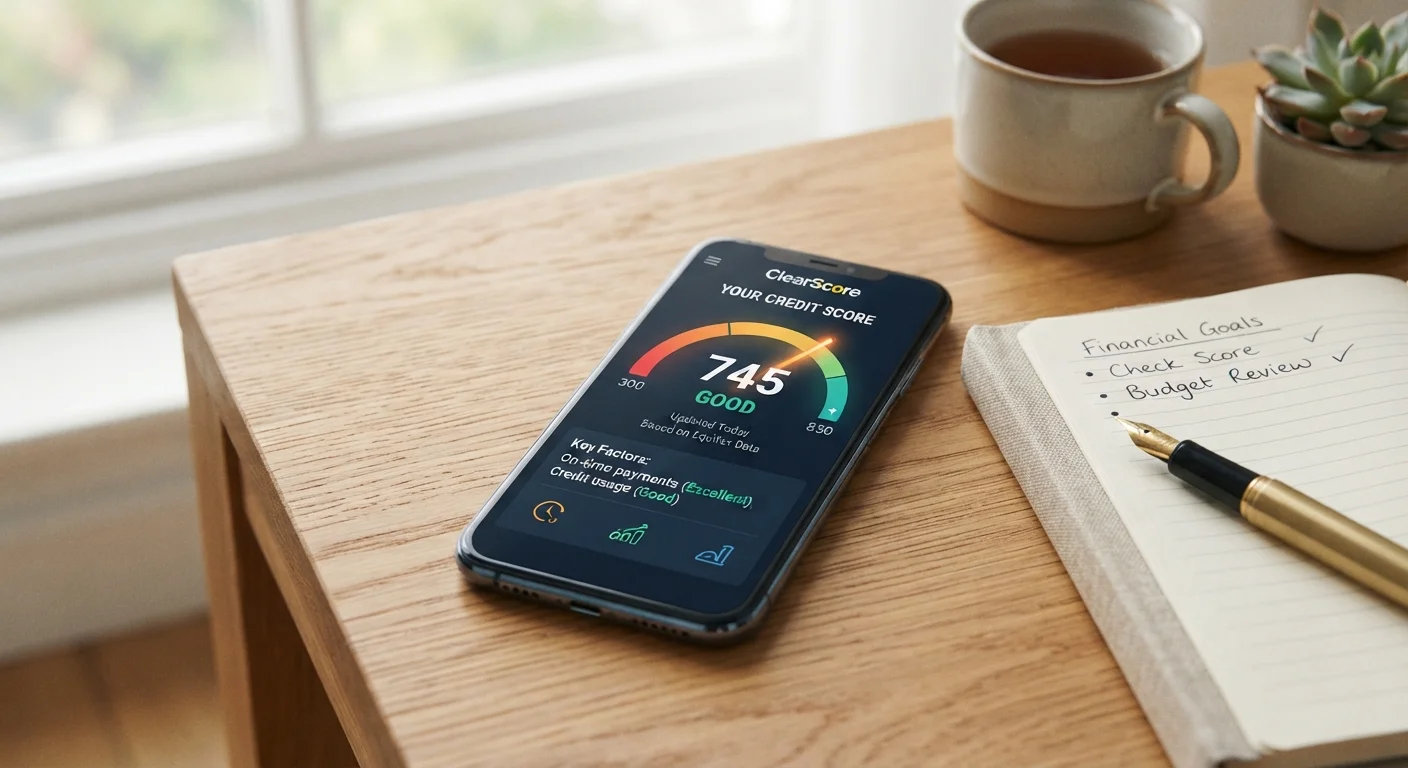
Why Credit Myths Are Costly - Not Just Confusing
Credit scores quietly influence major financial decisions: whether you qualify for a mortgage, what interest rate you'll pay on an auto loan, and sometimes even whether a landlord approves your rental application. Acting on bad information in this space doesn't just leave money on the table - it can set back your financial position for years.
The problem is that many myths sound plausible. They circulate because they're half-true, or because they made sense under older credit-scoring models no longer in widespread use. Understanding what actually drives your score - and what doesn't - is foundational financial literacy. For a deeper look at the documents behind your score, see how credit reports and credit scores differ.
Myth
Carrying a small balance on your credit card each month helps build your credit score.
Fact
Paying your balance in full each month is better for your score and saves you interest charges.
This myth likely stems from confusing "using credit" with "carrying debt." Scoring models reward responsible credit use - but that means demonstrating you can borrow and repay, not that you need to pay interest to prove it. Paying your statement balance in full each month shows responsible behavior without the cost. Carrying a balance means paying interest, sometimes at rates above 20% APR, with zero scoring benefit in return. See also: why minimum payments are more expensive than they appear.
Myth
Closing credit cards you don't use will clean up your credit profile and improve your score.
Fact
Closing old or unused cards typically lowers your score by reducing total available credit and potentially shortening your credit history.
Two scoring factors take a hit when you close a card: your credit utilization ratio goes up (because your total available credit decreases), and your average account age can drop if the closed card was one of your older accounts. A card with no annual fee that you don't use is often better left open with a small recurring charge - just make sure the balance is paid monthly. If a card carries an annual fee you can't justify, the calculus changes, but understand the likely score impact before closing.
Myth
Checking your own credit score will lower it.
Fact
Checking your own score is a soft inquiry and has no effect on your credit score.
Credit inquiries come in two types: hard and soft. Hard inquiries occur when a lender reviews your credit as part of an application decision - these can cause a small, temporary score dip. Soft inquiries include background checks, pre-approval reviews, and when you check your own score. Soft inquiries do not affect your score at all. Avoiding your credit report out of fear of lowering your score means missing errors that could be dragging it down without your knowledge. Reading your credit report for the first time is a practical first step.
Myth
Applying for a mortgage with multiple lenders will tank your score due to multiple hard inquiries.
Fact
Most scoring models treat multiple mortgage, auto, or student loan inquiries within a short window as a single inquiry for rate-shopping purposes.
Scoring models are designed to encourage comparison shopping on installment loans. FICO, for example, typically groups multiple mortgage or auto loan inquiries made within a 45-day window and counts them as one. This means consumers can - and should - shop around for the best loan terms without worrying that each lender check is compounding score damage. The same protective logic does not apply to credit card applications, where each application generally counts as a separate hard inquiry.
Myth
A higher income means a higher credit score.
Fact
Income is not a factor in any major credit scoring model - only your credit behavior is.
Lenders may consider income when making underwriting decisions (debt-to-income ratio, for instance), but that calculation happens separately from your credit score. Your score reflects how you've managed credit over time: whether you pay on time, how much of your available credit you use, how long your accounts have been open, and similar behavioral signals. Someone earning a modest income with excellent payment habits can - and often does - outrank a higher earner who carries high balances or misses payments.
What Actually Moves the Needle on Your Score
Scoring models like FICO and VantageScore weight a handful of factors heavily: payment history, credit utilization, length of credit history, credit mix, and new credit inquiries. Of these, payment history and utilization together typically account for the largest share of your score. That means habits - paying on time, keeping balances low - matter far more than one-time actions.
35%
Payment history share of FICO score
According to FICO's publicly disclosed score factor weightings, payment history is the single largest component of a standard FICO score.
30%
Credit utilization share of FICO score
Amounts owed - heavily influenced by credit utilization across revolving accounts - is the second-largest factor in the FICO scoring model.
1 in 5
Americans with a credit report error
A study by the Federal Trade Commission found that roughly one in five consumers had an error on at least one of their three major credit reports.
Utilization is one of the most misunderstood levers. Many people don't realize that the ratio is calculated across all revolving accounts, not just one card. Carrying a high balance on a single card can spike your overall utilization even if other cards are empty. Our guide to credit utilization breaks down exactly how this ratio works and how to manage it strategically.
If your score needs rebuilding or you're starting from scratch, the path forward is methodical rather than dramatic. Building credit from little or no history outlines the mechanisms - secured cards, credit-builder loans, authorized user status - and how each one functions. And for the long view, consistent habits matter most - not one-time fixes.
Don't Let Errors Stay on Your Report
Credit report mistakes - wrong account statuses, accounts that aren't yours, outdated negative items - can suppress your score without your knowledge. You're entitled to free reports from all three major bureaus regularly. If you find an error, you have the right to dispute it. Learn how to formally dispute credit report errors before they do more damage.
This article is for general informational and educational purposes only and does not constitute personalized financial or credit advice. Consult a qualified financial professional for guidance specific to your situation.
The content provided on our blog site traverses numerous categories, offering readers valuable and practical information. Readers can use the editorial team’s research and data to gain more insights into their topics of interest. However, they are requested not to treat the articles as conclusive. The website team cannot be held responsible for differences in data or inaccuracies found across other platforms. Please also note that the site might also miss out on various schemes and offers available that the readers may find more beneficial than the ones we cover.