

Why Utilization Carries So Much Weight
If you've ever wondered why your credit score moved after you paid down a credit card - or dropped after a big purchase - credit utilization is usually the reason. It's one of the most dynamic scoring factors, and it's often the fastest one to change in either direction.
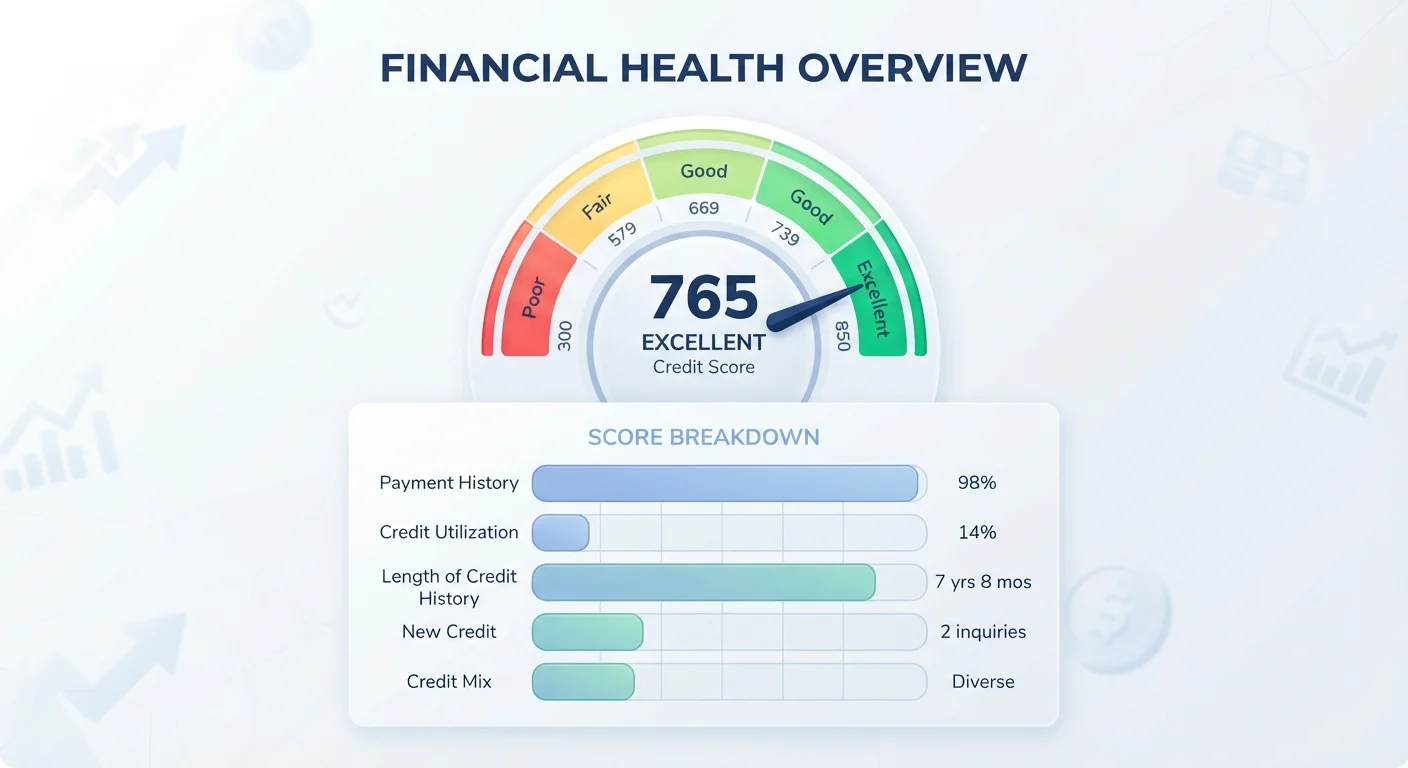
Under the FICO scoring model - the most widely used framework by U.S. lenders - amounts owed (which heavily reflects utilization) accounts for roughly 30% of your score. Only payment history carries more weight. For context, that puts utilization ahead of length of credit history, new credit inquiries, and your credit mix combined.
To understand why, consider what utilization signals from a lender's perspective. Someone maxing out their credit cards looks like they may be stretched financially, regardless of whether they pay on time. Someone using a small fraction of their available credit appears to have more financial breathing room. Scoring models are designed to reflect that risk distinction.
~30%
Weight of amounts owed in FICO score
According to FICO's publicly published score factor breakdown, amounts owed - which heavily incorporates credit utilization - is the second-largest scoring category.
<10%
Utilization ratio of highest-scoring consumers
FICO data indicates that consumers with scores above 800 typically carry credit utilization rates well below 10% across their revolving accounts.
1-2 cycles
Time for utilization change to reflect in score
Because utilization is recalculated monthly based on reported balances, paying down balances can improve your score within one to two billing cycles - faster than most other scoring factors.
The Calculation Most People Get Wrong
Utilization sounds simple - balances divided by limits - but the mechanics trip people up in two important ways.
First: timing. Most people assume their reported balance is what they owe on their payment due date. In reality, issuers generally report your balance to the credit bureaus on your statement closing date - which may be several weeks before your payment is due. So if you spend heavily during a billing cycle and only pay after the statement closes, the higher balance is what gets reported. Paying down your balance before the statement closing date is the most reliable way to keep reported utilization low.
Second: per-card utilization matters independently. Even if your overall utilization looks healthy, maxing out a single card can still drag your score. Scoring models evaluate utilization on each card as well as in aggregate. A single card at 90% utilization is a flag - even if your other cards are empty.
Pay Before Your Statement Closes
If you want to lower the balance your issuer reports to the credit bureaus, make a payment before your statement closing date - not just before the payment due date. Check your card's billing cycle in your account settings or by calling your issuer to find out exactly when your balance gets reported each month.
Common Mismanagement Mistakes - and How to Avoid Them
Several widespread habits unintentionally inflate credit utilization. Here are the most common ones:
- Closing paid-off cards. Eliminating a card's credit limit reduces your total available credit, which pushes utilization up on remaining balances. This surprises many people who close accounts thinking it will help their financial profile. For more on this and similar misconceptions, see common credit score myths that cost people money.
- Charging large one-time expenses to a single card. A home repair, medical bill, or travel booking on one card can push that card's utilization to 80-100% - even if the charge is paid off immediately. Spreading the expense or paying it down before the statement closes avoids the hit.
- Ignoring utilization when applying for a loan. Mortgage and auto lenders often pull your credit during a period when a high-utilization month coincides with your application. A quick paydown before applying for major credit can meaningfully improve your score in a short window.
- Not monitoring reported balances. If your credit report shows a balance that doesn't reflect a recent payment, it's worth checking. To understand how scores and reports interact - and why errors matter - see how credit reports differ from credit scores.
Practical Ways to Improve Your Ratio
You don't always need to eliminate debt to improve utilization. Here are approaches that work:
Whatever approach you take, the goal is to maintain a reported balance that represents a small fraction of your total available credit. If you're building credit fundamentals from scratch, a foundational overview of how credit works can provide useful context before diving into optimization.
This article is for general informational and educational purposes only and does not constitute personalized financial or credit advice. Consult a qualified financial professional for guidance specific to your situation.
Frequently Asked Questions
Most financial guidance suggests keeping utilization below 30% - both overall and per card. However, people with the highest credit scores typically maintain utilization well below 10%. The lower the ratio, the less credit risk you signal to lenders.
Yes, but timing matters. Your issuer typically reports your balance to credit bureaus on your statement closing date, not your payment due date. If you carry a high balance before your statement closes - even if you pay in full afterward - that higher utilization gets reported. Paying before the statement closes keeps the reported balance low.
Closing a card can hurt your score by reducing your total available credit, which raises your utilization ratio if you still carry balances elsewhere. It can also shorten your average account age over time. Think carefully before closing cards you rarely use - particularly older ones.
It can trigger a hard inquiry, which may cause a small, temporary dip in your score. However, if the increase is approved, the resulting lower utilization often offsets that effect over time. Some issuers offer soft-inquiry limit reviews that don't affect your score at all.
Relatively quickly. Because utilization is recalculated each billing cycle based on the balance your issuer reports, paying down balances can reflect in your score within one to two billing cycles. Unlike payment history derogatory marks, high utilization doesn't leave a lasting scar once corrected.
Having a $0 balance on one or more cards while keeping at least one account active is generally fine. However, if all your revolving accounts show $0 and are unused for extended periods, some issuers may close them for inactivity - which would then raise utilization on remaining accounts. Light, regular use is better than none.
The content provided on our blog site traverses numerous categories, offering readers valuable and practical information. Readers can use the editorial team’s research and data to gain more insights into their topics of interest. However, they are requested not to treat the articles as conclusive. The website team cannot be held responsible for differences in data or inaccuracies found across other platforms. Please also note that the site might also miss out on various schemes and offers available that the readers may find more beneficial than the ones we cover.