

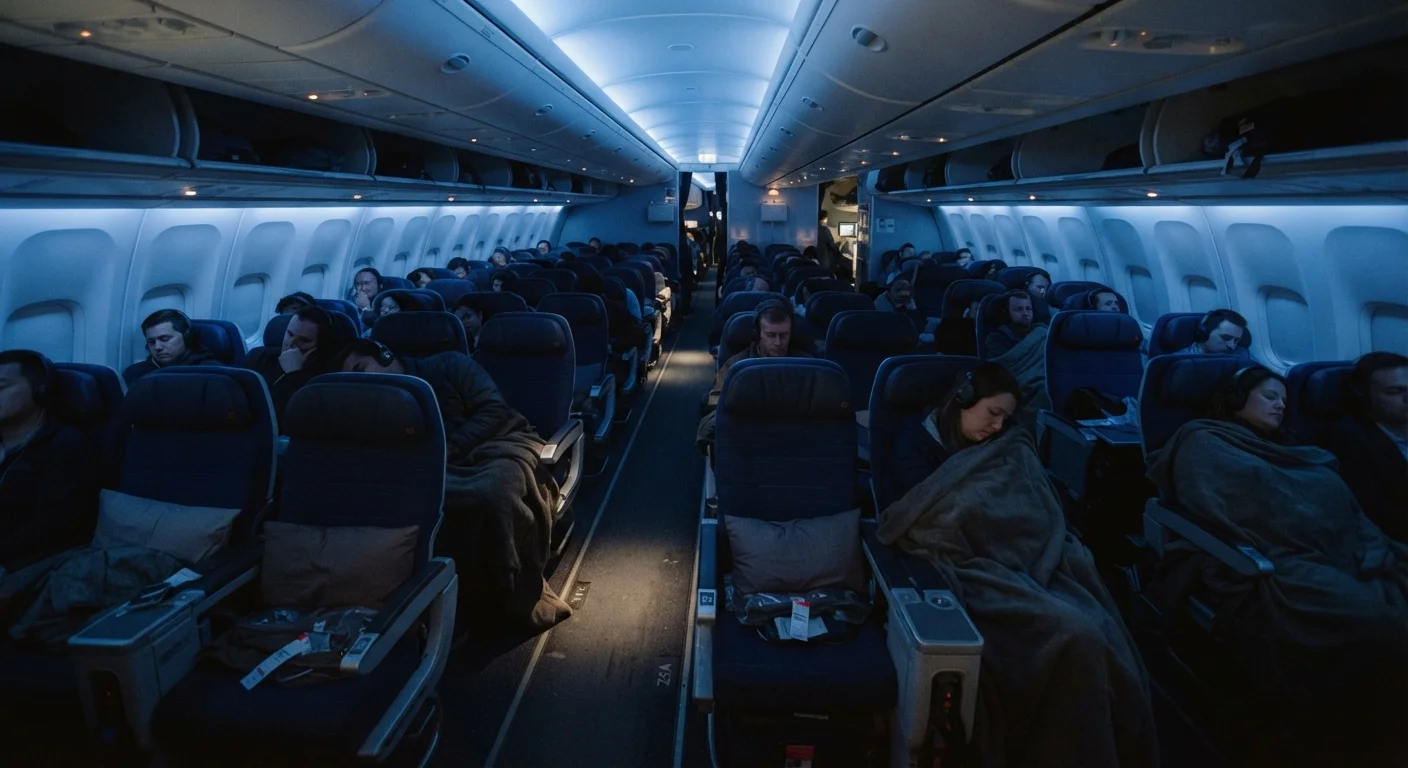
What's Actually Happening to Your Body at 35,000 Feet
Flying is physiologically unusual. The cabin environment aboard a commercial aircraft differs from nearly any other space you regularly inhabit - lower humidity, reduced atmospheric pressure, sustained vibration, and limited movement combine into a package of stressors most passengers don't fully anticipate.
Cabin humidity typically hovers between 10% and 20%, well below the 30-60% range considered comfortable for indoor environments. At that level, mucous membranes in the nose, throat, and eyes dry out - sometimes producing a scratchy throat or eye irritation that travelers mistake for illness. The solution isn't complicated: consistent hydration throughout the flight, not a large drink at boarding.
Cabin pressure adds another layer. At cruising altitude, most aircraft cabins are pressurized to an equivalent of roughly 6,000-8,000 feet above sea level. This slight reduction in available oxygen isn't dangerous for healthy adults, but it does mean your blood carries marginally less oxygen per breath. For passengers with underlying cardiac or respiratory conditions, this distinction matters - consult a healthcare provider before flying if relevant.
10-20%
Typical cabin relative humidity
Aviation medical literature consistently reports cabin humidity well below the 30-60% range recommended for indoor comfort.
~8,000 ft
Equivalent pressure altitude in most cabins
Most commercial aircraft maintain cabin pressurization equivalent to 6,000-8,000 feet above sea level during cruise, per standard aerospace engineering parameters.
80-85 dB
Approximate in-flight cabin noise level
Sustained noise at this level - comparable to heavy road traffic - is a documented stressor that impairs sleep quality and elevates cortisol.
The Circulation and Posture Problem Nobody Talks About Enough
Economy seating places the body in a sustained semi-reclined position with hips and knees bent at angles that restrict blood flow in the lower legs. Over a short flight, that's a manageable inconvenience. Over several hours, it becomes a genuine circulatory concern.
The combination of immobility and reduced cabin pressure slows venous return - the process by which blood travels back up the legs toward the heart. This is the same mechanism that makes DVT a recognized risk on long-haul flights, particularly for passengers with pre-existing risk factors such as recent surgery, pregnancy, or clotting disorders.
For most healthy travelers, the practical countermeasure is simple: move. Walking the aisle, ankle circles in your seat, and standing periodically all help maintain circulation. Compression hosiery is commonly recommended for passengers who are higher-risk or on very long flights - though the right approach for your individual situation is worth discussing with a clinician.
Posture is a separate but related issue. Slumping for hours compresses spinal discs and loads the neck and shoulder muscles in ways that compound fatigue. A lumbar support - even a rolled jacket - can reduce lower back strain on extended flights. For evidence-based strategies on posture, sleep positioning, and more, see our guide to long-haul flight comfort.
Move Before You Have To
Don't wait until your legs feel stiff to get up and walk the aisle. Set an informal schedule - roughly once every 60 to 90 minutes on longer flights. Ankle rotations and calf raises in your seat between walks keep blood moving without requiring a full aisle trip. Small, consistent movement is more effective than a single long stretch near landing.
Noise, Light, and Why You Wake Up More Exhausted Than You Expect
Sustained engine noise in a commercial aircraft typically registers around 80-85 decibels - comparable to a busy city street. That level of background noise triggers a low-grade stress response in most people, elevating cortisol and making genuine sleep harder to achieve even when you feel like you're resting.
Artificial cabin lighting - often bright overhead LEDs that cycle without regard for destination time zones - compounds the problem. Light is among the most powerful regulators of the body's internal clock, and exposure to it at the wrong phase of your circadian rhythm delays sleep onset and reduces sleep quality. This is why travelers frequently feel foggy even after dozing for several hours on a red-eye. Understanding this distinction helps clarify why jet lag and travel fatigue are two separate problems requiring different recovery approaches.
Noise-reducing earplugs or active noise-cancelling headsets meaningfully reduce the cognitive load of sustained engine drone. An eye mask blocks ambient light from screens and overhead panels. These aren't luxury items - they address real, documented physiological disruptions. When packing for any flight, these belong near the top of the list; our resource on packing strategies frequent travelers rely on covers how to fit them into a streamlined carry-on.
Applying This Knowledge Before You Board
The most effective interventions for cabin discomfort are largely behavioral and low-cost. They require awareness and planning more than any specific purchase. Arriving at the gate already well-hydrated is more effective than trying to recover mid-flight. Booking a seat with extra legroom - or simply choosing an aisle seat to enable movement - matters more than most in-flight accessories.
Understanding what's driving your discomfort also prevents misattribution. The dry throat that appears on a morning flight isn't necessarily the start of a cold; the bloating after a meal at altitude isn't necessarily dietary; the fatigue after a short overnight flight isn't necessarily the result of poor sleep habits. These are expected physiological responses to an unusual environment. Treating them as such leads to more targeted, proportionate responses.
Travel carries costs beyond the financial - the physical toll is real and often underestimated. Just as travelers should account for hidden financial costs that inflate trip budgets, they should plan for the hidden physical costs that inflate recovery time at the destination.
Frequently Asked Questions
Flight fatigue is a distinct phenomenon from jet lag. Low cabin humidity, reduced oxygen levels, noise, and uncomfortable posture all tax the body over hours of travel. If you didn't cross many time zones, you're likely experiencing travel fatigue rather than a circadian disruption. The <a href="/travel-smarter/travel-safety-comfort/jet-lag-vs-travel-fatigue-two-different-problems-two-different-fixes">difference between jet lag and travel fatigue</a> has meaningful implications for how you recover.
Modern commercial aircraft use HEPA filtration systems that remove the vast majority of airborne particles, including bacteria and viruses. The air in most jets is a mix of fresh outside air and recirculated, filtered cabin air. The main concern is very low humidity - not contamination.
Pressure changes during ascent and descent cause the air trapped in the middle ear to expand or contract. The Eustachian tube normally equalizes this pressure, but it can struggle - especially if you're congested. Swallowing, yawning, or using the Valsalva maneuver (gently exhaling against closed nostrils) typically helps.
There's no universal prescription, but general guidance suggests drinking water consistently throughout the flight rather than waiting until you feel thirsty. Avoid excess caffeine and alcohol, which have diuretic effects and compound the dehydrating conditions of the cabin. Thirst cues can lag behind actual hydration needs.
Prolonged immobility is a known contributing factor for deep vein thrombosis (DVT), particularly in passengers with other risk factors. Regular movement, leg exercises in your seat, and staying hydrated are commonly recommended precautions. Consult a healthcare professional if you have personal risk factors before flying long-haul.
Sustained low-frequency engine noise - typically around 85 decibels - is a genuine stressor that elevates cortisol and impairs rest. Active noise-cancelling technology reduces this background drone effectively. Even without it, earplugs meaningfully reduce noise exposure and can improve sleep quality on longer flights.
The content provided on our blog site traverses numerous categories, offering readers valuable and practical information. Readers can use the editorial team’s research and data to gain more insights into their topics of interest. However, they are requested not to treat the articles as conclusive. The website team cannot be held responsible for differences in data or inaccuracies found across other platforms. Please also note that the site might also miss out on various schemes and offers available that the readers may find more beneficial than the ones we cover.