

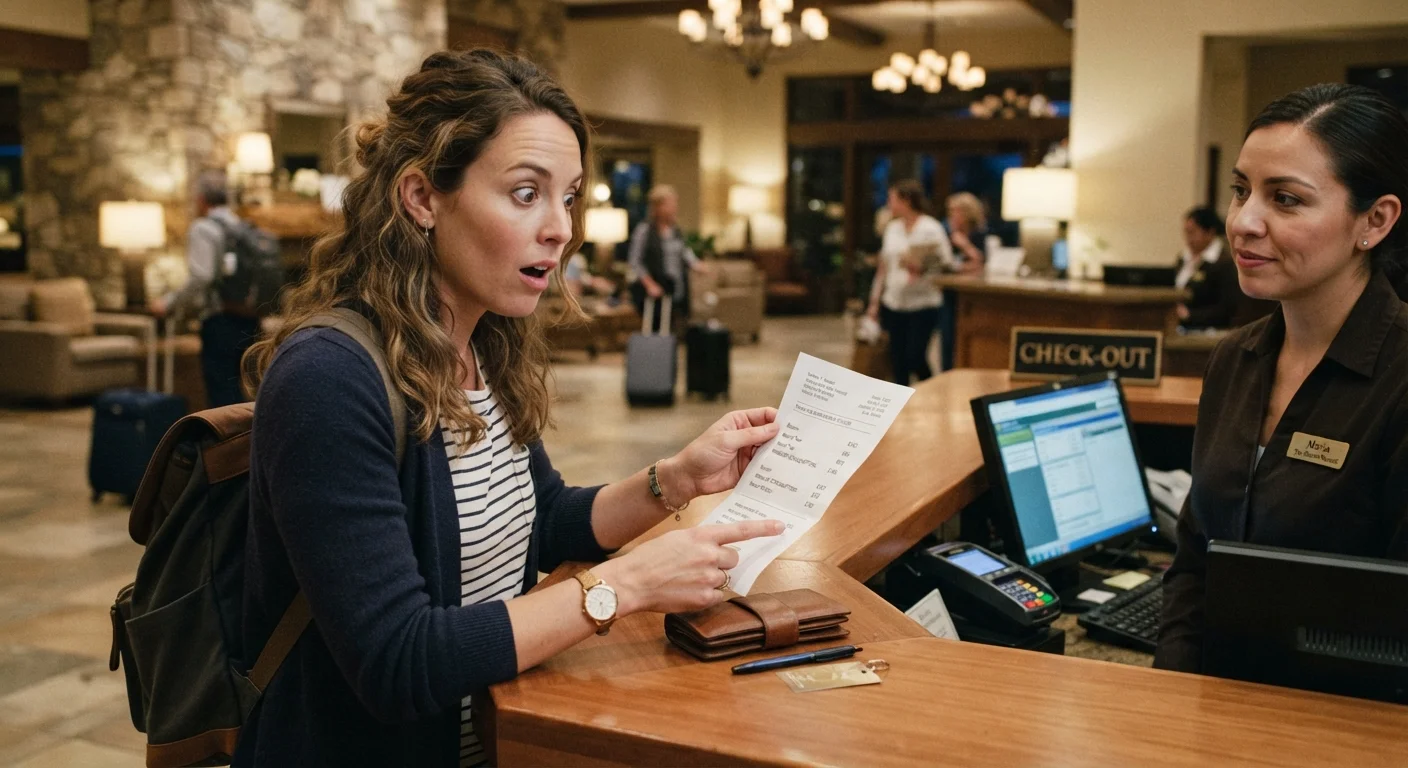
Why These Costs Keep Catching Travelers Off Guard
The listed price of a flight or hotel room is a starting point, not a final number. Yet most travelers build mental budgets around advertised rates and then absorb a series of small shocks during and after the trip - resort fees at check-out, bag fees at the gate, a currency conversion markup on every foreign purchase. Individually, each feels manageable. Collectively, they can add 20-30% to what you thought you'd spend.
The pattern isn't accidental. Pricing in travel is heavily segmented: airlines, hotels, and rental companies have learned that consumers comparison-shop on headline rates, so ancillary charges are disclosed separately and later. Knowing this dynamic is the first step to building a budget that actually holds.
Before you finalize any itinerary, see our trip planning essentials hub for a structured approach to organizing all the moving pieces - including cost categories that are easy to miss.
$30-$50+
Typical daily resort fee at major U.S. hotel properties
Many Las Vegas, Miami, and Hawaii properties charge mandatory resort or destination fees on top of the room rate, regardless of whether guests use the included amenities.
~3%
Average foreign transaction fee charged by U.S. credit cards
Cards without foreign transaction fee waivers apply this surcharge to every purchase made in a foreign currency, which compounds quickly on longer trips.
15-25%
Standard U.S. tipping range for restaurant service
In cities and tourist-heavy areas, gratuity is often pre-added to bills at restaurants, tours, and hotel services - meaning double-tipping is a common and costly mistake.
The Most Common Hidden Costs - and How to Account for Them
The mistakes below represent the categories where travelers most reliably underestimate expenses. Each one is avoidable with a small amount of upfront research - the kind that takes 10 minutes before booking and saves real money over the course of a trip.
Ignoring mandatory hotel resort or destination fees when comparing rates.
Why it happens: Booking platforms often display the base nightly rate prominently and disclose mandatory fees only on a later confirmation screen or in fine print.
Underestimating baggage and seat selection fees on flights.
Why it happens: Travelers focus on the fare itself, then treat ancillary fees as optional - until they're standing at the airport with no choice but to pay.
Accepting dynamic currency conversion at foreign ATMs and point-of-sale terminals.
Why it happens: The option to pay in dollars sounds convenient and familiar, so many travelers select it without realizing it triggers a worse exchange rate controlled by the merchant or ATM operator.
Failing to budget for tipping across all service categories.
Why it happens: Travelers plan for meals but overlook gratuities for hotel housekeeping, tour guides, airport porters, rideshare drivers, and resort staff - which accumulates into a meaningful unplanned expense.
Overlooking ground transportation costs between airport and accommodation.
Why it happens: Travelers price the flight and hotel but assume getting between them will be cheap or straightforward, only to encounter surge pricing, limited transit options, or long taxi queues.
Treating travel insurance, visa fees, and entry taxes as afterthoughts.
Why it happens: These costs don't appear in booking flows for flights or hotels, so they're easy to forget until a visa application deadline or check-in requirement surfaces.
Read the Fine Print Before You Book
Hotel resort fees and airline ancillary charges are legal, disclosed costs - but they're often buried in terms or revealed only at checkout. The advertised price is rarely the price you'll pay. Always search for the property's mandatory fee schedule and an airline's baggage fee table before finalizing any reservation.
Road trippers face a parallel version of this problem. Fuel is the most visible cost, but tolls, wear-and-tear, overnight parking, and roadside meals add up fast. The full cost breakdown of a road trip beyond the gas pump applies the same line-item discipline to driving trips.
Dynamic Currency Conversion Is Almost Never in Your Favor
When a foreign ATM or card terminal offers to charge you in U.S. dollars instead of local currency, it's applying its own exchange rate - typically 3-8% worse than your card issuer's rate. Always choose to pay or withdraw in the local currency and let your bank handle the conversion. For a deeper look at this and related financial risks abroad, see how to protect your money while traveling.
If you're still in the planning stage and want a systematic way to capture all of these categories before you book, the travel budgeting from the ground up walkthrough is a practical starting point - no finance background required.
The content provided on our blog site traverses numerous categories, offering readers valuable and practical information. Readers can use the editorial team’s research and data to gain more insights into their topics of interest. However, they are requested not to treat the articles as conclusive. The website team cannot be held responsible for differences in data or inaccuracies found across other platforms. Please also note that the site might also miss out on various schemes and offers available that the readers may find more beneficial than the ones we cover.