

Why Your Packing System Matters More Than Your Bag
Most travelers focus on which bag to buy. Frequent travelers know the bag is secondary - the system inside it is what determines whether a trip starts smoothly or with a frantic repack at the airport curb. A repeatable packing process reduces decision fatigue before departure and makes retrieving items mid-trip far less disruptive.
The core principle behind effective packing is intentionality: every item should earn its place based on a specific planned use. If you can't name when you'll need something, it probably doesn't belong in the bag. This mindset pairs well with the pre-trip planning checklist approach, where you confirm your itinerary's demands before opening your suitcase.
“The best travelers I know don't pack for every possibility - they pack for the most likely 80% and trust themselves to handle the rest.”
— Rolf Potts, Travel writer and author of 'Vagabonding'
Core Packing Techniques That Deliver Results
These aren't travel hacks - they're established methods that hold up across trip types, climates, and bag sizes.
Roll clothes instead of folding them flat
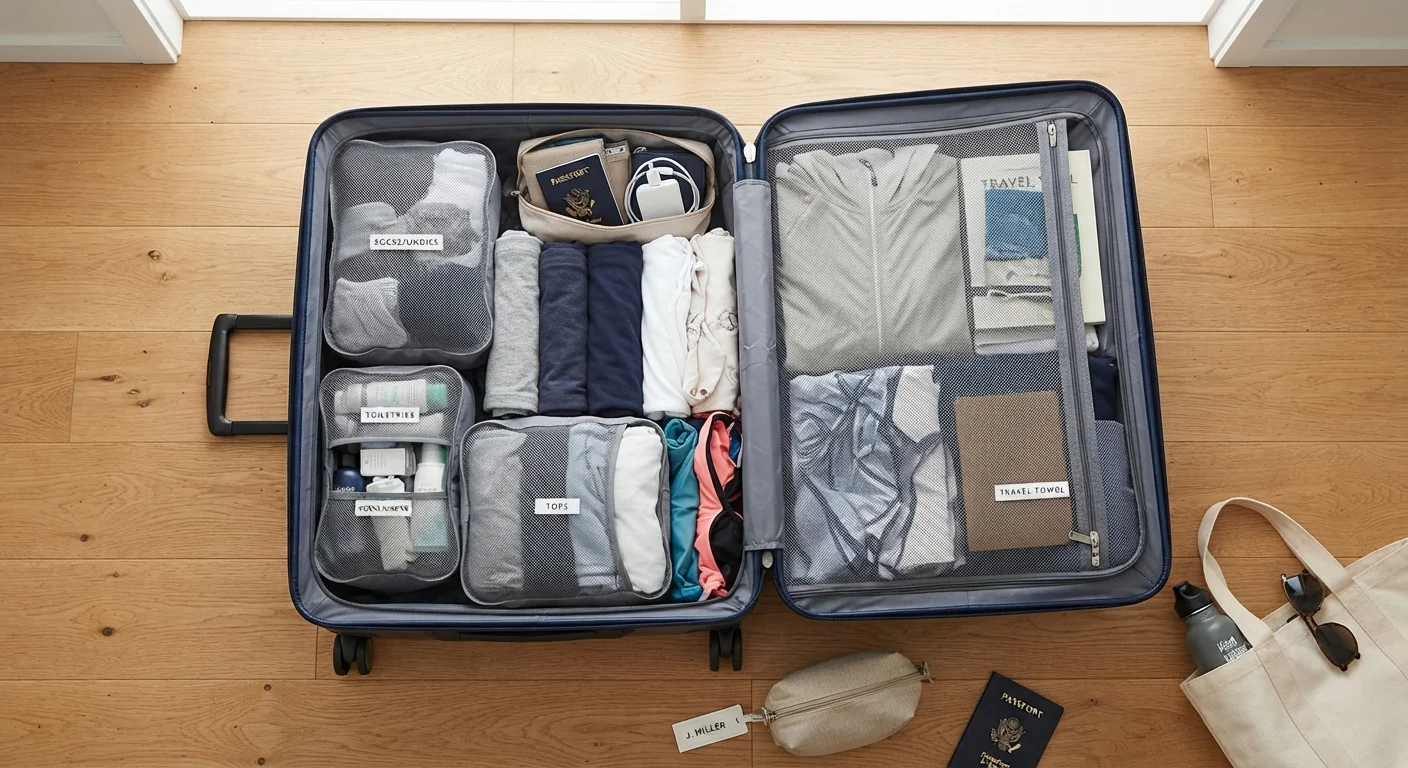
Rolling reduces the surface area exposed to compression, which means fewer deep wrinkles in lightweight fabrics. It also makes visual inventory easier - you can see every item without digging. Tightly rolled garments fill dead space more efficiently than stacked folds.
Use packing cubes to segment your bag by category
Packing cubes transform an open bag into organized compartments, eliminating the hunt-and-dump cycle at every hotel. They also compress soft items slightly and make repacking after laundry much faster. Consistent color or size coding across trips builds muscle memory.
Build your packing list around your itinerary, not your wardrobe
Packing from your wardrobe leads to overpacking because you're choosing from abundance. Packing from your itinerary forces specificity - you're answering 'what will I actually do on Tuesday?' This approach also helps you plan outfit versatility before you open the closet. It pairs naturally with building a structured itinerary.
Apply the one-bag philosophy as a discipline, not a rule
Carrying only what fits in a single personal item or carry-on removes checked baggage fees, wait times at carousels, and the risk of lost luggage. More practically, it forces you to pack versatile items and make real decisions about need versus comfort. See also the packing light framework for a structured approach to cutting down without going without.
Wear your heaviest items on travel day
Boots, heavy jackets, and structured blazers weigh down a bag and consume volume. Wearing them in transit puts that weight on your body rather than on a scale, which matters if you're working within airline weight limits. It also protects bulky items from compression damage.
Quick Moves You Can Make Before Your Next Trip
Some improvements to your packing routine don't require buying anything or overhauling your approach - they just require doing a few things in the right order.
If you're also thinking through in-flight comfort, see our guide on hidden air travel comfort drains - what you pack in your personal item matters as much as what goes in your checked bag.
Adapting Your Strategy by Trip Type
No single packing formula fits every journey. A three-day business trip has different constraints than a two-week international circuit. Understanding the variables helps you calibrate without starting from scratch each time.
- Short domestic trips (1-4 nights): A carry-on or personal item only is almost always achievable. Use the rolling method for clothes and keep toiletries in a reusable quart-size bag. Wear your bulkiest shoes on travel day.
- Extended international travel (2+ weeks): Laundry access changes your math significantly. If your accommodations offer laundry, pack for 5-7 days and plan one mid-trip wash. This is where the one-bag philosophy scales effectively.
- Outdoor or adventure travel: Gear-heavy trips may require checked luggage, but the same organizational logic applies - group items by function and use compression sacks for bulky layers.
For travel that involves significant flexibility in your schedule, the open-ended itinerary guide explores how looser plans affect what you need to carry. And if you're putting together a health kit for the road, the personal travel health kit guide walks through what's commonly recommended by travel medicine professionals.
~$35
Average one-way domestic checked bag fee
Major U.S. carriers commonly charge between $30-$40 per checked bag each way as of recent years, making carry-on travel a meaningful cost reducer for frequent flyers.
1 in 170
Bags mishandled per passenger journey
According to SITA's Baggage IT Insights reports, global baggage mishandling rates have improved but still affect millions of travelers annually - a concrete reason to carry on when feasible.
The content provided on our blog site traverses numerous categories, offering readers valuable and practical information. Readers can use the editorial team’s research and data to gain more insights into their topics of interest. However, they are requested not to treat the articles as conclusive. The website team cannot be held responsible for differences in data or inaccuracies found across other platforms. Please also note that the site might also miss out on various schemes and offers available that the readers may find more beneficial than the ones we cover.