

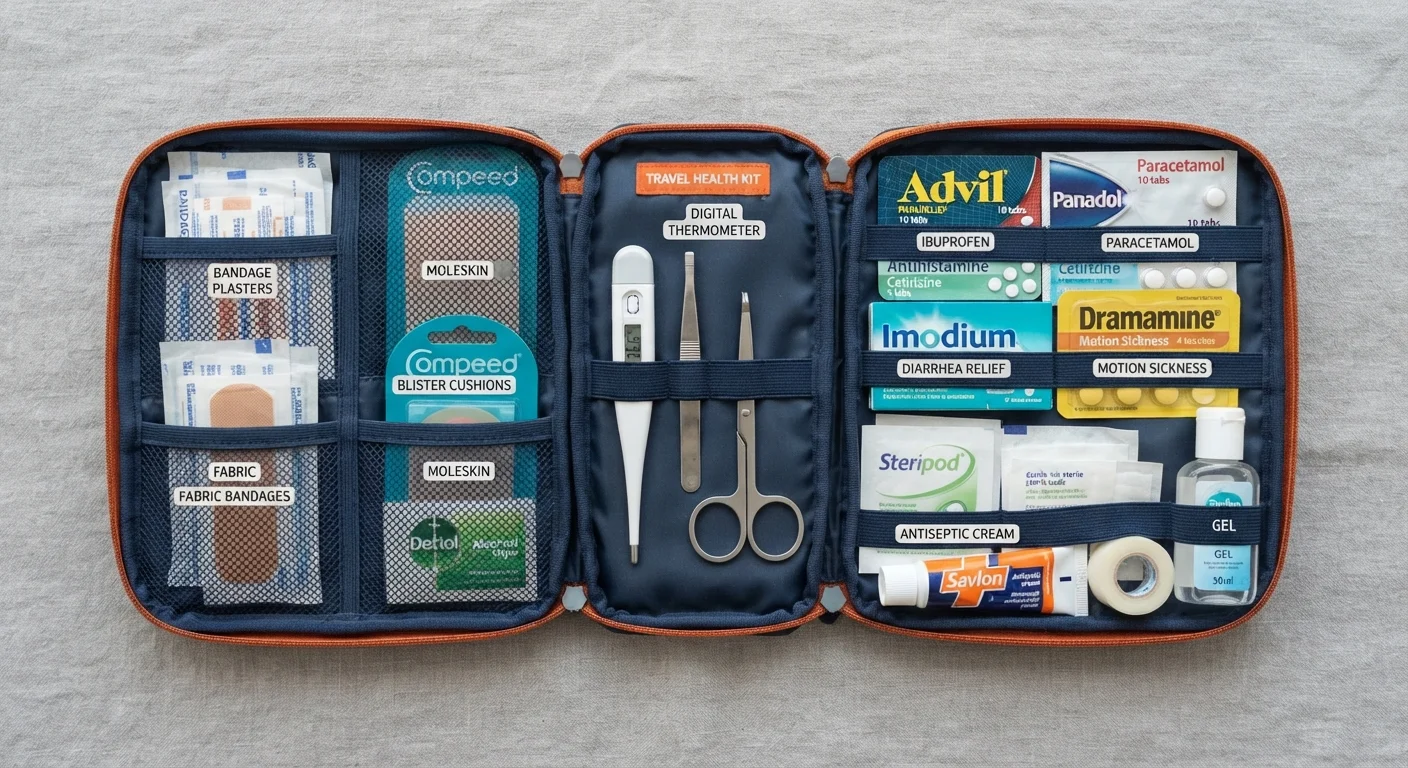
Summary
22 items · 30-60 minutes to assemble
Why a Personal Health Kit Belongs in Every Bag
Minor health disruptions - a sudden headache, an upset stomach, a painful blister - are among the most common reasons travelers cut days short or miss planned activities. A thoughtfully assembled personal health kit puts basic remedies within arm's reach before a small problem becomes a trip-derailing one.
Abroad, finding the right over-the-counter product is rarely straightforward. Brand names differ by country, packaging is in another language, and pharmacy hours may not match your timing. Packing the items you already trust removes that friction entirely.
This checklist covers what travel medicine professionals commonly suggest including, organized by category. Your specific destination, trip length, and any existing health conditions should always shape your final selections. For destination-specific vaccine and medication guidance, verify requirements with your doctor or a travel medicine clinic before you leave - this checklist is a general framework, not personalized medical advice.
For a broader pre-departure review, see the pre-trip safety audit that covers documents, emergency contacts, and more alongside health preparation.
Wound Care & Skin Protection
Pain, Fever & Allergy Relief
Digestive Health
Prescription & Condition-Specific Items
Tools & Supporting Supplies
Packing and Carrying Your Kit Smartly
How you pack the kit matters nearly as much as what goes in it. Liquids and gels - including antibiotic ointment and liquid antacids - must comply with TSA's 3-1-1 rule in carry-on bags, so consider solid or tablet alternatives where possible. Keep prescription medications in their original labeled containers to simplify security screening and customs declarations.
Customs Rules Vary - Check Before You Pack
Some medications that are legal over the counter in the United States are controlled or prohibited in other countries. Codeine-based pain relievers, certain ADHD medications, and some sleep aids fall into this category. Before traveling internationally, verify the legal status of every medication you plan to bring with the destination country's embassy or consulate - and carry a doctor's letter for any prescription item.
A compact, zippered pouch dedicated to health supplies keeps everything findable in a hurry. Label any unmarked items clearly. Store the kit in your carry-on, not checked luggage - if your bag is delayed, you want your essentials with you.
For travelers who are already thinking carefully about what fits in the bag, the packing light framework offers a structured approach to cutting weight without cutting necessities. If you're building this kit as part of a larger pre-trip workflow, the pre-trip planning checklist covers the full picture from visa verification to spending limits.
Once your kit is packed, think through what happens if something more serious arises. The guide to planning for medical emergencies abroad walks through the contingency framework that should sit behind any health kit - knowing where to go, who to call, and what your insurance covers.
A Kit Is Not a Substitute for Insurance or Professional Care
A personal health kit is designed for minor, self-manageable ailments. It does not replace travel health insurance, emergency evacuation coverage, or in-person medical evaluation. If you experience symptoms that are severe, worsening, or unfamiliar - seek professional medical care immediately. Confirm your insurance coverage for international medical situations before you depart.
This article is for general informational purposes only and does not constitute medical advice. Consult a qualified healthcare professional or travel medicine specialist to determine the right medications and supplies for your specific health needs and travel destination.
The content provided on our blog site traverses numerous categories, offering readers valuable and practical information. Readers can use the editorial team’s research and data to gain more insights into their topics of interest. However, they are requested not to treat the articles as conclusive. The website team cannot be held responsible for differences in data or inaccuracies found across other platforms. Please also note that the site might also miss out on various schemes and offers available that the readers may find more beneficial than the ones we cover.