

Summary
24 items · 45-90 minutes
Why a Safety Audit Is Worth Doing Before Every Trip
Most travel disruptions aren't random - they're predictable gaps that a focused pre-departure review would have caught. An expired document, a phone with no international plan, or a destination under an elevated travel advisory are all discoverable before you leave home. The goal of a pre-trip safety audit isn't to create anxiety; it's to replace uncertainty with a clear, manageable picture of what's in order and what still needs attention.
This checklist covers five core areas: documents and identity, health and medical prep, emergency contacts and communication, digital security, and destination safety awareness. It applies equally to domestic road trips and international travel, though international trips will require attention to a broader set of items. If you're driving to your destination, pair this with the vehicle pre-trip checklist to cover both personal and mechanical readiness.
Work through this audit at least a week before departure - not the night before. Several items, such as visa applications, health consultations, and insurance reviews, can require days or weeks to resolve. For broader trip-planning context, the Trip Planning Essentials hub is a useful companion resource.
U.S. State Department STEP Program
Allows U.S. travelers to register international trips so the nearest embassy can contact them during emergencies or crises.
Government Travel Advisory Portal (travel.state.gov)
Provides official, up-to-date safety advisory levels and destination-specific warnings for countries worldwide.
Authenticator App (e.g., any TOTP-based app)
Generates time-based one-time codes for two-factor authentication, significantly reducing account compromise risk while traveling.
Secure Cloud Storage
Stores password-protected scanned copies of travel documents accessible from any internet-connected device.
VPN Application
Encrypts your internet connection when using untrusted public Wi-Fi networks at airports, hotels, and cafés.
Travel Health Insurance Policy
Covers emergency medical treatment, evacuation, and sometimes trip cancellation costs that standard health plans may not cover abroad.
How to Use This Checklist
Each item in the checklist below is labeled by priority: must items are non-negotiable and should be completed before every trip; should items are strongly recommended and apply to most travelers; nice-to-have items are optional enhancements worth considering for longer or higher-risk journeys.
Work through each group sequentially, beginning with documents, since those issues carry the longest lead times. If you're traveling solo, pay particular attention to the emergency contacts section - the habits covered in our guide on solo travel safety complement this audit closely.
Medical Coverage Gaps Are a Real Risk
Many standard U.S. health insurance plans provide limited or no coverage for medical treatment outside the country. Before departing on any international trip, call your insurer directly and ask specifically what is covered abroad, including emergency evacuation. For trips where coverage is inadequate, a separate travel health policy may be worth considering - consult a licensed insurance professional about your options.
Documents & Identity
Health & Medical Prep
Emergency Contacts & Communication
Digital Security
Safety Awareness & Destination Research
Don't Rely on Memory Alone
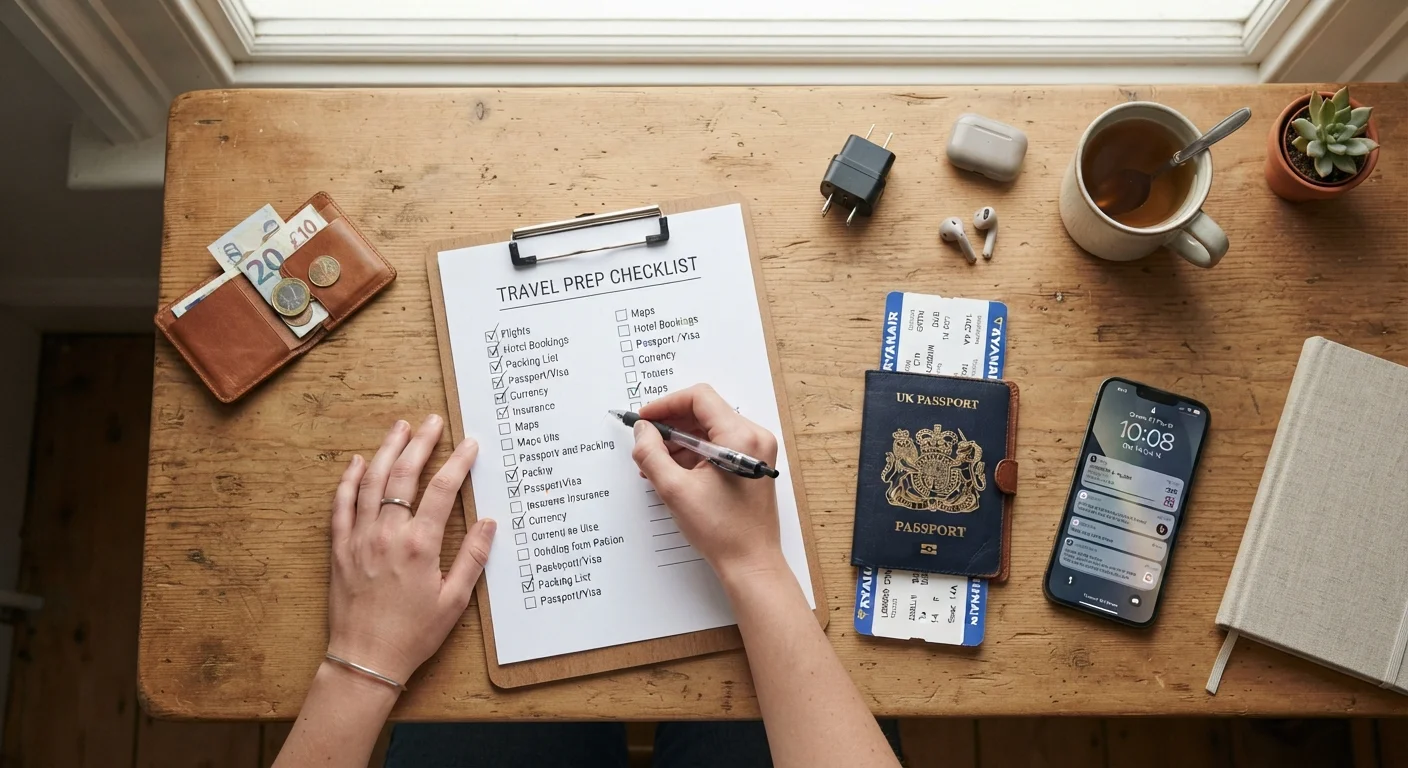
Even experienced travelers overlook critical details when packing under time pressure. Print or download this checklist and physically check off each item rather than running through it mentally. A missed item - like an expired passport or unchecked travel advisory - can derail an entire trip before it begins.
Verify Visa Rules Directly with Official Sources
Visa requirements, entry rules, and health documentation mandates can change without much public notice. Always verify current requirements through the destination country's official embassy or consulate website, not third-party travel blogs. The U.S. Department of State's country information pages are also a reliable starting point.
After the Checklist: A Few Final Checks
Once you've worked through all five groups, take a few minutes for two last tasks. First, confirm that your home contact has everything they need: a copy of your itinerary, your accommodation addresses and phone numbers, your travel insurance policy number, and a clear understanding of when to expect check-ins from you. Second, do a final digital sweep - log out of any accounts you won't need while traveling, update passwords if any feel overdue, and double-check that your VPN and authenticator apps are working correctly.
For deeper guidance on protecting your accounts and devices while on the road, see our article on digital security while traveling. And if your trip involves any international health considerations, our comparison of travel clinics vs. primary care doctors can help you choose the right pre-travel health consultation.
A completed audit won't guarantee a flawless trip - travel involves inherent unpredictability. But it will put you in a far stronger position to handle whatever comes up, because you'll have the documents, contacts, coverage, and information you need already in place.
The content provided on our blog site traverses numerous categories, offering readers valuable and practical information. Readers can use the editorial team’s research and data to gain more insights into their topics of interest. However, they are requested not to treat the articles as conclusive. The website team cannot be held responsible for differences in data or inaccuracies found across other platforms. Please also note that the site might also miss out on various schemes and offers available that the readers may find more beneficial than the ones we cover.