

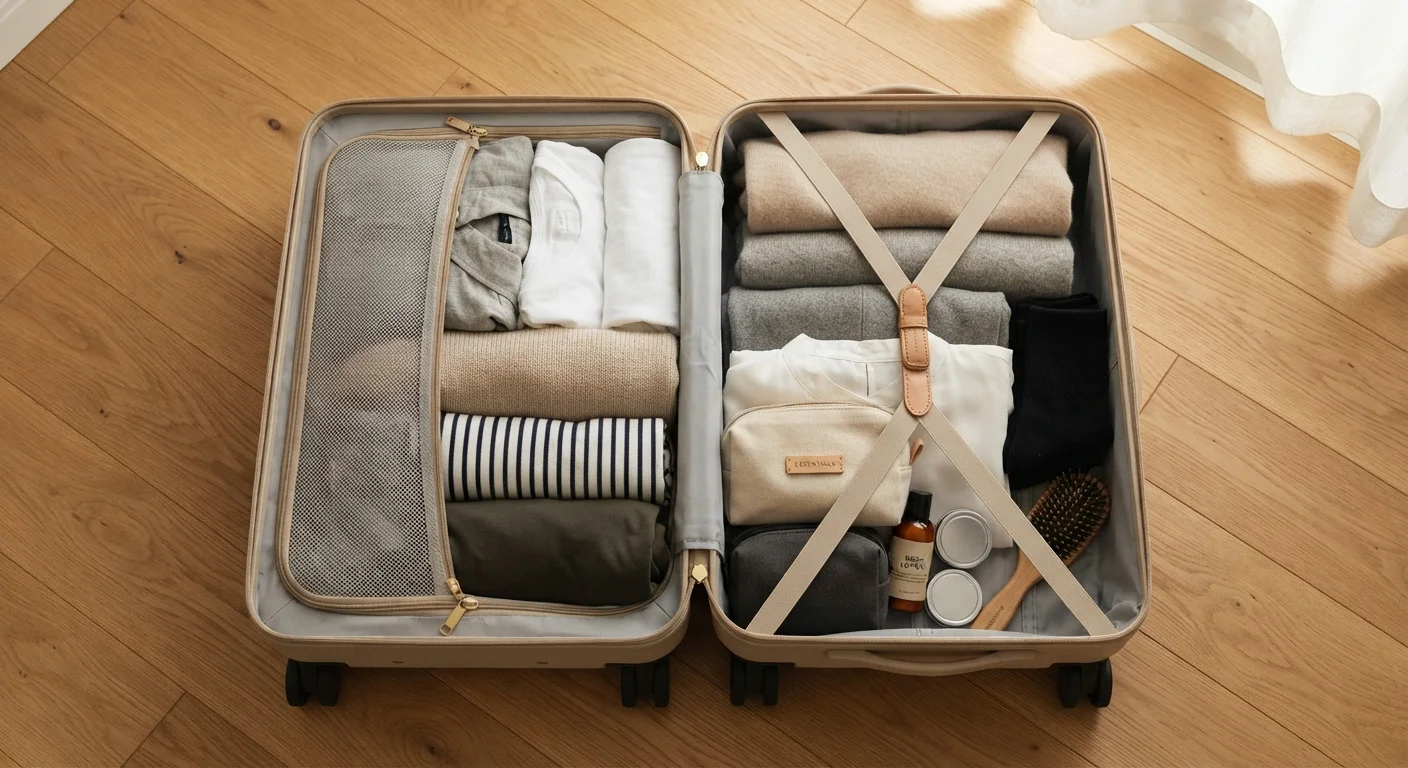
Why Packing Light Is a Financial and Logistical Decision
Checked baggage fees are a real and recurring cost. On domestic routes, a single checked bag can run $35-$45 each way on many carriers, and some international routes charge more - in both directions. A family of four checking one bag each on a round trip can spend $280 or more before arriving at the hotel. That's money that could fund two or three days of meals or a meaningful activity.
Beyond fees, a lighter bag changes how you move through a trip. No waiting at baggage claim. No risk of a lost bag disrupting your first day. Easier navigation on public transit, cobblestone streets, or overnight trains. The total trip cost framework most seasoned travelers use treats baggage costs as a line item worth reducing - and carry-on-only travel is one of the most reliable ways to do it.
This guide gives you a repeatable process, not a rigid packing list. Trips vary too much for one-size-fits-all item counts. What doesn't vary is the method for making deliberate, informed decisions about what earns space in your bag.
Build Your Packing List Before Opening the Closet
Writing out every item you intend to bring - before you start pulling things from shelves - forces deliberate choices rather than reflexive ones. Once the list is complete, cut it by 20% before you touch your bag. Items that appear only once on the list with no secondary use are the first to go.
What You Need Before You Start
The packing process works best when you treat it as a planning task rather than a last-minute chore. Gather your tools and set aside uninterrupted time - 30 to 90 minutes is realistic for most trips.
What you will need
Carry-on bag or travel backpack
Primary luggage that fits in the overhead bin or under the seat, eliminating checked-bag fees.
Packing cubes
Compress and organize clothing by category, making it easier to locate items without unpacking everything.
Kitchen or luggage scale
Verify your bag's total weight before the airport to avoid overweight fees.
Reusable travel-size containers (3.4 oz / 100 ml)
Decant only the volume of toiletries you need, reducing both weight and TSA liquid-restriction issues.
Wrinkle-resistant, quick-dry clothing
Fabrics that dry overnight and resist creasing enable laundry during the trip and reduce the total garment count needed.
For broader trip preparation beyond what you pack, the pre-trip planning checklist covers the full scope of what to confirm before you leave home, including documentation, currency, and health considerations.
Follow These Steps to Pack a Carry-On That Actually Works
The steps below walk you through a structured process - from defining what your trip actually requires to organizing for real-world use. Follow them in order; each step informs the next.
Check Airline Size and Weight Rules First
Carry-on dimensions and weight limits vary meaningfully between airlines and fare classes - a bag that flies free on one carrier may incur a gate fee on another. Always verify the specific allowances for every flight segment in your itinerary before you pack. Budget carriers in particular enforce these limits strictly at the gate.
Define your trip's activity profile
Before selecting a single item, map out the types of activities your itinerary actually contains - not the ones you imagine might happen. A beach-and-sightseeing week has very different requirements than a city business trip with one casual dinner. List each category (e.g., walking, formal, athletic, beach) and note how many days each applies. This prevents packing for hypothetical scenarios that rarely materialize.
Build a capsule clothing plan on paper
Using your activity profile, select a core set of 5-7 garments that can be mixed and matched across multiple outfits. Neutral colors (navy, grey, black, olive, white) combine more freely than bold prints or bright hues. Aim for each item to serve at least two different activity types. Write out specific outfit combinations before packing to confirm coverage without redundancy.
Apply the one-week rule with laundry built in
For trips longer than seven days, plan at least one laundry session rather than adding more clothing. Most destinations have laundromats, hotel laundry services, or sink-washing is viable for quick-dry fabrics. Planning a wash on day four of a ten-day trip effectively doubles your wardrobe without adding a gram to your bag. Factor in a small amount of travel laundry detergent or detergent sheets if you'll be hand-washing.
Audit and decant toiletries ruthlessly
Full-size toiletry bottles are one of the most common sources of unnecessary bag weight. Estimate how much of each product you'll realistically use over the trip's duration, then fill a reusable container to that volume only. Solid formats - shampoo bars, solid conditioner, solid sunscreen - bypass liquid restrictions entirely and are often lighter. Purchase items like shampoo or body wash at your destination if staying more than a week.
Pack and weigh before any editing
Pack everything on your list into the bag without editing as you go - get a complete picture first. Then place the bag on a scale and record the total weight. Compare it to your airline's carry-on weight limit (if applicable). If you're over the limit, return to your list and remove items by asking: does anything on this list have an exact duplicate function? Redundant items (two pairs of similar shoes, multiple chargers for the same device) are the fastest path to weight savings.
Organize for access, not just compression
A packed bag that requires a full unpack to find one item is functionally inefficient. Group items by use frequency: things needed daily (charger, toiletries, a layer) should be reachable without disturbing the rest. Packing cubes, a dedicated top pocket, or a consistent internal layout all support this. Organize once at home so the system is repeatable at every accommodation.
For additional packing philosophies - including rolling techniques and the one-bag approach - see packing strategies that frequent travelers rely on. And if you're preparing for a long-haul flight specifically, the evidence-based guide to long-haul flight comfort addresses what to keep in your personal item versus your overhead bag for a 10-plus-hour journey.
Common Pitfalls That Undermine Light Packing
Even travelers who follow a structured process frequently fall into a few predictable traps:
- Packing for emergencies that never occur. A formal outfit for an event that isn't on the itinerary, or rain gear for a forecast that shows zero precipitation, adds weight for a zero-probability scenario. Pack for what's planned.
- Doubling up on footwear. Shoes are heavy and bulky. Most trips are handled comfortably by two pairs at most - one for walking and one that can serve both casual and slightly dressier settings. A third pair almost never justifies the space.
- Ignoring the personal item. Most carriers allow both a carry-on and a personal item. A well-chosen daypack or tote as your personal item can carry your electronics, documents, and items needed during the flight - freeing your carry-on for clothing and toiletries only.
- Buying travel-size products retail instead of decanting. Pre-packaged travel-size items cost significantly more per ounce than filling your own containers from full-size products you already own.
Don't Rely on Buying Essentials at Your Destination
While pharmacies exist worldwide, specific medications, prescription items, and niche personal care products may not be available in the form or dosage you need. Pack those non-negotiable items - prescription drugs, medical devices, and allergy-critical products - regardless of weight savings. See the travel health kit guide for a structured approach to what belongs in your personal kit.
Getting packing light right is ultimately about alignment - between what your trip requires and what you actually bring. Revisit this process before each trip until the discipline becomes automatic.
The content provided on our blog site traverses numerous categories, offering readers valuable and practical information. Readers can use the editorial team’s research and data to gain more insights into their topics of interest. However, they are requested not to treat the articles as conclusive. The website team cannot be held responsible for differences in data or inaccuracies found across other platforms. Please also note that the site might also miss out on various schemes and offers available that the readers may find more beneficial than the ones we cover.