

What the Three Numbers Actually Mean
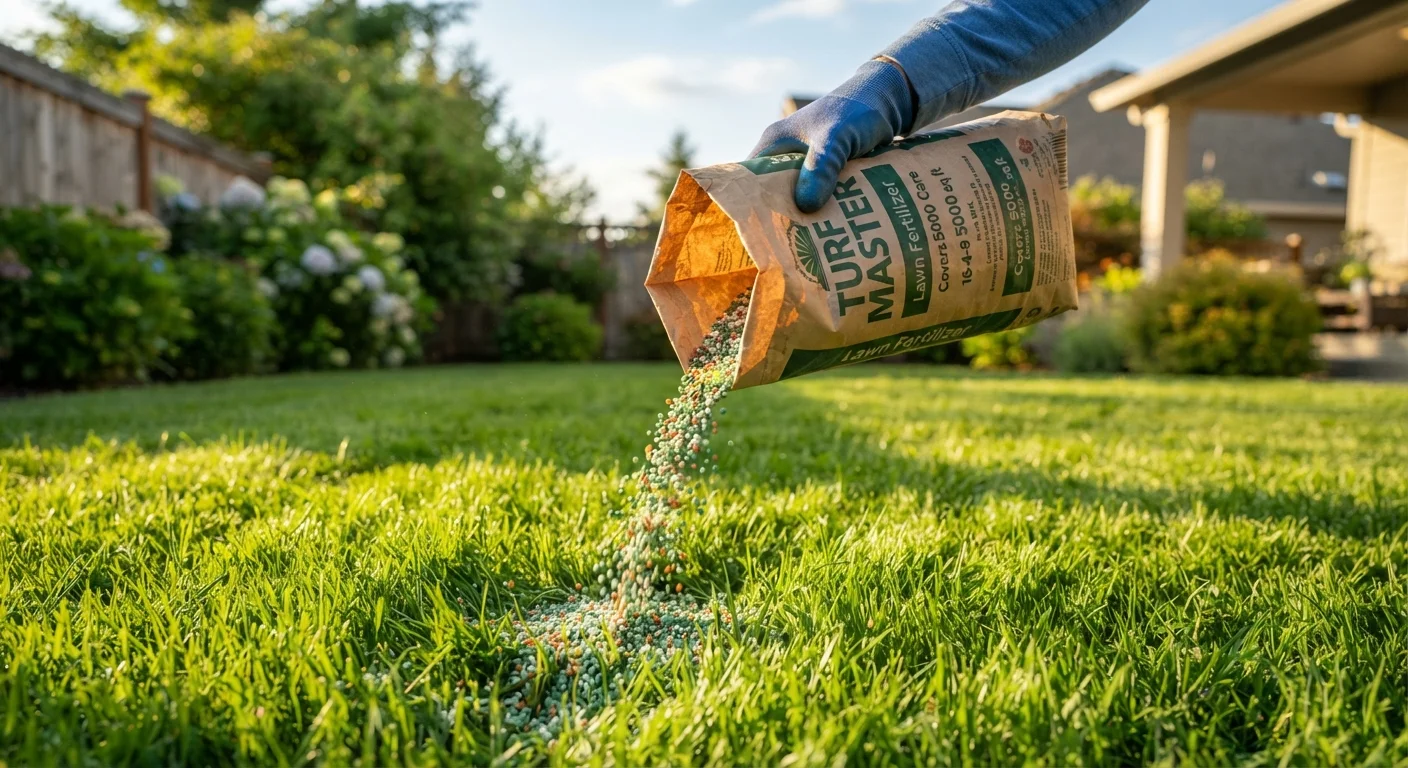
Pick up any fertilizer bag and you'll see a sequence like 32-0-10 or 16-4-8. These numbers, called the NPK ratio, are federally required disclosures - not marketing figures. They tell you precisely how much of each primary nutrient is packed into that product.
N - Nitrogen: The first number. Nitrogen is the engine of shoot and leaf growth. It's why a nitrogen-rich fertilizer turns a pale, slow-growing lawn dark green quickly. Grass consumes more nitrogen than any other nutrient, which is why this number tends to be the largest on lawn-specific products.
P - Phosphorus: The middle number. Phosphorus underpins cell division and root formation. It's especially valuable for seedlings and newly sodded areas establishing their root systems. Many soils in established yards already contain sufficient phosphorus, and in some states, phosphorus-containing fertilizers are restricted for environmental reasons.
K - Potassium: The third number. Often called "potash," potassium doesn't produce visible color changes, but it quietly strengthens cell walls, improves drought tolerance, and helps grass recover from foot traffic and disease. Think of it as the nutrient that builds a lawn's long-term resilience.
Secondary and Micronutrients
NPK covers the three primary macronutrients, but fertilizer labels may also list secondary nutrients like calcium, magnesium, and sulfur, as well as micronutrients such as iron and manganese. These aren't part of the NPK ratio but can matter in soils with specific deficiencies. Iron, for instance, can deepen green color without stimulating excess shoot growth - useful for lawns that look pale but don't need a growth surge.
Why Ratios Matter More Than Raw Numbers
A bag labeled 10-10-10 contains equal parts of all three nutrients - sometimes called a "balanced" fertilizer. But balanced doesn't automatically mean appropriate. Lawns have different nutritional priorities than vegetable gardens or flower beds, and applying the wrong ratio can waste money, burn grass, or overload soil with nutrients it doesn't need.
Most established cool-season grasses (like Kentucky bluegrass or tall fescue) benefit from high-nitrogen, low-phosphorus products, particularly in fall. Warm-season grasses (like Bermuda or Zoysia) often respond well to potassium-forward formulas during their active summer growth phase. A ratio with a higher third number - such as 15-0-15 - prioritizes that K-driven hardening without unnecessary phosphorus loading.
46%
Nitrogen content in pure urea fertilizer
Urea (46-0-0) is one of the most concentrated nitrogen sources available, illustrating why application rate precision matters - small measurement errors translate to large nutrient differences.
50%+
Of U.S. states with phosphorus fertilizer restrictions
According to reporting by lawn care researchers, more than half of U.S. states have enacted rules limiting or banning phosphorus-containing fertilizers on established lawns to protect waterways.
The best way to move beyond guesswork is a soil test, typically available through your local cooperative extension office. A test reveals exactly which nutrients are deficient and which are already adequate - so you only add what your lawn genuinely lacks. Our article on soil pH and nutrient availability explains how soil chemistry affects whether nutrients already present can even be absorbed by grass roots.
Common Fertilizer Scenarios and What to Reach For
Understanding the numbers lets you make informed choices based on your lawn's situation rather than relying on seasonal marketing labels.
Timing and application method also shape outcomes. Slow-release fertilizers (often indicated by terms like "sulfur-coated" or "polymer-coated" on the label) deliver nutrients gradually over weeks, reducing the risk of burn and runoff. Fast-release products act quickly but require more careful rate management. Always follow the application rate on the label - more is rarely better and can damage turf or leach into waterways.
For a complete lawn care picture, consider how fertilization fits alongside other practices. Lawn aeration can improve how efficiently fertilizer reaches grass roots, and organic mulching in garden beds can naturally reduce synthetic fertilizer needs over time.
Avoiding the Most Common Fertilizer Mistakes
Even with the right product, application errors undermine results. Over-application is the most frequent mistake - it can chemically burn grass blades, create uneven growth spurts, and send excess nutrients into storm drains and local waterways. Always calibrate your spreader and measure your lawn's square footage before applying.
Fertilizing at the wrong time is equally problematic. Feeding cool-season grasses in the heat of summer, for example, stresses rather than strengthens them. Similarly, fertilizing right before heavy rain increases the chance that nutrients run off before the soil can absorb them.
Test Before You Fertilize
A basic soil test - typically inexpensive through your local cooperative extension service - removes the guesswork entirely. It tells you which nutrients are deficient, which are excessive, and what ratio to target. This one step can save you from buying the wrong product and prevent unintentional environmental harm from over-application.
Reading fertilizer labels involves similar analytical thinking to decoding other product labels. If you've explored nutrition label literacy, you'll notice the same principle applies here: the numbers are standardized disclosures designed to inform, not to sell - once you understand what they measure, you're in control of the decision.
Frequently Asked Questions
A 10-10-10 fertilizer contains 10% nitrogen, 10% phosphorus, and 10% potassium by weight. It's considered a balanced fertilizer, but "balanced" doesn't mean ideal for every lawn. Most established grass lawns need more nitrogen than phosphorus, so this ratio isn't always the most efficient choice.
For most lawns, the first number - nitrogen - has the greatest visible impact on grass health and color. However, the right balance depends on your soil's existing nutrient levels and your grass type, which is why a soil test gives you the most accurate answer.
Yes. Over-fertilizing can chemically burn grass, create uneven growth, and cause excess nutrients to run off into waterways. Always follow the application rate on the label and calibrate your spreader for your lawn's square footage.
Timing depends on your grass type. Cool-season grasses generally benefit most from fall fertilization. Warm-season grasses are best fed during their active summer growth period. Avoid fertilizing during drought stress or right before heavy rain.
Not always. Many established lawns already have adequate phosphorus in the soil, and adding more can contribute to water pollution. A soil test will tell you whether phosphorus supplementation is genuinely needed. Some states restrict its use on established turf.
Slow-release fertilizers deliver nutrients gradually over weeks, reducing burn risk and runoff. Fast-release products act quickly but require careful rate management. The best choice depends on your goals, grass type, and how closely you can monitor application.
The content provided on our blog site traverses numerous categories, offering readers valuable and practical information. Readers can use the editorial team’s research and data to gain more insights into their topics of interest. However, they are requested not to treat the articles as conclusive. The website team cannot be held responsible for differences in data or inaccuracies found across other platforms. Please also note that the site might also miss out on various schemes and offers available that the readers may find more beneficial than the ones we cover.