

Our Verdict
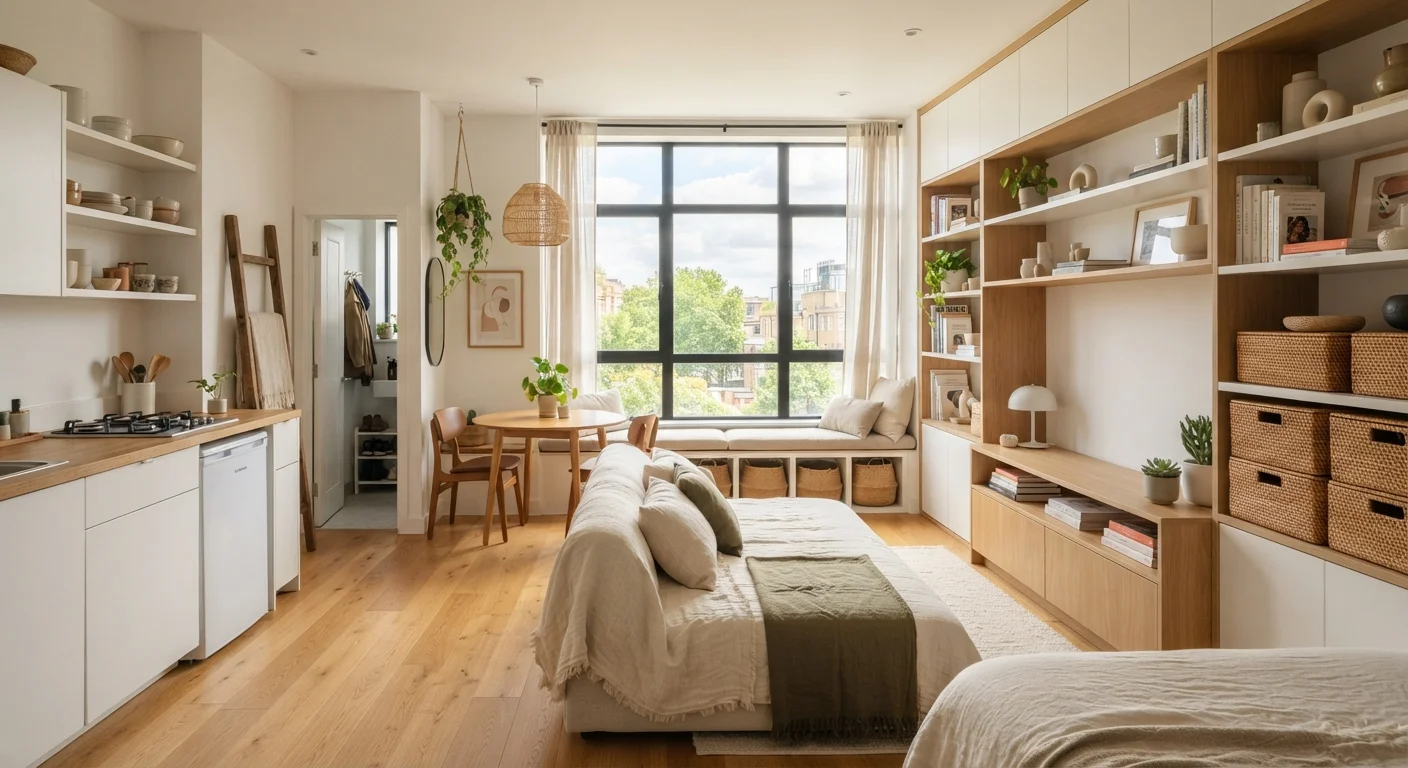
Organizing a small space is genuinely different from organizing a large one - it demands more intentionality, more frequent editing of possessions, and smarter furniture choices. The constraints can actually produce tidier, calmer homes, but they also require ongoing maintenance and honest decision-making about what truly belongs in your space.
Anyone living in a studio, apartment, or compact home who wants practical, sustainable organization rather than temporary fixes.
Why Small Spaces Demand a Different Mindset
In a larger home, a cluttered corner is an inconvenience. In a 500-square-foot apartment, it can make the entire space feel dysfunctional. That shift in consequence is the core reason small-space organization isn't just scaled-down conventional organizing - it's a fundamentally different discipline.
Every object competes for limited real estate. Storage must be earned, not assumed. And because there's no spare bedroom or underused basement to absorb overflow, decisions about what stays and what goes carry genuine weight. The upside is that these constraints can push residents toward leaner, more intentional living - which many people find less stressful once the transition is made.
If you're approaching your whole home with fresh eyes, the room-by-room organization roadmap provides a useful broader framework. But for smaller spaces, the principles below deserve particular attention.
The Real Advantages of Organizing in Tight Quarters
Small spaces impose a kind of natural discipline that larger homes don't. Here's where that works in your favor:
Clutter becomes immediately visible and addressable
In a small space, disorder is hard to ignore, which often motivates faster clean-up habits. Many small-space residents report that maintaining tidiness becomes more instinctive over time.
Cleaning and maintenance take less time
Fewer square feet means less surface area to dust, vacuum, and organize. This can translate to meaningful time savings each week.
Forces intentional purchasing decisions
When there's no room for impulse buys, spending habits often improve naturally. Many people find that living in a smaller space aligns with broader goals around simplifying possessions and budgets.
Easier to establish and maintain organizing systems
Fewer rooms and zones mean fewer systems to build and maintain. A well-designed small space can reach a stable, organized state more quickly than a large home with many rooms.
Everything is within easy reach
Compact layouts mean items are rarely far away. Daily routines - from cooking to getting dressed - often become more efficient when a space is well-organized and compact.
~880 sq ft
Average size of new US apartments
According to U.S. Census Bureau data, the median size of newly completed apartments in multifamily buildings has generally hovered below 1,000 square feet in recent years.
2-3x
Vertical storage capacity versus floor footprint
Organization experts commonly note that using walls to ceiling height can multiply usable storage capacity several times over compared to floor-level storage alone.
Zoning - assigning specific areas to specific functions - becomes especially powerful when space is limited. A reading nook, a work corner, and a dining spot can coexist in a single room if each is deliberately defined. Learn more about how this principle works in our guide to zoning as an organizing strategy.
The Trade-Offs You Should Expect
Honesty matters here. Small-space organization has genuine drawbacks that shouldn't be papered over with optimism:
Storage limits force hard trade-offs on belongings
Items that would find a natural home in a larger house simply may not fit in a small one. Sentimental or seasonal items often require off-site storage or difficult letting-go decisions.
Multifunctional furniture can feel compromised
A sofa bed is rarely as comfortable as a dedicated bed; a fold-out desk rarely as functional as a fixed one. Dual-purpose solutions involve trade-offs in quality or comfort.
Organizational systems require consistent upkeep
Small spaces have zero buffer - one busy week can undo a carefully built system. Maintaining order demands more frequent and deliberate effort than in spaces with natural overflow areas.
Hosting and entertaining becomes logistically challenging
Limited floor space restricts how many guests a home can comfortably accommodate. Furniture rearrangement may be necessary for gatherings, which adds friction.
Household disagreements over clutter are amplified
When living with others in close quarters, differences in tidiness standards become more pronounced and harder to negotiate around. Without shared systems, tension can build quickly.
One underappreciated challenge: shared small spaces amplify household friction. When two people have different clutter tolerances in 400 square feet, the tension is constant. The guide to organizing shared spaces addresses this directly.
Strategies That Actually Work in Limited Square Footage
Certain approaches deliver outsized results in compact homes:
- Go vertical: Wall-mounted shelves, tall bookcases, and over-door organizers reclaim space that would otherwise sit unused. Understanding when to build up versus spread out is worth careful thought - see our breakdown of vertical versus horizontal storage.
- Choose dual-purpose furniture: Ottomans with interior storage, beds with drawers underneath, and fold-down desks all serve double duty without doubling footprint.
- Audit regularly: A small space stays functional only if what's in it is genuinely used. A quarterly review of belongings prevents slow accumulation from undermining your systems.
- Use awkward spots deliberately: The area under stairs, above doorframes, or inside closet doors often holds real potential. Storage solutions for awkward spaces walks through how to think about these areas.
Permits and Installations: Know the Rules
Some vertical storage solutions - such as wall-mounted shelving systems or built-in cabinetry - may require wall anchoring into studs or other structural work. Renters should review their lease agreements before making permanent modifications. Homeowners undertaking more significant built-in storage projects should verify whether local building codes or HOA rules apply. When in doubt, consult a qualified contractor or your property manager.
The content provided on our blog site traverses numerous categories, offering readers valuable and practical information. Readers can use the editorial team’s research and data to gain more insights into their topics of interest. However, they are requested not to treat the articles as conclusive. The website team cannot be held responsible for differences in data or inaccuracies found across other platforms. Please also note that the site might also miss out on various schemes and offers available that the readers may find more beneficial than the ones we cover.