

Why Most Rooms Feel Chaotic
The most common organizing mistake isn't a lack of storage bins - it's a lack of intention. When a room has no defined purpose for each area, everything migrates everywhere. Laundry ends up on the dining chair. Paperwork colonizes the kitchen counter. Toys spread across the living room floor. The mess isn't a character flaw; it's what happens when space has no structure to guide behavior.
Zoning addresses this at the root level. Before you buy a single basket or label maker, you decide: what is this area for? That single question, answered clearly and committed to, changes how a room functions. It also changes how it feels - defined spaces create a sense of order even when they're not perfectly tidy.
For a broader framework on tackling each room in your home, the room-by-room organization roadmap is a useful companion to the concept introduced here.
84%
Americans who say a disorganized home causes stress
According to a survey by the American Cleaning Institute, the vast majority of U.S. adults report that household disorganization contributes to daily stress.
~30%
Of time spent searching for misplaced items
Research published in organizational psychology literature suggests adults lose a meaningful share of productive time each week locating items that lack a consistent, designated place.
How to Define and Mark Zones
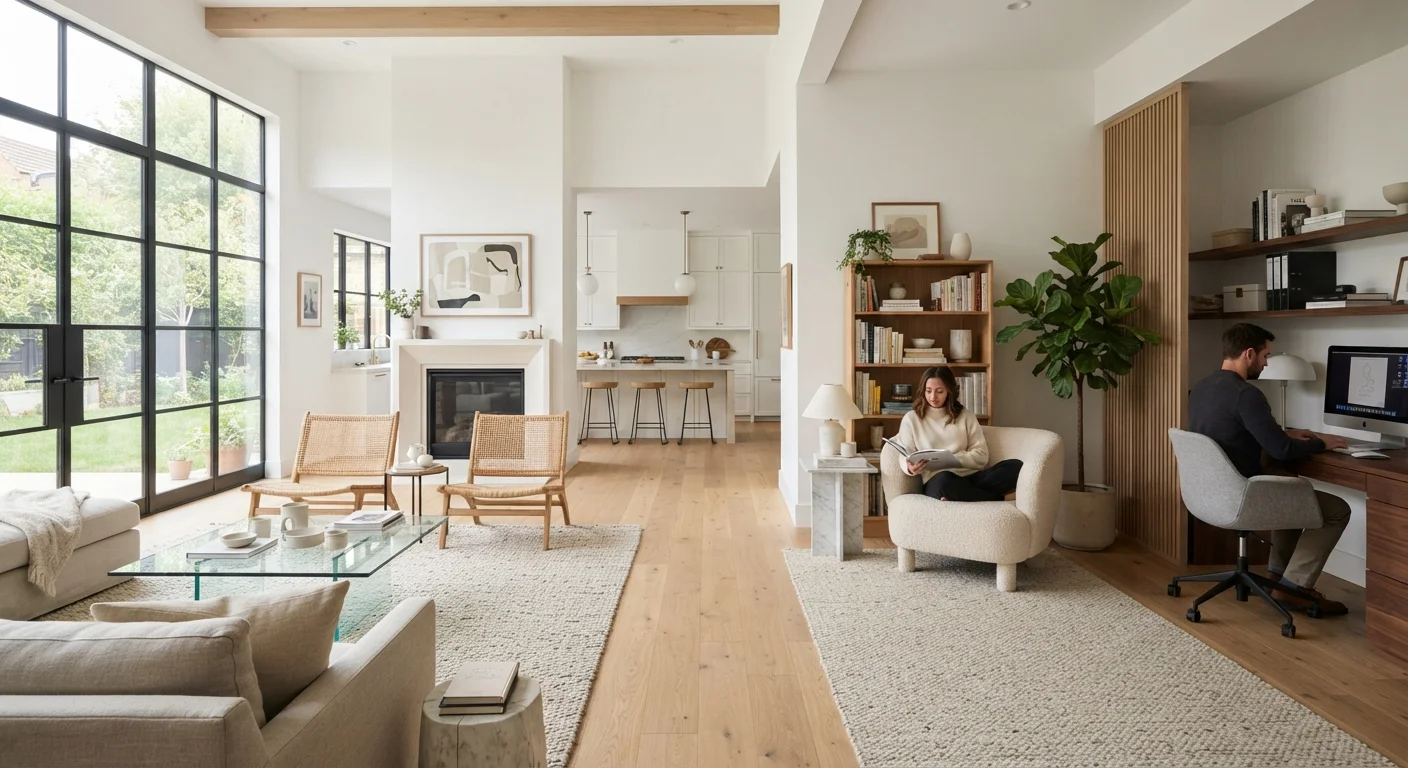
Zones don't require walls. In an open-plan home, the boundaries between zones are created through physical and visual cues that signal a transition from one activity area to another.
- Furniture arrangement: The back of a sofa, a bookcase, or a console table can act as a soft divider between a living zone and a work zone.
- Rugs: A defined rug anchors a seating arrangement and communicates that this patch of floor has a specific purpose.
- Lighting: A dedicated floor lamp over a reading chair or a pendant above a desk establishes that area as distinct from the ambient lighting of the rest of the room.
- Storage placement: Keeping items within the zone where they're used reinforces the boundary. Craft supplies stay in the craft zone; they don't drift to the kitchen table.
The key is consistency. A zone only works if the household agrees - explicitly or by habit - to honor it. That's a behavioral commitment as much as a design one.
Start With One Room, One Zone
Don't try to zone your entire home in a weekend. Pick one room and define a single zone within it - the place where mail gets sorted, or the chair reserved only for reading. Live with that defined zone for two weeks before expanding. Small, tested changes stick better than sweeping redesigns.
Mapping Zones to How You Actually Live
The most durable zones are built around observation, not aspiration. Spend a week noticing where you actually do things - where you drop your bag when you walk in, where you tend to pay bills, where the kids actually do homework - rather than where you wish those things happened.
That honest audit reveals your home's natural activity patterns. Zones built around those patterns require far less enforcement because they work with your habits, not against them. If everyone consistently does homework at the kitchen table, zone the kitchen table for homework during certain hours rather than trying to redirect to a desk that no one uses.
This approach also connects to a critical pre-step: decluttering before organizing. Assigning a zone to an area filled with items that don't belong there leads to a cluttered zone, not an organized one. The right order of operations - declutter, then zone, then store - keeps the process from unraveling.
Keeping Zones Intact Over Time
Zones erode gradually. A homework zone becomes a homework-and-snack zone, then a homework-snack-and-craft zone, and eventually just a pile zone. Preventing that drift is less about discipline and more about system design.
A few practices support zone integrity over time:
- Reset routines: A brief daily or weekly reset - returning displaced items to their zones - prevents gradual drift from compounding into chaos.
- Revisit annually: Household needs change. A zone that made sense last year may not fit this year's routines. Treat zone assignments as revisable decisions.
- Make it easy to comply: If returning something to its zone is harder than leaving it somewhere else, the zone will fail. Storage within the zone should be accessible, not hidden.
For the habit side of sustained organization - the small daily behaviors that make tidiness automatic - the article on habits that keep homes organized offers practical, low-effort routines that complement a zoning approach.
Frequently Asked Questions
No. Zoning is especially valuable in smaller homes because it forces deliberate choices about how every square foot is used. A studio apartment can have a sleep zone, a work zone, and a living zone within the same room using only furniture placement and lighting as dividers. See our guide on <a href="/home-garden/home-organization/small-space-organization-what-changes-when-square-footage-is-limited">organizing small spaces</a> for tailored strategies.
Most rooms function best with two to four zones. More than that and the boundaries become confusing rather than clarifying. A living room might reasonably have a conversation area, an entertainment zone, and a reading corner - but trying to add a workspace and a hobby station in the same room often creates conflict rather than clarity.
Shared zones require negotiated agreements about what activities belong where and when. Talking through expectations explicitly - who stores what in which zone - prevents the zone from gradually reverting to chaos. Our article on <a href="/home-garden/home-organization/shared-spaces-different-standards-organizing-a-home-with-multiple-people">organizing shared spaces</a> covers these dynamics in detail.
Not at all. Zones can be revised as your household's needs change - a nursery becomes a homework zone, a home office becomes a guest room. Think of zones as living decisions you revisit annually or whenever a major life change shifts how you use the home.
Rarely at the start. Rearranging existing furniture, using a rug to define a boundary, or simply moving where items are stored can establish meaningful zones without any purchases. Buy storage only after zones are defined, so you're solving a specific, identified need.
The content provided on our blog site traverses numerous categories, offering readers valuable and practical information. Readers can use the editorial team’s research and data to gain more insights into their topics of interest. However, they are requested not to treat the articles as conclusive. The website team cannot be held responsible for differences in data or inaccuracies found across other platforms. Please also note that the site might also miss out on various schemes and offers available that the readers may find more beneficial than the ones we cover.