

Why Awkward Spaces Deserve a Second Look
Most homes have at least a few spots that seem designed to collect dust rather than serve a purpose - the gap under the stairs, the dead air above a doorframe, the shallow alcove that's too narrow for furniture. These spaces are easy to write off, but with some structured thinking, many of them can do real work.
The key is approaching each odd space on its own terms. A solution that works beautifully under stairs probably won't apply above a door, and vice versa. Before investing in shelving, brackets, or custom cabinetry, it's worth spending a few minutes assessing what you actually need to store and whether the space can safely and practically support it.
If you're already rethinking how storage functions elsewhere in your home, our guide on vertical versus horizontal storage offers useful framing for any room. And for smaller homes where every square foot matters, small-space organization principles can help you prioritize what deserves a dedicated spot.
Under-Stair Space
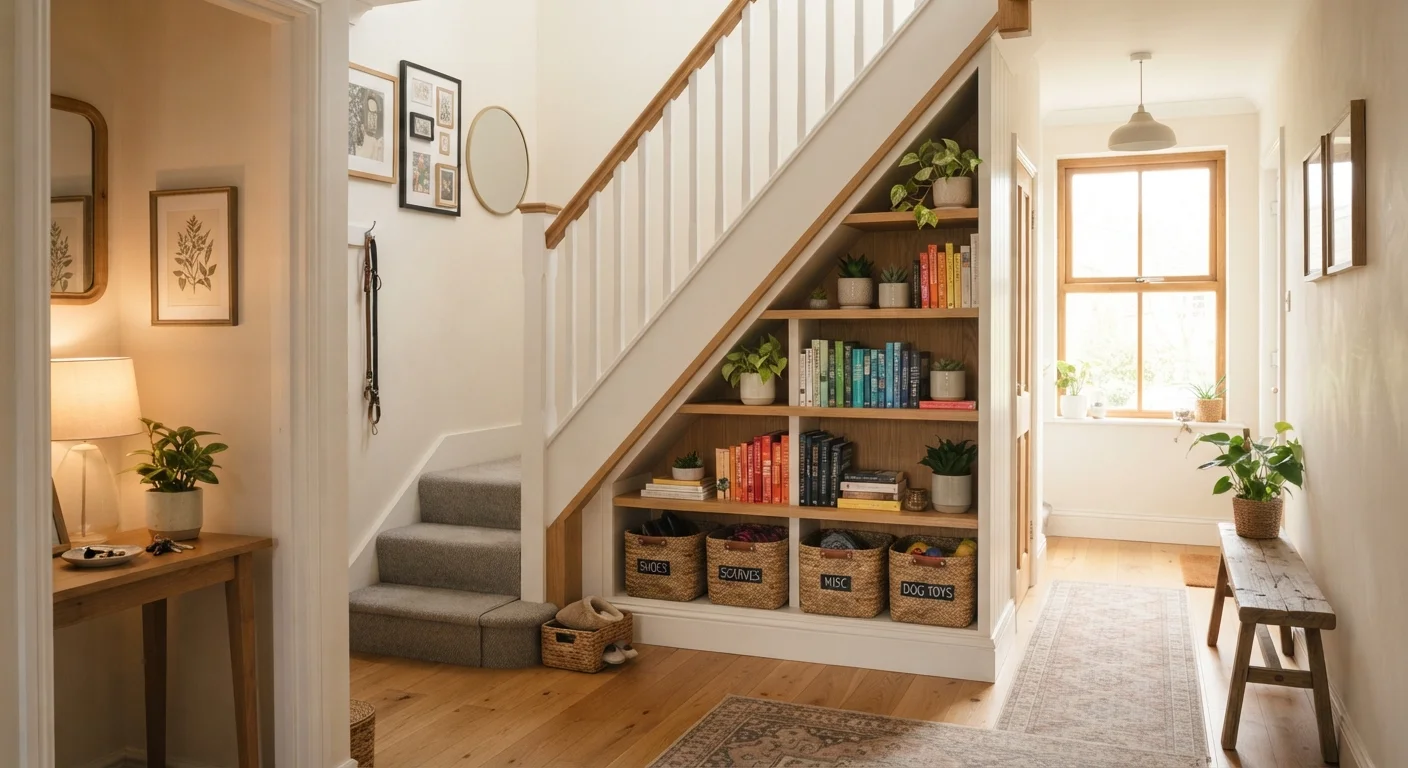
The area beneath a staircase is one of the most commonly overlooked storage zones in American homes. Depending on your staircase style, this space can range from a few shallow inches to a walk-in-sized cavity. Closed risers create a cleaner surface for built-in drawers or shelving, while open-riser stairs may work better with freestanding modular units that can be repositioned.
Consider what you'll store before deciding on a solution. Bulky items like vacuum cleaners or sports equipment need wider, taller clearance. Books, shoes, or pantry overflow do well on fixed shelves. For households with young children, this space is often practical for toy storage - accessible but out of the main living area.
Note on structural work: If you're planning to cut into drywall or modify structural framing around a staircase, consult a licensed contractor first. What looks like open space may contain load-bearing elements or utility runs.
Match the solution to the staircase style - built-ins for closed risers, modular units for open ones.
Above-Door Wall Space
The strip of wall above a door frame - typically 12 to 18 inches of vertical space - is almost always empty. A simple floating shelf in this zone can hold items that are used infrequently: extra linens, holiday decor, board games, or books you've already read but want to keep.
Weight matters here more than almost anywhere else. Wall anchors must be properly matched to wall material (drywall versus plaster versus concrete block), and shelf brackets need to be rated for what you plan to store. Lightweight, uniform items are safer than heavy or awkwardly shaped loads. If in doubt, a hardware store associate or contractor can help you assess anchor requirements before installation.
Above-door shelves work best for lightweight, infrequently needed items stored out of the way.
Inside Closet Doors
The back of a closet door is essentially free real estate. Over-the-door organizers - ranging from pocket panels to hook racks to shallow shelves - can hold a surprising volume of items without taking up floor or shelf space inside the closet itself.
This approach works especially well for items with high retrieval frequency: cleaning supplies in a utility closet, shoes or accessories in a bedroom closet, spices or foil wrap in a pantry. The main constraint is door clearance - make sure any organizer you add doesn't prevent the door from closing fully or bumping into shelving when it swings open.
Inside-door organizers add functional storage without touching a single inch of interior closet space.
Narrow Gaps Between Appliances or Furniture
A three- to six-inch gap between a refrigerator and a wall, or between two pieces of furniture, can become a pull-out storage zone with the right insert. Slim rolling carts designed for these gaps are widely available and can hold canned goods, baking supplies, cleaning products, or office materials depending on location.
The practical requirement is that the gap be consistent in width from front to back. Irregular or tapered gaps make most rolling solutions impractical. Measure carefully before purchasing anything - the depth of the cart matters as much as its width. This solution pairs naturally with the kind of kitchen organization thinking covered in our guide on kitchen drawer organization.
Slim rolling carts can turn a refrigerator gap from wasted space into a functional pantry extension.
High Wall Space Near Ceilings
In rooms with ceilings above the standard eight feet, the space between the top of your tallest furniture and the ceiling is often completely unused. Running shelving at this height around the perimeter of a room - a technique sometimes called picture-rail shelving - keeps floor and mid-wall space open while providing real storage for seasonal items, decorative objects, or overflow.
Accessibility is the obvious limitation. Items stored at ceiling height require a step stool or ladder to retrieve, so this zone should be reserved for things you genuinely use only a few times per year. It's also worth considering visual weight: dense, mismatched items stored up high can make a room feel cluttered even when the floor is clear. Uniform containers or baskets reduce visual noise considerably.
Ceiling-height shelving keeps floors clear but should only hold items you rarely need to access.
Shallow Alcoves and Recessed Walls
Some homes have shallow recesses - spots where a wall steps back slightly - that look awkward but can hold a surprising amount when fitted with shelving. Between wall studs, a recess might be only three and a half inches deep, which isn't much, but it's enough for spice jars, small books, or bathroom essentials arranged in a single row.
Deeper alcoves - sometimes found beside fireplaces or in older homes with irregular framing - can support full shelving units or even a built-in reading nook with storage beneath. The key is working with the recess dimensions rather than fighting them. A custom-cut shelf that fits the exact width and depth of the alcove will look intentional and function better than an off-the-shelf unit forced into an odd opening.
Even a three-inch recess between studs can hold single-row storage when properly shelved.
Making Your Decisions Stick
Choosing the right storage approach for an unusual space is only half the challenge. Maintenance matters just as much. Spaces that are hard to access tend to accumulate items that never get used - so be deliberate about what you assign to each spot. Reserve harder-to-reach areas for seasonal or infrequently needed items, and keep everyday essentials at eye level and within arm's reach.
Audit Before You Install
Before buying any hardware or shelving, spend five minutes noting what you'd actually put in the space and how often you'd need it. This single step prevents the most common storage mistake: installing something in a hard-to-access spot and then filling it with items you need daily. Write down the category of items, approximate size, and access frequency - then let those answers guide your solution choice.
If you share your home with others, consider that organization systems work best when everyone in the household understands and agrees to them. Our guide on organizing shared living spaces addresses how to navigate different clutter tolerances. And if you're weighing whether to go open or enclosed with any of these solutions, open shelving versus closed cabinets lays out the practical trade-offs worth considering before you commit.
The content provided on our blog site traverses numerous categories, offering readers valuable and practical information. Readers can use the editorial team’s research and data to gain more insights into their topics of interest. However, they are requested not to treat the articles as conclusive. The website team cannot be held responsible for differences in data or inaccuracies found across other platforms. Please also note that the site might also miss out on various schemes and offers available that the readers may find more beneficial than the ones we cover.