

Our Verdict
A vehicle maintenance log is a low-effort habit with disproportionately high payoffs. It strengthens your position when selling, simplifies repairs, and helps you stay on top of service schedules without relying on memory alone. The main drawbacks - initial setup effort and the discipline to keep it current - are modest compared to the protection it provides.
Any car owner who wants to protect their investment, simplify future repairs, and maximize resale value, especially those planning to sell or trade in within the next few years.
What a Maintenance Log Actually Is
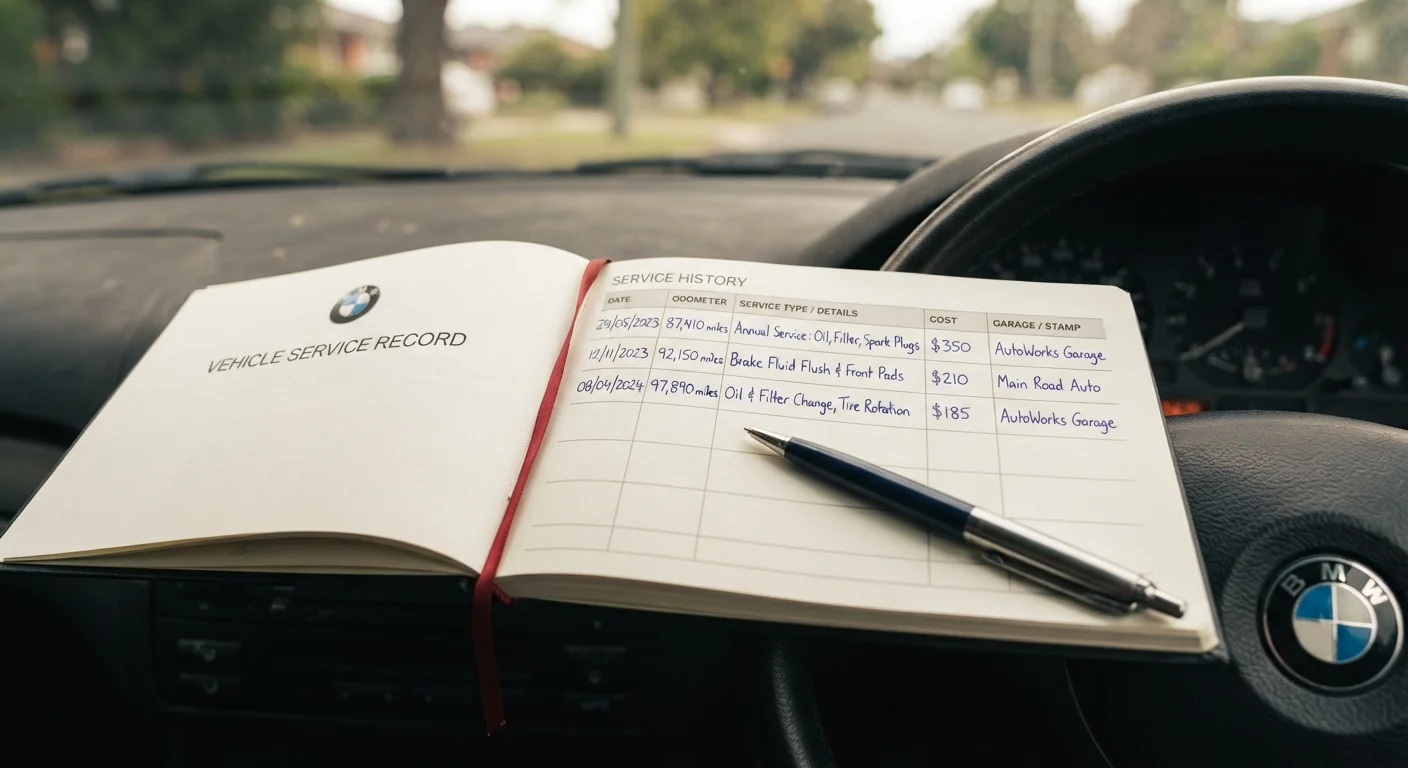
A maintenance log is a running record of every service event your vehicle undergoes - oil changes, tire rotations, brake inspections, fluid top-offs, and any repairs. It captures the date, mileage, work performed, parts used, and who did the work. Some owners use a simple paper notebook kept in the glove compartment; others prefer digital apps or spreadsheets. The format is secondary to the habit.
Think of it as a medical chart for your car. Just as a doctor relies on a patient's health history to make informed decisions, a mechanic with a full service record can diagnose problems faster, avoid redundant work, and catch patterns that might otherwise go unnoticed. For a deeper look at what each service milestone actually involves, see Your Car's Maintenance Schedule, Decoded.
The Real Advantages of Keeping a Log
The benefits of a well-maintained service record go well beyond simple organization.
Supports higher resale or trade-in value
A verifiable service history signals to buyers that the vehicle was well cared for, which can meaningfully influence offers. Private buyers and dealerships alike treat documented maintenance as a trust indicator.
Speeds up mechanic diagnostics
When a technician can see exactly what was done and when, they spend less time guessing and more time solving. This can reduce both labor time and the risk of unnecessary parts replacement.
Keeps warranty claims on solid ground
Many manufacturer and extended warranties require that maintenance be performed at specified intervals. A log provides the evidence needed if a warranty claim is ever disputed.
Helps catch recurring or escalating issues
Patterns - like needing to top off coolant repeatedly - become visible when you have a timeline. Catching these trends early can prevent more costly failures down the road.
Reduces reliance on memory
Most drivers cannot accurately recall when their last brake inspection or transmission service occurred. A log removes that uncertainty entirely, especially useful for high-mileage or older vehicles.
Up to $500+
Potential resale value gain with full service records
Industry appraisers and used-car analysts generally note that documented maintenance history can positively influence private-sale and dealer trade-in offers, with the premium varying by vehicle age and mileage.
1 in 3
Drivers who can't recall last oil change date
Surveys of U.S. drivers consistently find that a significant share cannot accurately state when their most recent routine service was performed, underscoring why written records matter.
When you're ready to sell or trade in your vehicle, a documented history is tangible proof that the car was cared for - something buyers and dealers actively look for. It also creates accountability: when you can see exactly when the last coolant flush happened, you're less likely to let it slip past its interval. For owners of older vehicles, this becomes especially critical - see High-Mileage Vehicles: How Maintenance Needs Shift After 100,000 Miles for context on why records matter even more as mileage climbs.
The Drawbacks Worth Knowing
Keeping a log isn't without its friction points. Most center on consistency rather than complexity.
Requires consistent effort to maintain
A log that stops after a few entries is only marginally better than no log at all. The habit demands a small but recurring commitment that many drivers underestimate.
Gaps can raise buyer suspicion
If entries are missing for a stretch of time, potential buyers may assume the car was neglected during that period - even if maintenance was performed but simply not recorded.
Paper records can be lost or damaged
A glove-compartment notebook is vulnerable to spills, theft, or being accidentally discarded. Without a backup, years of records can vanish instantly.
Setup takes time for existing vehicles
Owners who didn't start a log from day one may need to spend time hunting through old receipts and dealer records to reconstruct a usable history - an effort that deters many from starting at all.
Digital Backups Are Worth Considering
If you prefer a paper log, photographing each entry or scanning receipts into a cloud folder takes only seconds and protects against physical loss. Several free apps are also designed specifically for vehicle service tracking and sync across devices. Whichever method you choose, the goal is the same: a complete, accessible record that anyone - mechanic, buyer, or insurer - can follow.
It's also worth acknowledging that a log is only as useful as it is accurate. If service is performed but not recorded - or if records are lost - the gap can actually raise questions during a sale rather than answer them. Building the habit from the start is far easier than reconstructing a history later.
How to Start (and Actually Keep Up With) a Log
Starting is straightforward. Choose a format you'll realistically use: a small notebook in the glove box, a notes app on your phone, or a dedicated vehicle-tracking app. At minimum, record the date, odometer reading, service performed, and where the work was done. Keep receipts from shops as backup documentation - they fill in detail you might miss.
The most common failure point is the gap after the first few entries. Tie log updates to a recurring trigger - right after every oil change, for instance - so it becomes automatic rather than aspirational. If you're building maintenance habits from scratch, Car Maintenance for New Drivers offers a grounded starting framework. For a broader view of annual obligations and service milestones, the Annual Car Ownership Checklist is a useful companion reference.
The content provided on our blog site traverses numerous categories, offering readers valuable and practical information. Readers can use the editorial team’s research and data to gain more insights into their topics of interest. However, they are requested not to treat the articles as conclusive. The website team cannot be held responsible for differences in data or inaccuracies found across other platforms. Please also note that the site might also miss out on various schemes and offers available that the readers may find more beneficial than the ones we cover.