

Why Regular Budgets Leave Gaps
Most monthly budgets account for rent, utilities, groceries, and recurring subscriptions. Those are easy - they show up on the same date, for roughly the same amount, every month. The harder category is the expenses you know are coming but can't pin to a single billing cycle: the yearly car registration, holiday gifts, a planned dental procedure, or the HVAC tune-up you schedule each fall.
These costs aren't surprises - you've known about them for months. But because they don't appear on the current month's budget, they often get treated as emergencies when they arrive. The result is a scramble: tapping the emergency fund, carrying a credit card balance, or simply not paying the bill on time. A sinking fund closes that gap.
If irregular costs keep tripping up your plan, building a realistic buffer for those costs is the structural fix most budgets are missing.
How a Sinking Fund Actually Works
The mechanics are simple. You identify a future expense, set a target amount, and determine how many months you have before the money is needed. Divide the total by the number of months - that's your monthly contribution.
For example: you expect to spend $600 on holiday gifts. You start planning in June, giving yourself six months. Transfer $100 a month into a labeled savings account, and the money is ready in December without affecting any other part of your budget.
The same logic applies to larger goals. If your car is aging and you want to have $1,200 available for repairs over the next year, you contribute $100 a month to a car-maintenance fund. When the brake job comes in at $400, the fund absorbs it - and you keep saving toward the next repair.
~$400
Median unexpected expense that strains household budgets
Federal Reserve research has consistently found that many Americans report difficulty covering a mid-sized unexpected expense without borrowing or selling something.
1 in 3
Americans who carry new debt after the holiday season
Annual consumer surveys have repeatedly shown that holiday spending is one of the most common triggers for credit card debt accumulation among U.S. households.
~1%
Of home value recommended annually for maintenance
A widely cited rule of thumb in personal finance suggests homeowners budget roughly 1% of their home's value per year for upkeep, though actual costs vary significantly by age and location.
For a plain-language breakdown of budgeting terminology including how sinking funds are defined alongside similar concepts, see The Language of Budgeting glossary.
Sinking Funds vs. Emergency Funds: Not the Same Thing
It's worth being precise here because the two are often confused. An emergency fund exists for genuinely unpredictable events - a sudden layoff, an unexpected medical bill, a pipe that bursts at 2 a.m. It should be large enough to cover several months of essential expenses and should only be tapped for real emergencies.
A sinking fund covers costs that are predictable in nature even if they're irregular in timing. You know your car will eventually need tires. You know the homeowners insurance renewal is coming. These aren't emergencies - they're planned costs that belong in a sinking fund, not drawn from your safety net.
Keep Sinking Funds Physically Separate
Even if the dollar amounts are small, putting sinking fund money in a distinctly labeled sub-account - separate from both your checking account and your emergency fund - dramatically reduces the chance you'll spend it on something else. Out of sight, earmarked clearly, and transferred automatically are the three conditions that make sinking funds actually work.
Mixing the two leads to a common frustration: an emergency fund that never seems to grow because it's being used for oil changes and holiday spending. Separating them gives each fund a clear role and keeps your emergency reserves intact. If your emergency savings keep stalling, this breakdown of common obstacles explains what's usually going wrong.
Setting Up and Managing Multiple Sinking Funds
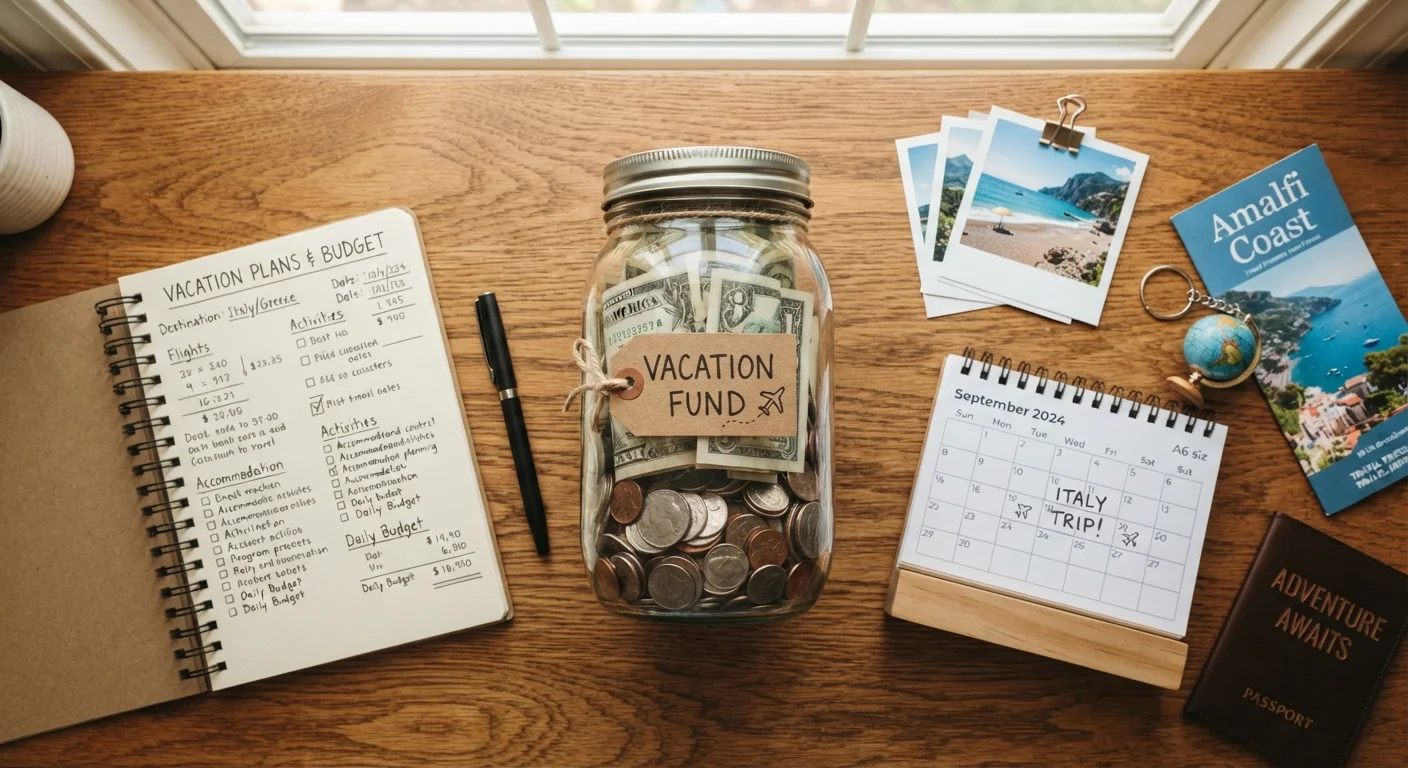
You don't need special software or a complex spreadsheet. Most banks and credit unions let you open multiple savings sub-accounts at no cost. Label each one by purpose - 'Car Maintenance,' 'Annual Insurance,' 'Vacation' - and set up automatic transfers on payday. The automation is key: the money moves before you have a chance to spend it.
A few common sinking fund categories worth considering:
- Vehicle maintenance and registration - predictable annual costs that hit hard without planning
- Holiday gifts and travel - a category that catches many budgets off guard every December
- Home maintenance - a general rule of thumb is to set aside roughly 1% of home value annually, though actual needs vary
- Medical and dental copays - especially useful if you have a high-deductible health plan
- Annual subscriptions and memberships - software, gym, professional dues
Once you're running sinking funds alongside a monthly budget, the whole system becomes more stable. Building a monthly budget you'll actually follow shows how to integrate these irregular categories into your broader spending plan from the start.
This article is for general informational and educational purposes only and does not constitute personalized financial advice. Consult a qualified financial professional for guidance specific to your situation.
Frequently Asked Questions
An emergency fund covers genuinely unexpected costs - job loss, a medical crisis, an appliance that fails without warning. A sinking fund covers expenses you already know are coming, even if the exact timing varies slightly. Both are important, but they serve different purposes and should be kept separate.
There's no fixed rule. Most people start with one or two high-priority categories - often car maintenance and annual subscriptions - then add more as they get comfortable. The key is that each fund has a clear purpose and a target amount so money doesn't sit indefinitely without direction.
A savings account that earns interest is the practical choice. Many banks and credit unions allow you to open multiple sub-accounts or 'buckets' at no cost, making it easy to label each fund and track balances without mixing money. The goal is accessibility without temptation.
Start contributing even if you won't fully fund the account in time. A partial sinking fund still reduces the out-of-pocket hit when the bill comes. Over successive cycles - the second car registration, the next holiday season - you'll have a full buffer in place.
No - sinking funds work inside a broader budget, not instead of one. They handle the irregular-expense layer that standard monthly budgets often miss. If you're new to budgeting, <a href="/your-money/budgeting-basics/personal-budgeting-from-the-ground-up">starting with the fundamentals</a> first will help you see where sinking funds fit.
Yes. Even saving $15 a month toward a $180 annual fee means it's covered when the charge hits. The value isn't just financial - knowing the money exists eliminates the stress of that bill and prevents you from using a credit card or raiding savings earmarked for something else.
The content provided on our blog site traverses numerous categories, offering readers valuable and practical information. Readers can use the editorial team’s research and data to gain more insights into their topics of interest. However, they are requested not to treat the articles as conclusive. The website team cannot be held responsible for differences in data or inaccuracies found across other platforms. Please also note that the site might also miss out on various schemes and offers available that the readers may find more beneficial than the ones we cover.