

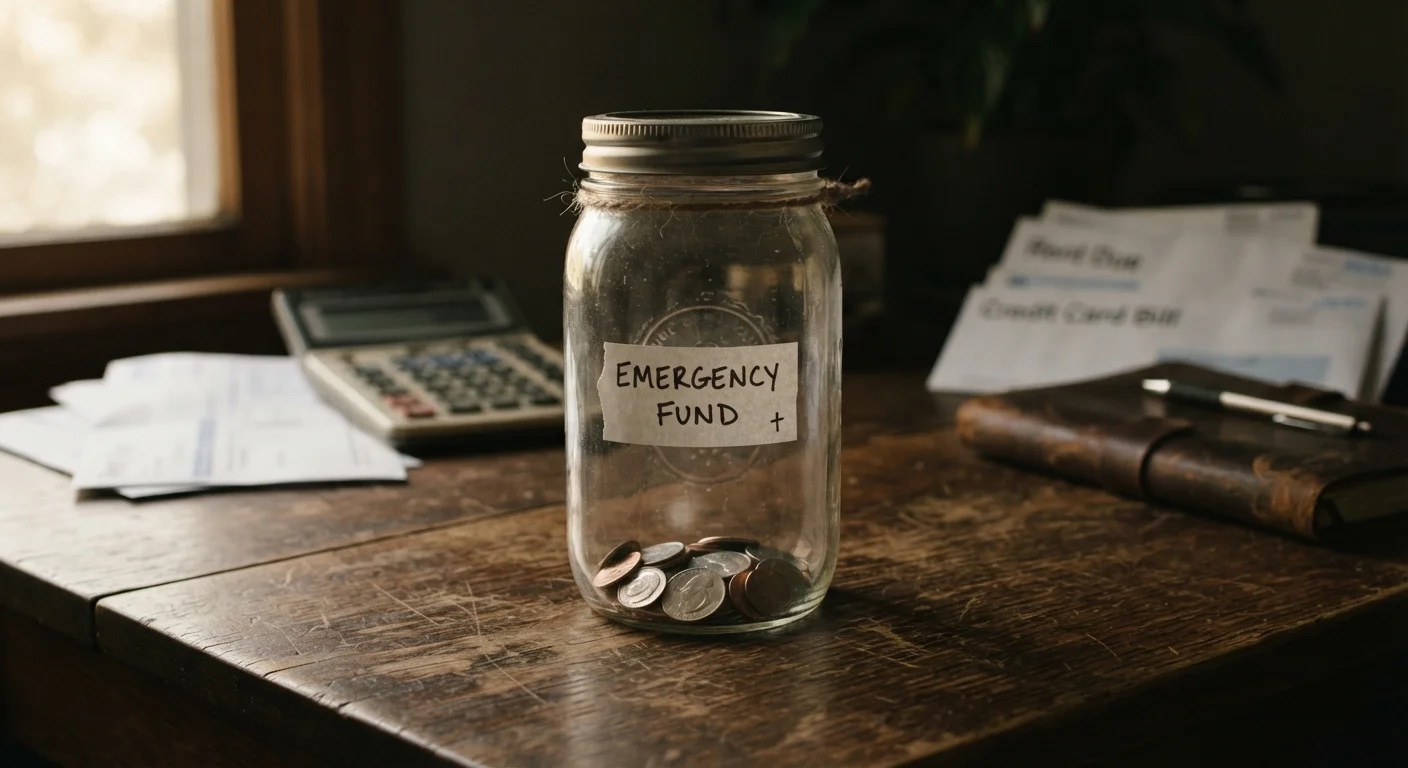
The Real Reason Your Balance Never Seems to Grow
Most people know they should have an emergency fund. Understanding the concept isn't the problem - if you need a refresher on the fundamentals, our guide to what emergency funds are and why they matter covers the basics. The stalling happens in the execution, and the culprits are usually habitual rather than circumstantial.
The most common pattern: you intend to save, life gets busy, and whatever money might have gone into savings quietly disappears into everyday spending instead. This isn't a willpower problem - it's a systems problem. Your budget and banking setup may be working against you without you realizing it.
Saving whatever is left over after spending, rather than paying yourself first.
Why it happens: Most people think of saving as a destination for surplus money, so spending takes priority by default. By the end of the month, there's rarely anything left to transfer.
Setting a vague goal like 'save more' instead of a specific dollar target.
Why it happens: Generic intentions feel motivating but provide no measurable milestone to work toward, making it easy to deprioritize when other spending competes for attention.
Keeping emergency savings in the same account as everyday spending money.
Why it happens: Convenience and simplicity lead many people to lump all cash into one checking account, where it becomes psychologically invisible and easy to spend.
Raiding the fund for predictable irregular expenses instead of true emergencies.
Why it happens: Car registration, holiday gifts, and appliance repairs feel urgent and unexpected in the moment, even though they recur every year. Without a plan for them, the emergency fund becomes the default ATM.
Giving up after a setback drains the fund back to zero.
Why it happens: Using the fund for a real emergency - exactly what it's there for - can feel like failure, triggering discouragement that stalls the rebuilding process.
Understanding why these mistakes happen is just as important as knowing what to do differently. Most of them share a common thread: they're passive. The fund stalls not because of one dramatic decision, but because the default settings in your financial life favor spending over saving.
How to Break the Stall for Good
Fixing a stalled emergency fund rarely requires earning more money - it requires restructuring the small decisions that happen on autopilot. Start with automation. Scheduling a recurring transfer to a dedicated savings account the moment your paycheck lands removes temptation before it can form.
Not Every Surprise Expense Qualifies
One of the fastest ways to drain an emergency fund is using it for expenses that feel urgent but aren't truly emergencies. Before making a withdrawal, ask whether the expense was genuinely unforeseeable and unavoidable. Our guide on when to use your emergency fund and when not to can help you draw that line clearly.
From there, revisit your target. If your goal feels abstract or overwhelming, it may be contributing to avoidance. Use your actual monthly essentials - rent, utilities, food, insurance, minimum debt payments - to calculate a realistic three-to-six-month figure, then divide it into achievable monthly milestones. Our walkthrough for building your first emergency fund from zero offers practical steps if you're starting over.
Also consider what's quietly competing with your fund. Predictable costs that hit once or twice a year - annual subscriptions, car maintenance, back-to-school expenses - shouldn't come out of your emergency reserve. A sinking fund handles those so your cushion stays intact for genuine crises. And if you want to audit where you actually stand today, our emergency fund readiness checklist walks through fund size, account type, and access speed in a structured way.
Finally, don't let a necessary withdrawal derail your momentum. Using the fund for a real emergency - a job loss, an unexpected medical bill - is exactly what it's there for. The goal after a drawdown is to restart contributions promptly, even in smaller amounts. Our article on rebuilding an emergency fund after using it offers a realistic roadmap for that process.
This article is for general informational purposes only and does not constitute personalized financial advice. Consult a qualified financial professional for guidance specific to your situation.
The content provided on our blog site traverses numerous categories, offering readers valuable and practical information. Readers can use the editorial team’s research and data to gain more insights into their topics of interest. However, they are requested not to treat the articles as conclusive. The website team cannot be held responsible for differences in data or inaccuracies found across other platforms. Please also note that the site might also miss out on various schemes and offers available that the readers may find more beneficial than the ones we cover.