

Summary
22 items · 2-5 hours spread over 1-2 weekends
Why Spring Prep Sets the Tone for the Entire Year
Spring is not just the start of the mowing season - it is your single best opportunity to correct last year's damage, strengthen the root system, and put your lawn in a position to handle summer heat, drought, and foot traffic. Lawns that skip spring prep often spend the growing season playing catch-up, filling in bare patches reactively rather than thriving proactively.
Timing is everything. For cool-season grasses (Kentucky bluegrass, tall fescue, perennial ryegrass), the ideal prep window is early spring when daytime temperatures are consistently in the 50s°F. For warm-season grasses (Bermuda, Zoysia, St. Augustine), wait until the lawn has broken dormancy and soil temperatures reach at least 60-65°F - typically late spring in most U.S. regions.
This checklist is part of a broader approach to lawn ownership. For a full picture of what your lawn needs through all four seasons, see the year-round lawn care guide covering every major task from winter to fall.
Cleanup and Assessment
Soil Preparation
Seeding and Fertilizing
Weed and Pest Control
Equipment and Irrigation Readiness
Tools You'll Need Before You Start
Gathering your equipment before you begin prevents wasted trips and interruptions mid-task. Some tools are essential for any lawn; others depend on your specific situation - square footage, grass type, and existing lawn condition.
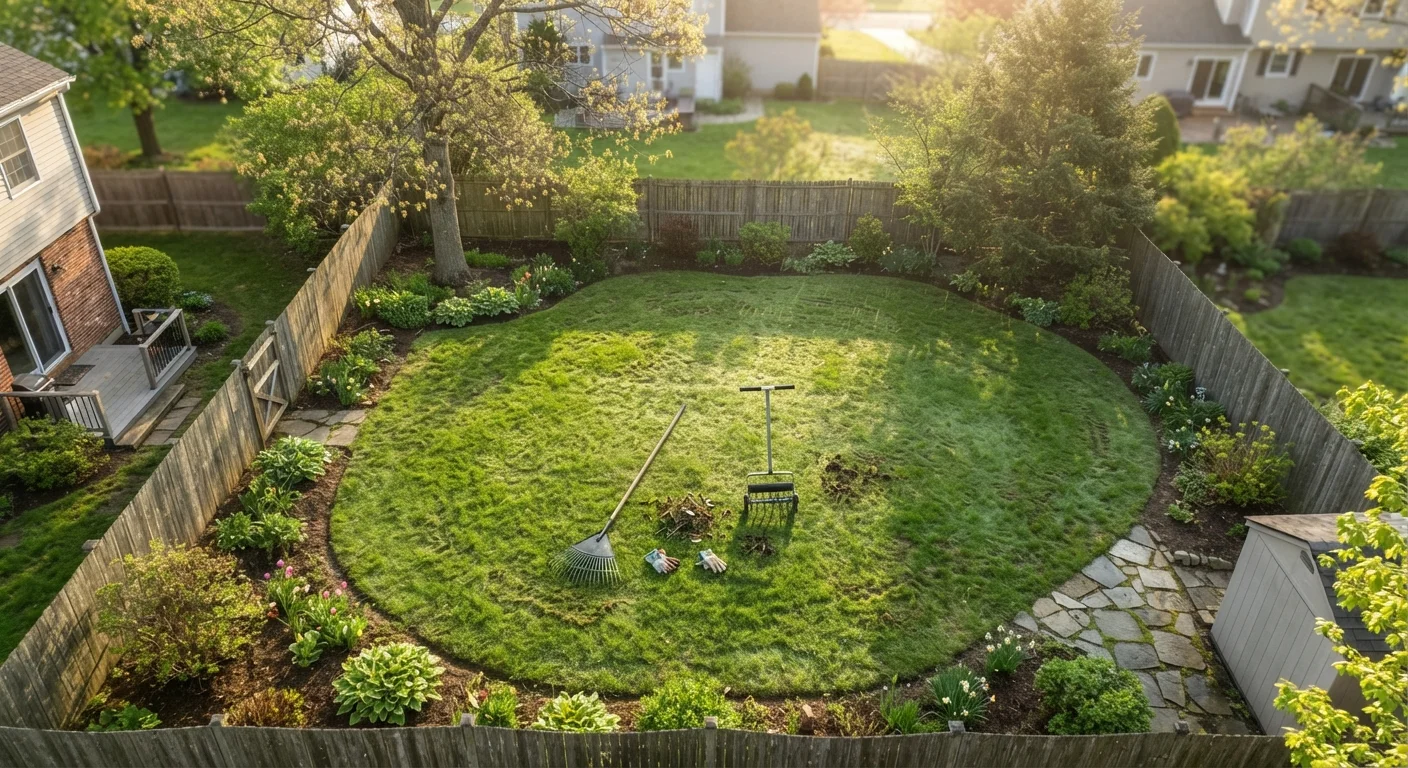
Lawn Rake
Lifts matted grass, removes debris, and prepares the surface for seeding and fertilizing.
Core Aerator
Pulls plugs of soil to relieve compaction and improve water and nutrient penetration.
Broadcast or Drop Spreader
Distributes grass seed, fertilizer, and pre-emergent herbicide evenly across the lawn.
Soil pH Test Kit
Determines whether lime or sulfur amendments are needed before fertilizing.
Rotary Mower with Adjustable Height
Makes the first spring cuts at the correct height to avoid stressing newly waking turf.
Lawn Edger or Half-Moon Spade
Restores clean boundaries along beds, driveways, and walkways after winter settling.
Garden Hose or Irrigation System
Provides consistent moisture after overseeding to support germination and establishment.
A Note on Aeration and Overseeding
Two tasks on this checklist - aeration and overseeding - often get applied indiscriminately when they actually require some judgment. Aeration addresses soil compaction, which is most common in high-traffic areas or clay-heavy soils. If your lawn drains well and feels soft underfoot, you may not need it this year. Our detailed look at lawn aeration benefits and limitations walks through how to assess whether your soil actually needs it.
Overseeding is similarly situation-dependent. Thin turf, bare patches, or a lawn that simply hasn't bounced back from winter are strong signals to overseed. If you're starting a section from scratch, the grass seed vs. sod comparison can help you decide whether seeding or laying sod makes more sense for that area.
Don't Combine Pre-Emergent with Overseeding
Pre-emergent herbicides work by preventing seeds from germinating - they cannot distinguish between weed seeds and grass seed. If you plan to overseed any area this spring, skip the pre-emergent in that zone entirely. Apply pre-emergent only to established turf sections where you are not introducing new seed.
Avoid Fertilizing Dormant Warm-Season Grass
Applying fertilizer to warm-season grass before it has fully broken dormancy can push top growth before the root system is ready, leaving the lawn more vulnerable to a late frost. Wait for consistent green-up across at least 50% of the lawn before applying any nitrogen source.
Final Checks Before the Growing Season Gets Underway
Once the physical prep tasks are complete, take a few minutes to set yourself up for the rest of the season. Walk the full perimeter of your lawn to note any low spots that collect standing water, fence lines that need edging, or irrigation heads that shifted over winter. These small observations now prevent larger problems in July.
Keep a simple log - even a notes app on your phone - tracking what you applied, when, and at what rate. This record helps you space fertilizer applications correctly, remember when pre-emergent was put down, and troubleshoot any problem areas that appear mid-season. Spring prep isn't a single Saturday project so much as a mindful reset that pays dividends for months.
Permits and Safety for Equipment Use
Renting or operating a power dethatcher, slit-seeder, or commercial core aerator involves moving parts that can cause injury if used incorrectly. Always read the operator's manual before use, wear appropriate footwear, and keep bystanders - especially children - clear of the work area. If a piece of equipment feels unfamiliar, ask for a demonstration at the rental counter before leaving.
The content provided on our blog site traverses numerous categories, offering readers valuable and practical information. Readers can use the editorial team’s research and data to gain more insights into their topics of interest. However, they are requested not to treat the articles as conclusive. The website team cannot be held responsible for differences in data or inaccuracies found across other platforms. Please also note that the site might also miss out on various schemes and offers available that the readers may find more beneficial than the ones we cover.