

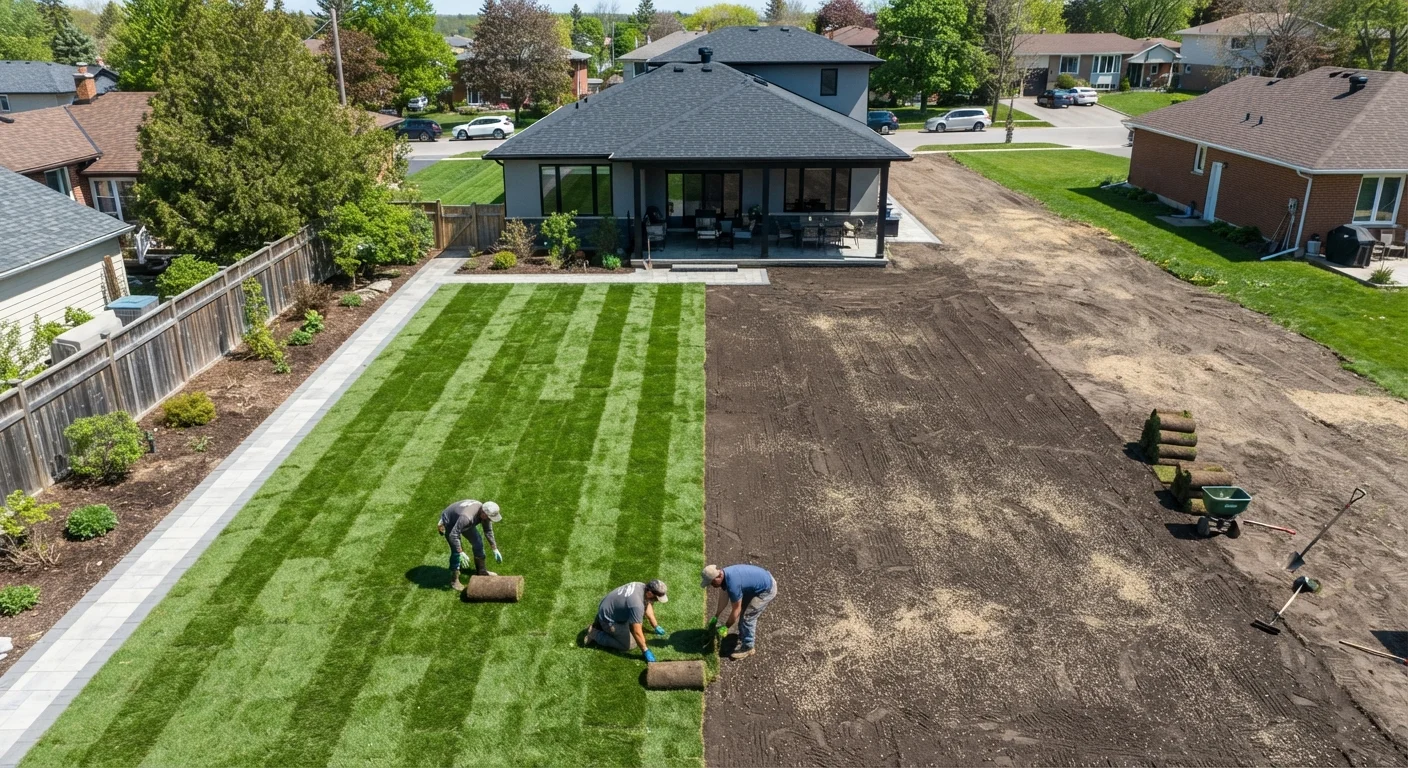
Option A
Grass Seed
The patient, budget-friendly approach to lawn establishment.
Best for: Homeowners with time to nurture growth, larger areas to cover, or specific grass variety preferences.
Option B
Sod
The instant, roll-out solution for an immediate lawn.
Best for: Homeowners who need quick erosion control, a fast-usable lawn, or are working with smaller, high-visibility areas.
Cost and Material Reality
The cost gap between seed and sod is real and substantial. On a per-square-foot basis, grass seed typically runs a few cents to around fifteen cents, depending on the species and blend. Sod, by contrast, generally ranges from thirty cents to over a dollar per square foot for the material alone - and professional installation adds labor on top of that.
For a 5,000-square-foot lawn, that difference can translate to hundreds or even thousands of dollars. That said, seeding isn't free of hidden costs. You may need a starter fertilizer, a lawn roller, straw mulch to protect seed from washing away, and consistent irrigation for four to eight weeks. Factor those in when comparing totals.
| Criterion | Grass Seed | Sod |
|---|---|---|
| Upfront material cost | Low (cents per sq ft) | High (30¢-$1+ per sq ft) |
| Time to usable lawn | 2-3 months | 2-6 weeks |
| Erosion control | Limited until established | Immediate coverage |
| Grass variety options | Wide selection available | Limited to supplier stock |
| Installation effort (DIY) | Moderate | Labor-intensive |
| Watering commitment | High for 4-8 weeks | High for 2-4 weeks |
| Best installation season | Early fall (cool-season) | Spring through early fall |
Neither method is a bargain if the underlying soil isn't prepared. Whether you're seeding or sodding, skipping grading, testing pH, and amending compacted soil will produce a disappointing result regardless of what you spend on materials.
Timeline and Effort Commitment
Sod's biggest selling point is speed. After installation, sod generally roots enough for light foot traffic within two to three weeks, and within four to six weeks it behaves like an established lawn. Seeding operates on a different clock. Most cool-season grasses - fescues, bluegrass, ryegrass - take seven to twenty-one days just to germinate, with a fully usable lawn often taking two to three months.
That waiting period demands active management. Seeded areas need frequent, light watering - sometimes multiple times a day during germination - to keep the soil surface moist without washing seeds away. This is a real commitment, particularly in warmer or windier climates. Sod also needs diligent watering post-installation, but the window of vulnerability is shorter.
7-21 days
Typical germination window for cool-season grasses
Germination time varies by species, soil temperature, and moisture consistency - fescues tend toward the faster end of this range.
2-3 weeks
Time for sod to root enough for light foot traffic
University extension programs generally recommend limiting traffic on newly laid sod for at least two weeks to allow adequate rooting.
5-10×
Approximate cost difference: sod vs. seed per sq ft
Material cost comparisons vary by region and grass type, but sod consistently runs several times more per square foot than comparable seed.
Timing also intersects with grass type. Cool-season varieties perform best when seeded in early fall, when soil is warm but air temperatures are dropping. Warm-season grasses - bermuda, zoysia, centipede - establish better in late spring and early summer. Sod is generally more flexible across seasons, though extreme heat or cold still affects rooting success. Before either project, see our spring lawn prep checklist to ensure your soil and site are ready.
Practical Scenarios Where Each Shines
Seeding makes the most sense when you're covering a large area, want to choose a specific cultivar adapted to your soil and sun conditions, or are overseeding an existing lawn to thicken it. It's also the standard approach for post-aeration lawn renovation, where seed drops into loosened soil for excellent soil-to-seed contact.
Sod is the stronger choice when you need immediate erosion control on a slope, want a presentable front yard with minimal uncertainty, or are working with a smaller, clearly defined area where the cost premium is more manageable. It also works well when the establishment window is compressed - for instance, if you're moving into a home and need a functional yard before fall.
Not every homeowner needs a traditional grass lawn, of course. If your primary goal is low maintenance rather than a classic turf look, it's worth exploring ground cover alternatives that require less water, mowing, and seasonal care.
Soil Prep Is Non-Negotiable for Both
No matter which method you choose, success hinges on what happens before you lay a single piece of sod or broadcast a single seed. At minimum, address soil compaction, correct pH if needed, and grade the surface to ensure water drains away from structures. Skipping these steps is the most common reason new lawns fail - regardless of how much was spent on materials.
The content provided on our blog site traverses numerous categories, offering readers valuable and practical information. Readers can use the editorial team’s research and data to gain more insights into their topics of interest. However, they are requested not to treat the articles as conclusive. The website team cannot be held responsible for differences in data or inaccuracies found across other platforms. Please also note that the site might also miss out on various schemes and offers available that the readers may find more beneficial than the ones we cover.