

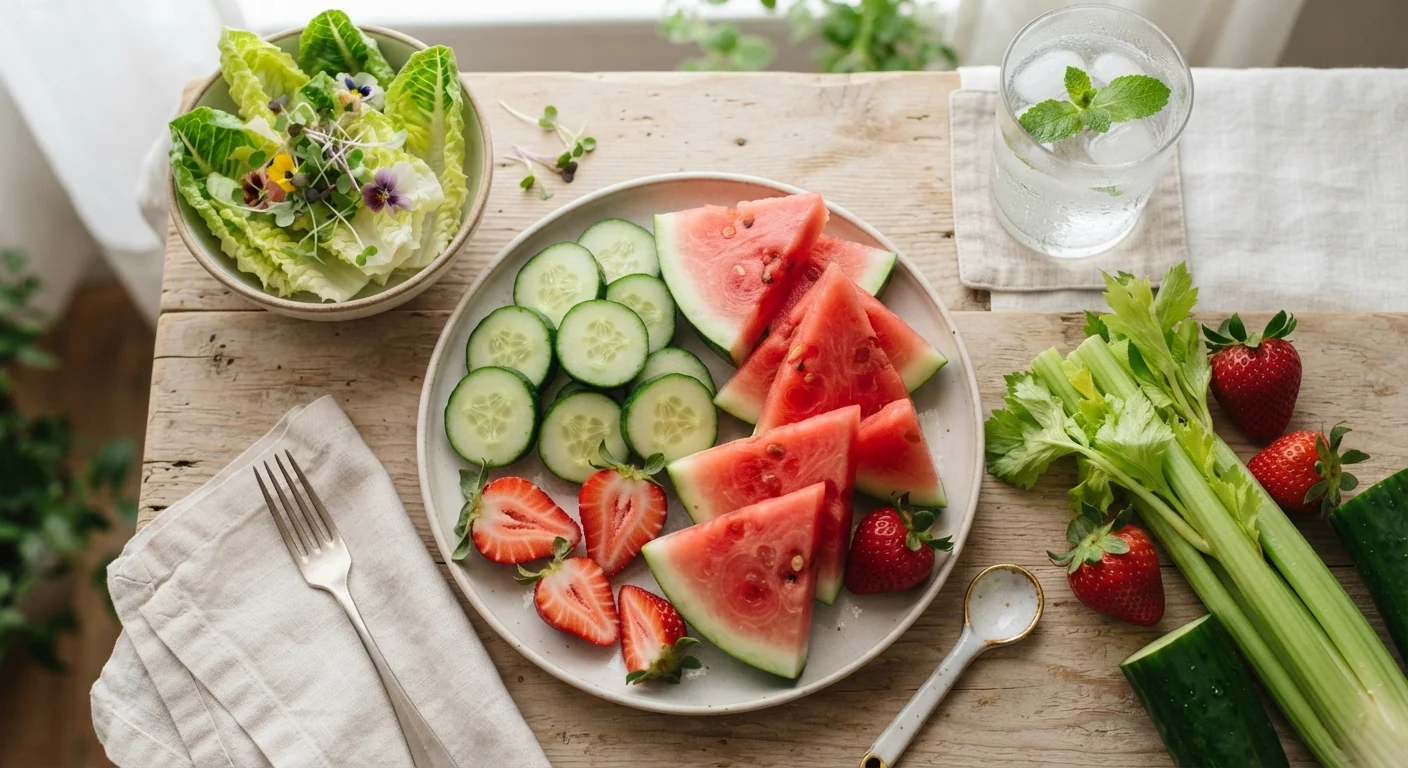
Your Plate Is Part of Your Water Supply
Most people think about hydration in terms of glasses of water or bottles carried to the gym. But a meaningful share of the fluid your body uses every day arrives via your food. According to estimates from nutrition researchers, food accounts for roughly 20% of total daily water intake for the average adult - and that figure rises considerably for people who regularly eat fruits, vegetables, and soups.
This isn't a minor footnote in nutrition science. It's a foundational concept that helps explain why two people drinking similar amounts of water can have very different hydration outcomes depending on what they eat. Understanding this can also help dispel persistent misconceptions - for a closer look at those, see our piece on common hydration myths that the evidence doesn't support.
~20%
Daily water intake from food for average adults
Nutrition research consistently estimates that food contributes around one-fifth of total fluid intake in a typical mixed diet.
96%
Water content of cucumber by weight
Cucumbers rank among the highest water-content foods available, making them one of the most hydrating choices per gram eaten.
92%
Water content of watermelon by weight
USDA food composition data consistently places watermelon above 90% water, along with strawberries and other summer fruits.
Which Foods Deliver the Most Water?
Water content in food varies enormously. At the high end, certain raw fruits and vegetables are composed of more than 90% water by weight. At the low end, dry goods like crackers, nuts, and flour contain very little. Here's a general breakdown:
- Very high water content (90-97%): Cucumber, iceberg lettuce, celery, radishes, tomatoes, zucchini, watermelon, strawberries, cantaloupe
- High water content (80-89%): Oranges, apples, blueberries, peaches, plain yogurt, cooked oatmeal, broccoli, carrots
- Moderate water content (60-79%): Bananas, cooked legumes, eggs, cottage cheese, cooked rice or pasta
- Low water content (below 20%): Bread, crackers, nuts, dried fruit, cheese, chocolate
Soups, broths, and stews also deserve recognition - they deliver water directly as a liquid component of a meal, making them especially effective hydration vehicles, particularly in colder months when cold beverages are less appealing.
How Food-Based Hydration Fits Into Total Fluid Needs
The National Academies of Sciences, Engineering, and Medicine has established general adequate intake levels for total water - meaning all sources combined, including beverages and food. These figures are not rigid prescriptions; they represent general population averages and account for the food contribution built into a typical diet.
Individual needs shift based on body size, physical activity, ambient temperature, and health status. A person doing manual labor outdoors in summer has vastly different needs from someone working indoors in a climate-controlled office. Neither should apply a single blanket rule.
What matters is recognizing that a diet built around whole foods - especially vegetables and fruit - naturally contributes to fluid balance in a way that a diet heavy in processed, dry, or shelf-stable foods does not. This is one more reason that overall diet quality touches nearly every dimension of health. For a broader look at how nutrients interact, our nutrition terms reference guide offers useful context.
Practical Implications for Everyday Eating
You don't need to track every gram of food-sourced water to benefit from this knowledge. A few practical patterns reflect the science well:
- Prioritize produce at meals. A salad, a side of fruit, or a vegetable-forward entrée contributes real fluid alongside fiber, vitamins, and minerals. The fiber benefits article covers why this matters beyond hydration.
- Don't dismiss soups and stews. These are among the most hydrating meals you can prepare, especially with vegetable or broth bases.
- Notice when your diet skews dry. Days heavy in crackers, processed snacks, deli meats, and bread without much produce or liquid-rich food may increase your beverage needs to compensate.
Use Your Plate as a Hydration Check
If your meals lean heavily on dry, packaged, or processed foods, you're likely getting less fluid from food than someone eating more whole produce. On those days, making a conscious effort to drink more water throughout the day helps compensate. Keeping a water-rich snack - like sliced fruit or raw vegetables - accessible is a simple way to boost both nutrition and fluid intake simultaneously.
The relationship between food choices and hydration also connects to gut function. Water is essential for digestive motility, and water-rich foods often bring fiber alongside fluid - a pairing that supports regularity. Our article on gut health and daily diet explores that connection further.
This article is for general informational and educational purposes only and does not constitute medical or dietary advice. Consult a qualified healthcare professional for guidance tailored to your individual health needs.
Frequently Asked Questions
Research suggests that food contributes approximately 20% of total daily water intake for most adults, though this varies by diet quality. People who eat more fruits and vegetables tend to get a higher proportion of fluids from food. Beverages - including plain water, coffee, tea, and milk - account for the remaining roughly 80%.
Cucumbers, lettuce, celery, tomatoes, watermelon, strawberries, and cantaloupe are among the foods with the highest water content, often exceeding 90% water by weight. Soups and broths also deliver substantial fluid. Cooked grains and legumes absorb water during preparation and contribute meaningfully as well.
Food-based hydration is a genuine and valuable contribution, but it doesn't fully replace the need to drink fluids for most people. The body requires a consistent supply of water throughout the day, and relying on food alone is unlikely to meet total needs without beverages. Think of food-sourced water as a complement, not a substitute.
Major health organizations typically frame fluid recommendations as total water intake, which includes both beverages and food sources. If you eat a diet rich in fruits and vegetables, you're already supporting your hydration without tracking it separately. Most people don't need to log food-based water specifically - simply eating a balanced diet helps.
Yes. Cooking methods can either reduce or increase a food's water content. Boiling and steaming can cause vegetables to absorb water, while roasting, grilling, or drying foods removes it. Fresh, raw fruits and vegetables generally retain the most water, though cooked soups and stews reintroduce fluid in another form.
Yes, conditions such as kidney disease, heart failure, or gastrointestinal disorders can affect how the body processes and retains water from all sources, including food. Anyone managing a chronic condition should discuss their specific fluid needs with a qualified healthcare provider rather than relying on general guidelines.
The content provided on our blog site traverses numerous categories, offering readers valuable and practical information. Readers can use the editorial team’s research and data to gain more insights into their topics of interest. However, they are requested not to treat the articles as conclusive. The website team cannot be held responsible for differences in data or inaccuracies found across other platforms. Please also note that the site might also miss out on various schemes and offers available that the readers may find more beneficial than the ones we cover.