

Why Gut Health Has Become a Wellness Flashpoint
Research into the gut microbiome - the trillions of bacteria, fungi, and other microorganisms living in the digestive tract - has accelerated dramatically over the past two decades. That legitimate scientific interest has also generated a wave of wellness marketing that often outpaces the evidence. Probiotic supplements, gut-cleansing protocols, and fermented-food trends are everywhere, yet the actual science is more nuanced than most headlines suggest.
Understanding what is well-established versus what is still emerging helps consumers make practical, grounded choices. For a broader view of which health habits have the strongest research backing, see our foundational health habits guide.
Myth
Taking a daily probiotic supplement will reliably improve your gut health.
Fact
Probiotic effects are highly strain-specific and population-specific; evidence for broad benefit in healthy adults remains limited.
Probiotic research shows real benefits for specific conditions - certain strains help reduce the duration of antibiotic-associated diarrhea, for example. However, the idea that any probiotic supplement will meaningfully improve a healthy person's gut is not well-supported by current evidence. The human gut is a complex ecosystem, and introducing new bacteria does not automatically mean they colonize or produce lasting benefit. Many supplemental strains pass through without establishing residence. If you have a specific digestive condition, discuss targeted probiotic options with a gastroenterologist rather than selecting products based on general marketing claims.
Myth
Fermented foods like kombucha and kimchi are proven to "heal" the gut.
Fact
Fermented foods can contribute live microorganisms to the diet, but "healing" the gut is an overclaim not supported by current research.
Fermented foods - including yogurt, kefir, kimchi, sauerkraut, and miso - do contain live microorganisms and have been part of traditional diets globally for centuries. Some research, including a 2021 study published in Cell, suggests that a diet high in fermented foods may increase microbial diversity and reduce certain inflammatory markers. However, effects vary significantly between individuals, and the term "healing" implies a therapeutic outcome that goes beyond what the science currently supports for the general population. Incorporating a variety of fermented foods as part of a balanced diet is a reasonable, low-risk choice - but they are not a treatment for gastrointestinal conditions.
Myth
Everyone should follow the same gut-healthy diet for best results.
Fact
Individual responses to diet differ substantially based on genetics, existing microbiome composition, and lifestyle factors.
One of the most striking findings from large-scale microbiome studies, including work from the Weizmann Institute's personalized nutrition research, is that two people can eat the same food and experience meaningfully different blood sugar and gut responses. The microbiome is shaped by factors including genetics, early-life exposures, antibiotic history, stress, sleep, and physical activity - not diet alone. This means population-level dietary guidance is a useful starting point, but personalized responses vary. General principles like increasing fiber and dietary diversity have broad support, but no single protocol guarantees the same outcome for everyone. This individuality is one reason why consulting a registered dietitian can be valuable for people with specific digestive concerns.
Myth
A "gut cleanse" or detox diet resets your microbiome.
Fact
There is no scientific evidence that commercial cleanses or detox diets reset or meaningfully improve the gut microbiome.
The gut microbiome can shift in composition within days of dietary changes, but it also tends to return toward its baseline relatively quickly when previous habits resume. Commercial "cleanses" - whether juice-based, supplement-driven, or highly restrictive - lack clinical evidence for producing lasting microbiome improvements. The liver, kidneys, and gut itself handle the body's filtering processes continuously. Very restrictive short-term protocols may also reduce dietary fiber intake and microbial diversity temporarily, which is counterproductive. For a broader look at nutrition misconceptions including detox diets, see our nutrition myths guide. Sustainable, diverse eating patterns support the gut far more reliably than any short-term cleanse.
Myth
More fiber is always better for gut health, regardless of where it comes from.
Fact
Fiber type and food source matter; whole-food fiber behaves differently from isolated fiber additives and supplements.
Not all fiber is equivalent in its effects on the gut. Fiber from whole foods - vegetables, legumes, fruits, and whole grains - comes packaged with additional nutrients, phytocompounds, and water that influence how it ferments in the colon and feeds different bacterial populations. Isolated fiber additives (such as inulin or chicory root extract added to processed foods) can cause digestive discomfort at high doses and may not produce the same microbiome benefits as whole-food sources. Rapidly increasing fiber intake of any kind can cause bloating and gas; a gradual increase alongside adequate hydration is generally more tolerable. Understanding dietary fiber sources can help clarify practical ways to increase intake sustainably.
What Diet Actually Does to Your Gut Microbiome
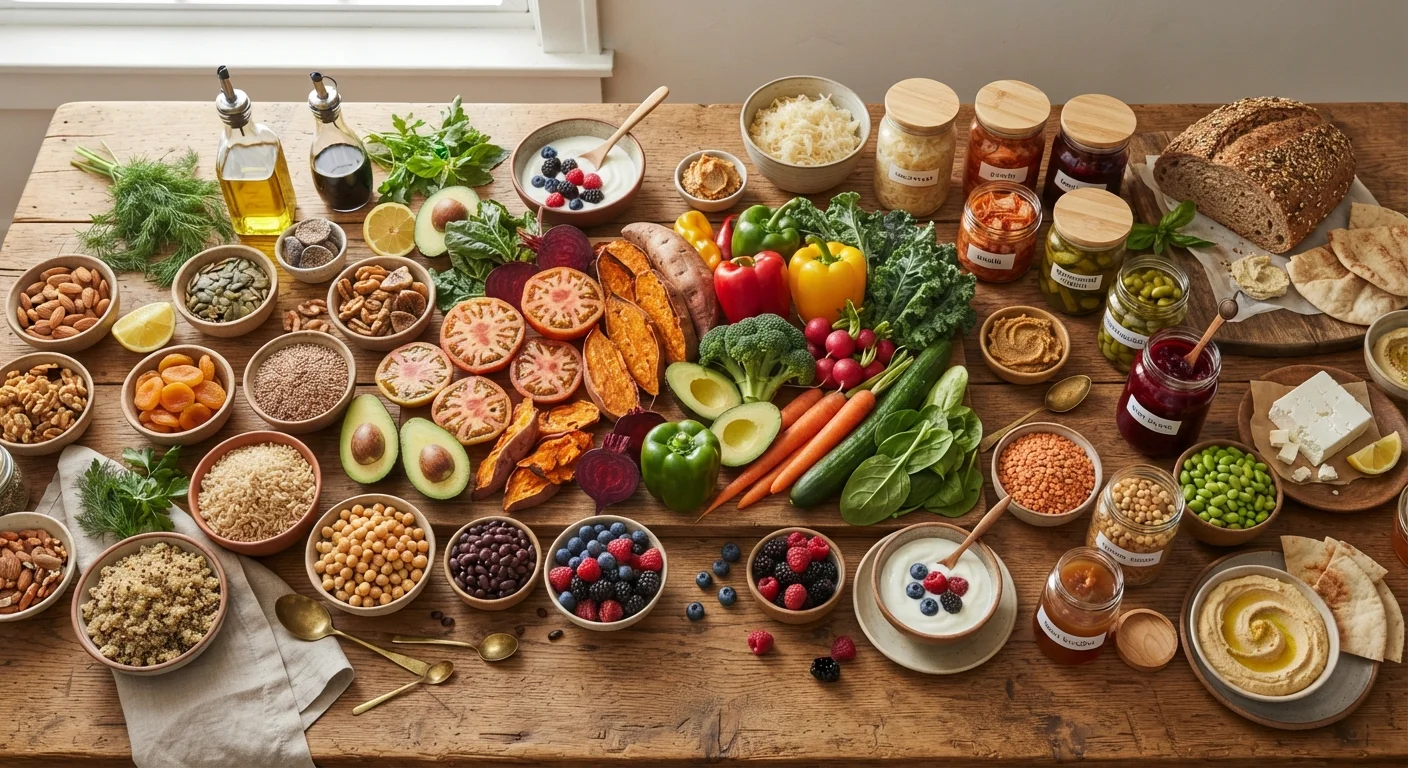
The clearest lesson from microbiome research is that dietary diversity matters. Studies consistently show that people who eat a wider variety of plant foods tend to have richer, more diverse gut microbiomes - and microbial diversity is generally considered a marker of gut health. This doesn't require exotic foods; rotating among different vegetables, legumes, whole grains, nuts, and seeds is a practical starting point.
Fiber deserves special attention. Most Americans consume well below the generally recommended daily intake, and fiber is the primary fuel source for many beneficial gut bacteria. Dietary fiber from whole foods - not supplements - is where the most consistent benefits are observed.
Highly processed foods, on the other hand, are associated with lower microbial diversity and higher levels of inflammatory markers in observational studies. This doesn't mean an occasional processed food is harmful, but a diet dominated by ultra-processed options appears to work against a varied microbiome over time. Various traditional eating patterns, such as those examined in global dietary pattern research, tend to share a common thread: high plant diversity and limited ultra-processed food.
~5%
Americans meeting daily fiber recommendations
Research published in the American Journal of Lifestyle Medicine estimates that only about 5% of Americans consume adequate dietary fiber, with the average intake falling well below general public health targets.
30+
Plant varieties per week linked to microbiome diversity
The American Gut Project, one of the largest citizen-science microbiome studies, found that people eating more than 30 different plant foods per week had significantly more diverse gut microbiomes than those eating 10 or fewer.
38 trillion
Estimated microbial cells in the human gut
A widely cited 2016 estimate published in Cell suggests the human body contains roughly equal numbers of human and microbial cells, with the vast majority of microbes residing in the colon.
It's also worth noting that the gut microbiome responds to eating patterns over time, not single meals. Consistent habits carry more weight than any individual food or supplement.
This article provides general health information and education. It is not a substitute for professional medical or dietary advice. Consult a qualified healthcare provider for guidance specific to your health situation.
The content provided on our blog site traverses numerous categories, offering readers valuable and practical information. Readers can use the editorial team’s research and data to gain more insights into their topics of interest. However, they are requested not to treat the articles as conclusive. The website team cannot be held responsible for differences in data or inaccuracies found across other platforms. Please also note that the site might also miss out on various schemes and offers available that the readers may find more beneficial than the ones we cover.