

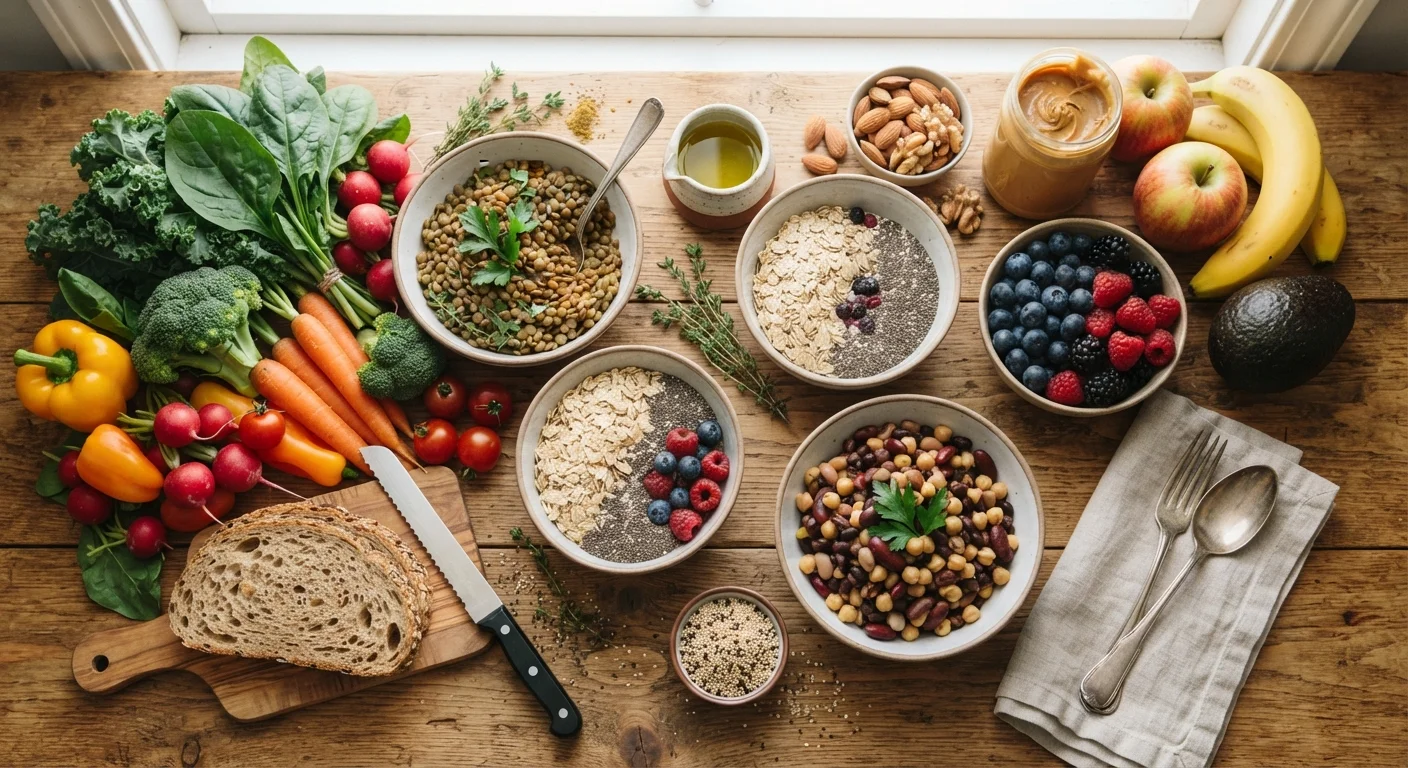
Why the Fiber Gap Is a Public Health Concern
Dietary fiber is one of the most studied and consistently recommended components of a healthy diet - yet national nutrition surveys suggest the average American adult consumes only around 10-15 grams per day, well below federal dietary recommendations. Health researchers sometimes refer to this shortfall as the "fiber gap," and it has real implications for population-level health outcomes.
The root cause is straightforward: the American food supply is heavily weighted toward ultra-processed products that have had most of their natural fiber removed. Refined grains, packaged snacks, and fast food staples are low in fiber almost by definition. When these foods make up a large share of daily calorie intake, meeting fiber goals becomes genuinely difficult.
Understanding why fiber matters - and which foods deliver it most effectively - is a practical starting point for anyone looking to make meaningful improvements to their everyday diet. For a broader look at how to interpret what food packaging actually communicates about nutritional content, see our guide to reading nutrition labels.
~10-15g
Average daily fiber intake for U.S. adults
Dietary surveys consistently show American adults fall well short of the 22-34g recommended by federal dietary guidelines.
95%
Americans not meeting fiber recommendations
The American Society for Nutrition has described fiber as one of the most widespread nutrient shortfalls in the U.S. diet.
7-8g
Fiber in half a cup of cooked lentils
Legumes are among the most fiber-dense foods available and are widely cited by dietitians as a practical tool for closing the fiber gap.
Soluble vs. Insoluble Fiber: What the Difference Means for Your Body
Fiber is not a single substance. It encompasses a range of plant-based compounds that behave differently in the digestive tract, and understanding both main types helps clarify why eating a variety of plant foods matters.
Soluble fiber dissolves in water and forms a viscous, gel-like material in the intestines. This slows the absorption of glucose into the bloodstream, which supports more stable blood sugar levels after meals. Soluble fiber also binds to bile acids - compounds made partly from cholesterol - and helps carry them out of the body, contributing to modest reductions in LDL (low-density lipoprotein) cholesterol over time. Oats, barley, apples, citrus fruits, and legumes are particularly rich in soluble fiber.
Insoluble fiber does not dissolve in water. Instead, it adds bulk to stool and helps food move through the digestive system more efficiently. This is the type most associated with regularity and the prevention of constipation. Whole wheat, bran, nuts, seeds, and most vegetables deliver substantial insoluble fiber.
Most plant foods contain a mix of both types, which is one reason that eating a wide variety of whole plant foods - rather than focusing on a single "superfood" - provides more consistent digestive and metabolic benefits. For a jargon-free reference on other nutrition terms you'll encounter, explore our everyday nutrition terms guide.
The Health Effects Supported by Research
Decades of nutritional epidemiology and clinical research have linked higher fiber intake to a range of health outcomes. It is important to note that much of this evidence comes from observational studies, which show associations rather than direct cause and effect - but the consistency of findings across diverse populations gives researchers confidence in fiber's role.
Digestive health: Insoluble fiber supports regular bowel movements and reduces constipation risk. Higher fiber diets are also associated with a lower risk of diverticular disease, a condition where small pouches form in the colon wall.
Blood sugar regulation: Soluble fiber slows glucose absorption, helping to moderate post-meal blood sugar spikes. This effect is relevant not only for people managing type 2 diabetes but also for anyone interested in sustained energy levels throughout the day.
Cardiovascular health: Multiple large studies associate higher dietary fiber intake - particularly from whole grains and legumes - with lower rates of cardiovascular disease. The cholesterol-lowering effect of soluble fiber is one plausible mechanism.
Gut microbiome support: Fermentable fibers serve as food for beneficial bacteria in the large intestine, promoting a more diverse microbial ecosystem. Gut microbiome research is a rapidly evolving field. For a grounded overview of what current science does and doesn't confirm, see our article on gut health and daily diet.
“Dietary fiber is the nutrient that keeps giving - it feeds your gut bacteria, moderates blood sugar, and supports heart health, all at once. Yet it remains one of the most consistently underconsumed nutrients in Western diets.”
— Dr. David Katz, Physician and researcher in preventive medicine and nutrition
Practical Ways to Eat More Fiber Every Day
Increasing fiber intake does not require dramatic dietary changes or expensive specialty products. Small, consistent shifts in food choices tend to add up significantly over the course of a day.
- Switch to whole grains: Replacing white bread, white rice, and refined pasta with whole-grain versions adds meaningful fiber without major changes to meal structure.
- Add legumes regularly: Beans, lentils, and chickpeas are among the most fiber-dense foods available. Adding them to soups, salads, or grain bowls even a few times a week makes a measurable difference.
- Eat fruits and vegetables with skins on: Much of a fruit or vegetable's fiber is concentrated in or near the skin. Leaving skins on apples, cucumbers, and potatoes preserves this.
- Choose nuts and seeds as snacks: Almonds, chia seeds, flaxseeds, and sunflower seeds deliver fiber alongside healthy fats and protein.
- Increase intake gradually: Moving from a low-fiber diet to a high-fiber one quickly can cause bloating and discomfort. A gradual increase over several weeks, alongside adequate water intake, allows the digestive system to adjust.
Increase Fiber Gradually to Avoid Discomfort
If your current fiber intake is low, aim to add roughly 5 grams per day each week rather than overhauling your diet all at once. Drinking adequate water throughout the day is equally important - fiber absorbs water in the intestines, and dehydration can worsen rather than relieve constipation. Most people find their digestive system adapts within a few weeks.
It is also worth developing the habit of checking fiber content on nutrition labels when choosing packaged foods. A product providing 5 grams or more of fiber per serving is generally considered a high-fiber food. Scrutinizing ingredient lists can also help - whole grains should appear first, not as secondary additions.
This article is for general informational and educational purposes only and is not a substitute for professional medical or dietary advice. Consult a qualified healthcare provider or registered dietitian for guidance tailored to your individual health needs.
Frequently Asked Questions
The Dietary Guidelines for Americans recommend 22-28 grams per day for adult women and 28-34 grams per day for adult men, depending on age. Needs can vary based on individual health factors. Most Americans consume only around 10-15 grams daily on average.
Legumes (beans, lentils, chickpeas), whole grains (oats, barley, brown rice), vegetables (broccoli, artichokes, carrots), fruits (pears, apples, berries), nuts, and seeds are among the richest sources. Eating a varied, plant-forward diet is the most effective strategy for meeting fiber goals.
Yes, dramatically increasing fiber intake in a short period can cause bloating, gas, cramping, or constipation. Gradually increasing intake over several weeks while staying well-hydrated helps the digestive system adapt comfortably.
Fiber supplements can help fill gaps, but they typically provide only one type of fiber and lack the vitamins, minerals, and phytonutrients found in whole plant foods. For most people, food-first approaches are preferred by health professionals.
High-fiber foods tend to be more filling and digest more slowly, which can support satiety and help people manage portion sizes naturally. However, fiber alone is not a weight-loss solution, and overall dietary patterns matter significantly.
Not exactly, but they overlap. Prebiotics are specific types of fiber that selectively feed beneficial gut bacteria. All prebiotics are fiber, but not all fiber qualifies as prebiotic. Both contribute to gut health in complementary ways.
The content provided on our blog site traverses numerous categories, offering readers valuable and practical information. Readers can use the editorial team’s research and data to gain more insights into their topics of interest. However, they are requested not to treat the articles as conclusive. The website team cannot be held responsible for differences in data or inaccuracies found across other platforms. Please also note that the site might also miss out on various schemes and offers available that the readers may find more beneficial than the ones we cover.