

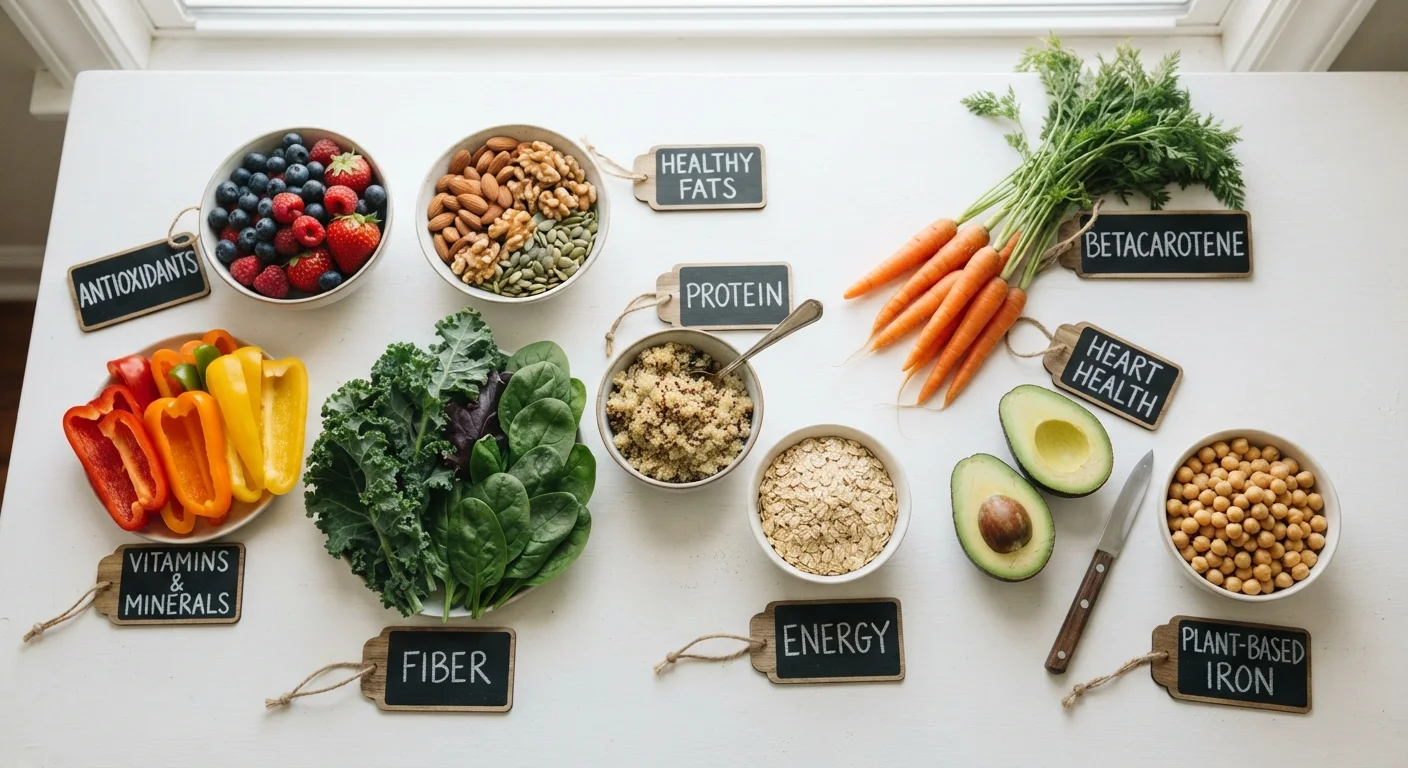
Why Nutrition Vocabulary Matters
Walk through any grocery store or scroll through a health article and you'll encounter terms like antioxidants, glycemic index, or refined carbohydrates - often without a clear explanation of what they actually mean for your daily eating. Nutrition science has its own language, and that language shapes how food is marketed, how labels are written, and how health advice gets framed.
This reference guide cuts through the noise. Whether you're new to thinking about what you eat or simply want a reliable vocabulary refresher, the terms below represent the concepts most worth understanding - not because they'll transform your diet overnight, but because informed readers make better decisions at the table and in the store.
This article is general nutrition education, not medical or dietary advice. For personalized guidance, consult a registered dietitian or your healthcare provider.
Macronutrient
One of three primary nutrient categories - carbohydrates, proteins, and fats - that provide energy (calories) and support essential body functions. All three are needed in relatively large quantities compared to micronutrients.
Micronutrient
Vitamins and minerals required by the body in small amounts. Despite their small quantities, they play essential roles in metabolism, immune function, bone health, and many other processes.
Glycemic Index (GI)
A scale from 0 to 100 that ranks how quickly carbohydrate-containing foods raise blood glucose levels, using pure glucose as the reference point of 100. Lower values indicate a slower, more moderate blood sugar response.
Dietary Fiber
The indigestible portion of plant foods. It comes in two types - soluble (which dissolves in water) and insoluble (which does not) - and supports digestive health, blood sugar regulation, and feelings of fullness.
Antioxidant
A compound that can neutralize free radicals - unstable molecules that can damage cells. Antioxidants are found naturally in many fruits, vegetables, nuts, and whole grains.
Refined Carbohydrate
A carbohydrate that has been processed to remove the bran and germ, stripping away fiber, vitamins, and minerals. White flour and white rice are common examples. Refined carbohydrates are often digested more quickly than their whole-grain counterparts.
Saturated Fat
A type of dietary fat that is solid at room temperature and found primarily in animal products and some tropical oils. Current dietary guidelines generally recommend limiting saturated fat intake, though the science continues to be studied.
Trans Fat
An industrially produced fat (partially hydrogenated oil) linked to adverse cardiovascular health outcomes. The FDA has largely phased out artificial trans fats in the US food supply, though small amounts may still appear in some products.
Bioavailability
The degree to which a nutrient can be absorbed and used by the body. A food may contain a nutrient in high amounts, but if bioavailability is low, much of it passes through unabsorbed.
Caloric Density
The number of calories per gram or serving of a food. Foods with low caloric density (like most vegetables) provide fewer calories relative to their volume, while high-caloric-density foods pack more energy into a smaller amount.
Core Terms in Context: From Label to Plate
Knowing a definition is one thing; knowing how a term applies to your actual food choices is another. Here's how several key concepts show up in everyday eating decisions.
Macronutrients vs. Micronutrients
Every food you eat delivers a mix of macronutrients - carbohydrates, proteins, and fats - which supply energy measured in calories. Each macronutrient plays a distinct role in fueling your body. Micronutrients - vitamins and minerals - are needed in far smaller amounts but are equally critical; even tiny deficiencies can have outsized health effects.
Glycemic Index and Blood Sugar
The glycemic index (GI) ranks carbohydrate-containing foods by how quickly they raise blood glucose levels relative to pure glucose. High-GI foods cause rapid spikes; lower-GI foods produce more gradual rises. Context matters here: GI doesn't operate in isolation - portion size, food combinations, cooking methods, and individual metabolism all influence the actual blood sugar response. It's a useful reference point, not a rigid rulebook.
Dietary Fiber: Soluble vs. Insoluble
Soluble fiber dissolves in water to form a gel-like substance, which can slow digestion and help moderate blood sugar and cholesterol levels. Oats, beans, and apples are good sources. Insoluble fiber doesn't dissolve - it adds bulk to stool and supports digestive regularity. Whole grains and many vegetables provide it. Most Americans consume well below the general recommended intake for fiber, according to federal dietary data.
Whole Foods and Processing Levels
The term whole food refers to foods that are minimally processed and close to their natural state. Ultra-processed foods have been significantly altered through industrial processes and typically contain additives not found in home cooking. The spectrum between whole and processed is more nuanced than a binary - canned beans are processed but remain nutritionally valuable, for example.
| Macronutrient categories | Carbohydrates, Proteins, Fats (USDA Dietary Guidelines for Americans) |
| Calories per gram of fat | 9 kcal/gram (FDA nutrition labeling standards) |
| Calories per gram of carbs or protein | 4 kcal/gram (FDA nutrition labeling standards) |
| Glycemic Index reference point | Pure glucose = 100 (Harvard T.H. Chan School of Public Health) |
| "Natural" FDA definition for most foods | No strict regulatory definition (U.S. Food and Drug Administration) |
| "Organic" certification authority (US) | USDA National Organic Program (U.S. Department of Agriculture) |
Terms That Often Get Misused
Some nutrition terms carry scientific definitions that differ sharply from how they're used in marketing or casual conversation.
Antioxidants
Antioxidants are compounds - including certain vitamins like C and E, and plant pigments called polyphenols - that can neutralize unstable molecules called free radicals in the body. While diets rich in antioxidant-containing foods (fruits, vegetables, nuts) are associated with positive health outcomes in observational research, the science on isolated antioxidant supplements is more mixed. Eating a varied diet is generally considered a more reliable approach than supplementing individual antioxidants.
Natural, Organic, and Non-GMO
These terms have distinct legal and regulatory meanings that don't always align with what consumers assume. Organic is a USDA-certified production standard. Non-GMO refers to the absence of genetically modified ingredients - a process claim, not a nutrition claim. Natural, meanwhile, has no strict FDA regulatory definition for most foods, meaning it can appear on packaging with limited enforcement. Front-of-package claims are worth scrutinizing carefully.
Empty Calories
A food described as providing empty calories supplies energy (calories from sugar or fat) with little to no accompanying nutrients - vitamins, minerals, or fiber. Sweetened beverages and heavily refined snack foods are common examples. The phrase is descriptive, not a moral judgment about eating habits.
This article is for general informational and educational purposes only and is not a substitute for professional medical or dietary advice. Consult a qualified healthcare provider or registered dietitian for guidance tailored to your individual needs.
The content provided on our blog site traverses numerous categories, offering readers valuable and practical information. Readers can use the editorial team’s research and data to gain more insights into their topics of interest. However, they are requested not to treat the articles as conclusive. The website team cannot be held responsible for differences in data or inaccuracies found across other platforms. Please also note that the site might also miss out on various schemes and offers available that the readers may find more beneficial than the ones we cover.