

Our Verdict
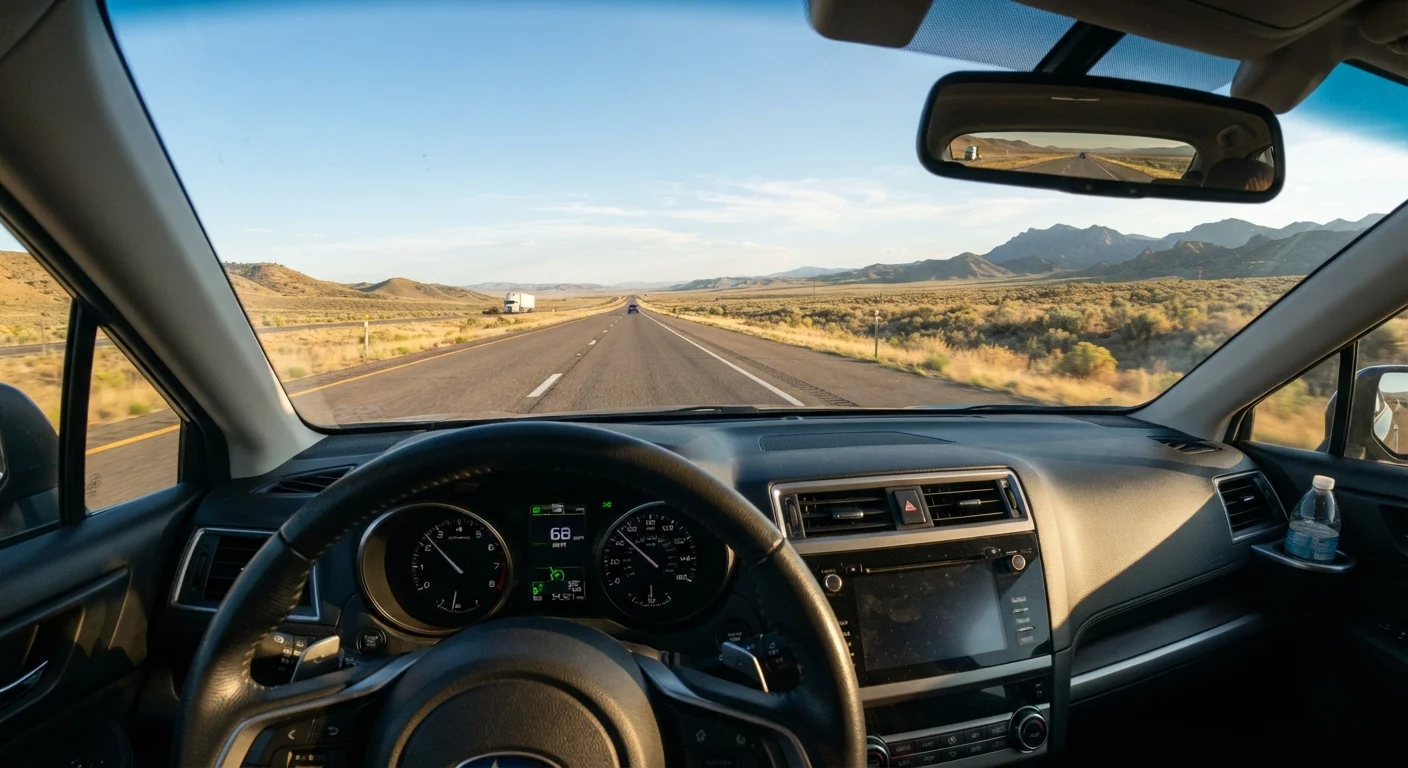
Cruise control is a genuinely useful tool when conditions allow it - namely flat highways, light traffic, and dry roads. In those settings it reduces driver fatigue and helps maintain steady fuel consumption. However, it is not a universal efficiency booster; hilly terrain, rain, ice, and dense traffic all argue against it.
Drivers who regularly cover long, flat highway stretches in dry conditions and want a reliable way to manage speed and reduce fatigue without sacrificing safety.
What Cruise Control Actually Does
Cruise control is a speed-maintenance system built into most modern vehicles. Once activated at a set speed, the vehicle's throttle adjusts automatically to hold that speed without driver input on the accelerator. Traditional cruise control maintains a fixed speed regardless of surrounding traffic; adaptive cruise control (ACC) - increasingly standard on newer vehicles - also monitors the distance to the car ahead and adjusts speed accordingly.
Understanding that distinction matters because the two systems have meaningfully different use cases. Traditional cruise control is essentially a throttle lock, while ACC adds a layer of situational awareness. For the purposes of this article, both are covered, with distinctions noted where relevant.
Where Cruise Control Genuinely Helps
Maintains consistent speed on flat highways
Human throttle input naturally drifts, causing speed fluctuations that waste fuel. Cruise control eliminates this variability, helping fuel consumption stay steady over long distances.
Reduces driver fatigue on long trips
Holding a steady pedal position for hours creates physical and mental strain. Removing that input lets drivers focus on steering and hazard awareness instead.
Helps avoid unintentional speeding
On open roads, drivers often creep above the speed limit without noticing. A set speed removes that drift and keeps the vehicle within legal limits.
Adaptive systems manage following distance automatically
Modern adaptive cruise control adjusts speed relative to the vehicle ahead, reducing the micro-corrections that exhaust drivers in light highway traffic.
The clearest benefit of cruise control is consistent speed on flat highways. Human drivers naturally drift - accelerating slightly, then easing off - in a pattern that wastes fuel. A steady throttle eliminates that variability. Research from fuel economy studies consistently shows that speed stability is one of the strongest predictors of efficient highway consumption, which is why cruise control earns its reputation on long, open roads.
For fuel context, see our breakdown of how driving conditions affect fuel use.
Driver fatigue on long trips is a genuine safety concern. Holding a steady foot position for hours creates physical tension. Cruise control removes that load, allowing the driver to focus on steering, scanning, and awareness - the tasks that actually require a human. Adaptive cruise control extends this by managing following distance, reducing the micro-corrections that mentally exhaust a driver in light highway traffic.
Where Cruise Control Works Against You
Inefficient on hilly or rolling terrain
Traditional cruise control applies aggressive throttle on uphill grades to hold a set speed, often using more fuel than a driver manually managing pace would.
Dangerous on wet, icy, or slippery roads
A fixed throttle setting during a skid delays the instinctive response a driver's foot would otherwise make, increasing the risk of losing vehicle control.
Unsuitable in heavy or stop-and-go traffic
Sudden slowdowns require manual override, adding potential reaction time. Even adaptive systems have limits in rapidly changing, dense traffic conditions.
Can encourage reduced driver attention
The comfort of automation may cause some drivers to mentally disengage, which is dangerous since cruise control does not handle every road situation.
Hills are the most common scenario where cruise control hurts rather than helps. On a traditional system, the vehicle aggressively applies throttle to maintain the set speed on an uphill grade, often downshifting and over-revving. A skilled human driver would naturally ease off slightly on climbs and recover speed gradually on descents - a technique covered in detail in our guide on smooth driving habits that save fuel. Cruise control cannot replicate that nuance on rolling terrain.
In heavy or unpredictable traffic, cruise control - particularly traditional systems - creates risk. A sudden slowdown ahead requires the driver to manually override the system, potentially adding reaction time. Adaptive systems handle this better, but even ACC has limits in rapidly changing stop-and-go situations.
Cruise Control and Traction Loss: A Critical Warning
If your vehicle begins to skid or a wheel loses traction, cruise control can actively work against recovery by continuing to apply throttle. Most safety authorities and vehicle manufacturers explicitly advise turning off cruise control whenever road surfaces are wet, icy, or unpredictable. This applies even to adaptive systems - traction management is a job for the driver, not the speed-hold function.
Weather is perhaps the most critical factor. On wet, icy, or snow-covered roads, maintaining a fixed throttle setting during a skid or loss of traction can delay the natural response a driver's foot would otherwise make. Wet and icy road driving demands active, responsive control - not automation.
Practical Rules for Smarter Use
A few practical guidelines help drivers get the most out of cruise control without relying on it in the wrong situations:
- Activate it on flat, dry, lightly trafficked highways - this is its home environment.
- Disengage on hilly terrain and manage speed manually to avoid unnecessary throttle surges.
- Switch it off in any precipitation - rain, sleet, snow, or ice. No exceptions.
- Avoid it in dense or unpredictable traffic, even with adaptive systems; maintain active control.
- Use ACC's following-distance settings conservatively - a longer gap gives more buffer for unexpected slowdowns.
Cruise control pairs well with the broader habit of reading traffic well ahead. Anticipating flow changes - a skill explored in our guide on anticipating traffic to reduce wear and fuel use - lets drivers decide earlier whether to keep cruise control engaged or take back manual control smoothly.
7-14%
Potential fuel savings from consistent highway speed
The U.S. Department of Energy notes that avoiding speed fluctuations and aggressive acceleration on highways can improve fuel economy in this range.
~3 sec
Additional reaction time risk when overriding cruise control
Traffic safety research indicates that the cognitive step of recognizing a hazard and disengaging automation can add measurable delay compared to active manual driving.
The content provided on our blog site traverses numerous categories, offering readers valuable and practical information. Readers can use the editorial team’s research and data to gain more insights into their topics of interest. However, they are requested not to treat the articles as conclusive. The website team cannot be held responsible for differences in data or inaccuracies found across other platforms. Please also note that the site might also miss out on various schemes and offers available that the readers may find more beneficial than the ones we cover.