

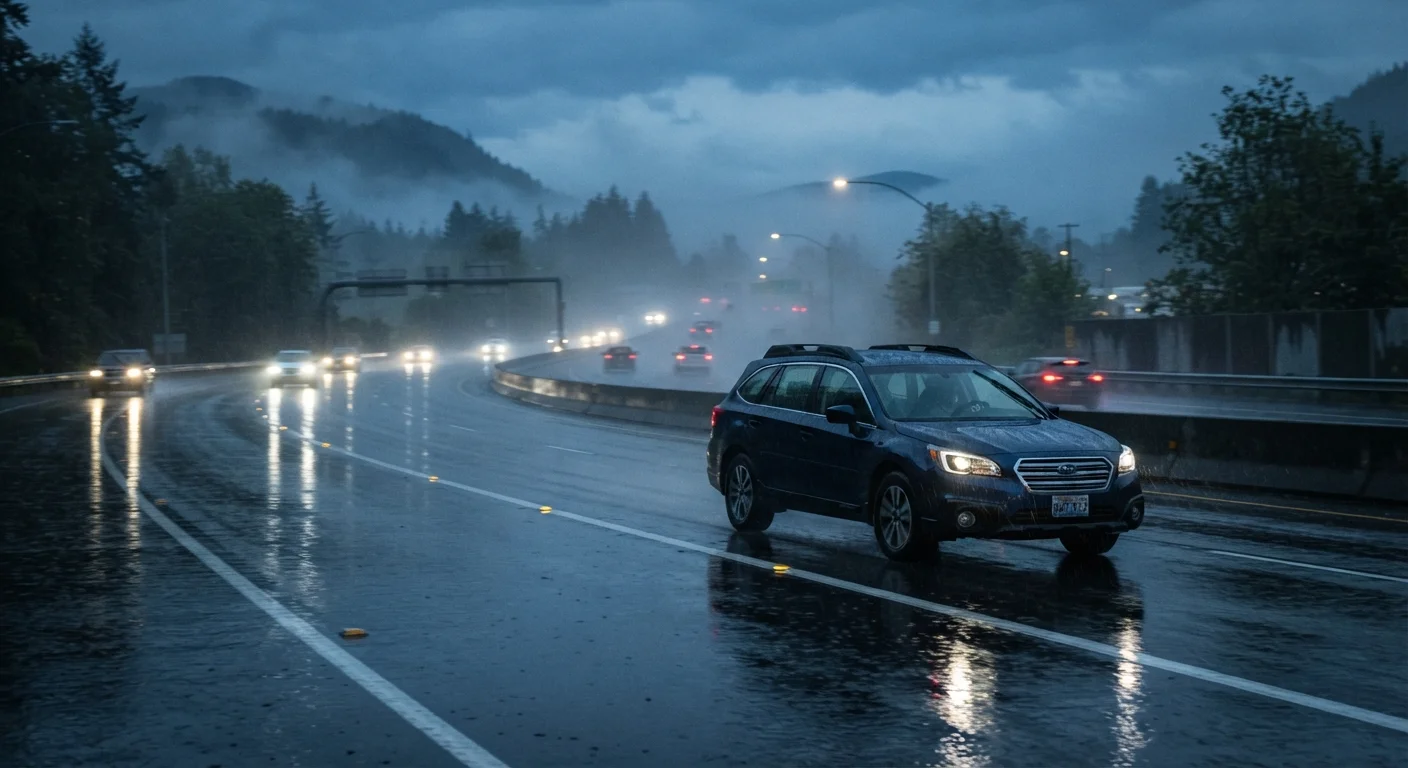
Why Bad-Weather Driving Demands a Different Approach
Most driving skill is built in dry, predictable conditions. Rain, snow, and ice change the fundamental contract between your tires and the road - reducing the friction that makes steering, braking, and accelerating work the way you expect. The adjustments that matter are not dramatic; they are largely about timing, smoothness, and margin.
Rain reduces grip by creating a thin film of water between the tire and pavement. At higher speeds, tires can lose contact with the road entirely - a condition called hydroplaning - leaving steering momentarily ineffective. Snow compacts unevenly and can hide patches of ice underneath. Ice is the most hazardous of the three because friction values can drop to a fraction of what even wet pavement offers.
Black Ice Offers No Visual Warning
Black ice is a thin, nearly transparent layer of ice that blends with pavement and gives no visible cue that traction is compromised. It forms most often on bridges, overpasses, and shaded road sections when temperatures hover near freezing. If your car suddenly feels lighter or your steering goes unusually quiet, you may be on black ice - ease off the accelerator gradually and avoid sudden steering inputs.
Understanding which condition you are driving in helps you calibrate. Rain at 40 mph demands more caution than rain at 25 mph. Packed snow is more manageable than fresh powder over ice. Arriving at that awareness - rather than applying a single blanket rule - is what separates capable bad-weather drivers from lucky ones.
Your vehicle's condition is also a factor. Worn tires significantly worsen wet-weather performance. Before the season changes, it is worth reviewing our tire pressure and tread depth field guide and the broader seasonal car maintenance checklist to make sure your vehicle is ready before conditions worsen.
Step-by-Step Technique Adjustments
The steps below build a complete approach to bad-weather driving, from vehicle preparation through in-motion technique. Work through them in order - preparation shapes how every subsequent adjustment functions.
What you will need
Tire Tread Depth Gauge
Measures remaining tread to confirm tires have adequate grip for wet or snowy roads.
Ice Scraper and Snow Brush
Clears ice and snow from all windows, mirrors, and lights before driving.
Tire Pressure Gauge
Verifies correct inflation, which affects handling and traction in cold conditions.
Emergency Kit (blanket, flashlight, jumper cables, sand or kitty litter)
Provides basic safety resources if you become stranded in winter conditions.
Prepare Your Vehicle Before You Drive
Before pulling out of your driveway in bad weather, take five minutes to prepare. Clear all snow and ice from every window, mirror, headlight, and taillight - not just a small porthole on the windshield. Snow left on the roof can slide forward onto your windshield when you brake, and it can fly off onto following drivers.
Check that your defrost systems (front and rear) are functioning, that your wipers clear cleanly, and that your headlights are on. In many states, driving with headlights on in rain or snow is legally required - and it makes you visible to others.
Multiply Your Following Distance
The standard three-second following distance for dry roads is not enough when traction is reduced. In rain, increase your following distance to at least five to six seconds. On snow or ice, eight to ten seconds is more appropriate - stopping distances on ice can be up to ten times longer than on dry pavement.
To measure following distance, pick a fixed point on the road ahead (a sign, a line) and count the seconds from when the vehicle in front passes it until you do. If you reach it before your count, you are too close.
Brake Early, Smoothly, and in a Straight Line
Hard, late braking is one of the most common causes of skids on slick roads. Instead, begin braking much earlier than you normally would and apply the pedal gradually. Smooth pressure builds brake force progressively, giving tires the best chance of maintaining grip.
Whenever possible, brake while your vehicle is traveling in a straight line - not while turning. Combining braking and steering forces on a slippery surface often exceeds available traction. Slow down before a curve, then steer through it with light throttle.
Accelerate Gently to Avoid Wheelspin
On snow or ice, pressing the accelerator too firmly breaks traction and causes the drive wheels to spin - which slows forward progress and can trigger a loss of control. Accelerate gradually from stops, using the lightest throttle input that keeps you moving.
On manual transmissions, starting in second gear can reduce torque delivery enough to prevent wheelspin on ice. On automatics with a snow or low-traction mode, engage it before setting off - these modes limit throttle response and may hold lower gears to reduce power surges.
Steer With Deliberate, Controlled Inputs
Abrupt steering movements on a slippery surface can cause the front tires to lose grip and push wide (understeer) or the rear to step out (oversteer). Keep steering inputs smooth and measured. If you need to change lanes or navigate a curve, do so gradually - plan well ahead so you have time to steer gently.
If the rear of your vehicle starts to slide, steer gently in the direction of the slide (commonly called "steering into the skid") while easing off the accelerator. Avoid overcorrecting - small, controlled inputs are more effective than dramatic wheel movements.
Understand What Your Driver Aids Can and Cannot Do
Modern vehicles typically include ABS (anti-lock braking system), traction control, and electronic stability control (ESC). These systems are genuinely effective - ESC in particular has been credited with significantly reducing single-vehicle crash rates. However, they work within the limits of available tire-to-road friction. When that friction is very low, no electronic aid can fully overcome the physics.
Traction control may limit wheelspin but cannot make ice grip like dry pavement. Four-wheel or all-wheel drive helps with acceleration and climbing but does not improve braking or cornering grip beyond what your tires allow. Adjust your expectations accordingly and do not treat AWD as license to drive at normal speeds in icy conditions.
For further context on when technology aids help and when driver judgment must lead, see our cruise control guide - particularly the section on when to disengage automated systems.
Check Your Tires Before Winter Weather Arrives
Worn tread and under-inflated tires dramatically reduce grip in wet or snowy conditions. Review our tire pressure and tread depth guide to confirm your tires are ready before conditions deteriorate. Cold temperatures also cause tire pressure to drop, so check inflation more frequently in winter months.
Do Not Pump ABS Brakes
If your vehicle has anti-lock brakes (ABS) - standard on virtually all cars made after 2012 - do not pump the brake pedal during an emergency stop. Apply firm, steady pressure and let the system modulate braking for you. Pumping defeats the ABS function and extends stopping distance on slick surfaces.
Common Mistakes That Increase Risk
Even experienced drivers fall into patterns that increase risk in poor conditions. Overconfidence after years of uneventful winter driving is common - conditions vary, and past success does not guarantee future safety. A few specific habits consistently appear in adverse-weather incidents:
- Driving at normal speed and just hoping for the best. Slowing down meaningfully - not just slightly - is the single most reliable risk reduction available.
- Following too closely behind large vehicles. Trucks and buses create spray and reduce visibility while also needing more stopping distance themselves.
- Failing to account for bridge and overpass freezing. These surfaces lose ground heat from below and freeze before surrounding roads - treat every elevated section with extra caution when temperatures approach or are below freezing.
- Relying entirely on AWD or 4WD. As noted in the steps, these systems improve traction under power but do not improve braking distance on ice.
Smooth, anticipatory driving that reads the road well ahead is the most durable habit for reducing risk across all weather types. If conditions deteriorate to the point where safe travel is genuinely in doubt, delaying the trip is a legitimate and reasonable choice.
The content provided on our blog site traverses numerous categories, offering readers valuable and practical information. Readers can use the editorial team’s research and data to gain more insights into their topics of interest. However, they are requested not to treat the articles as conclusive. The website team cannot be held responsible for differences in data or inaccuracies found across other platforms. Please also note that the site might also miss out on various schemes and offers available that the readers may find more beneficial than the ones we cover.