

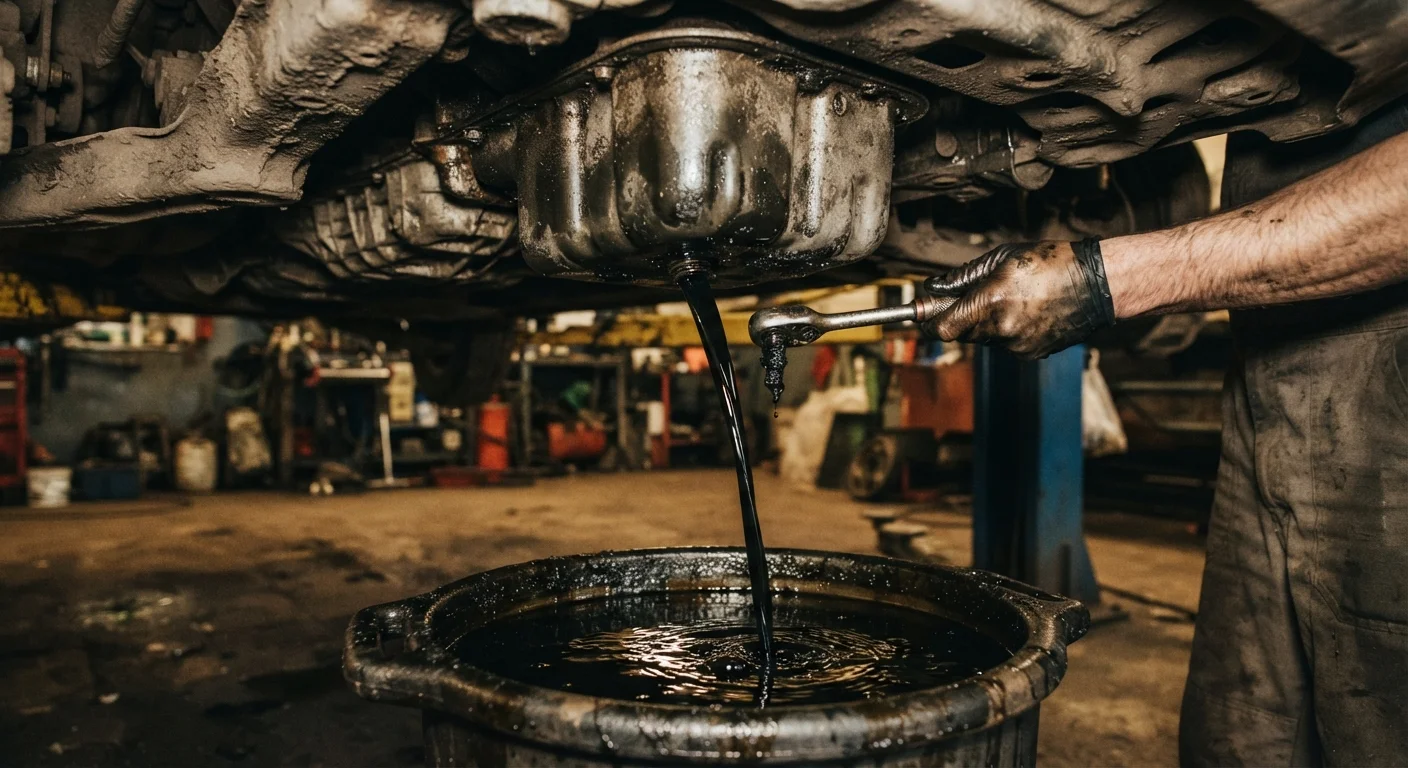
What Oil Actually Does - and Why Age Ruins It
Motor oil does three essential jobs simultaneously: it lubricates moving metal surfaces to reduce friction, carries heat away from the combustion chamber, and suspends contaminants so they can be captured by the filter. Fresh oil handles all three effectively. Old oil does not.
Over time and mileage, oil oxidizes, accumulates combustion byproducts like soot and acids, and its viscosity-modifying additives break down. What was once a slippery, protective film becomes a thicker, less effective fluid. Eventually it can turn into a sticky residue called engine sludge - a condition that physically blocks oil passages and starves components like the camshaft, lifters, and bearings of the lubrication they need to survive.
Understanding this process is the first step to recognizing why delayed oil changes are a mechanical problem, not just a service reminder you can dismiss. For a closer look at how interval recommendations are set by engineers, see our guide to oil change intervals.
$4,000-$8,000+
Typical engine replacement cost for a mid-size sedan
Engine replacement estimates from independent repair shops consistently fall in this range, compared to an average oil change costing $35-$100 depending on oil type.
10,000 miles
Modern synthetic oil change interval (many vehicles)
Many current manufacturer-recommended intervals for vehicles using full synthetic oil now extend to 7,500-10,000 miles, according to owner's manual specifications across major automakers.
The Most Common Mistakes Drivers Make with Oil Changes
Most engine damage from neglected oil doesn't happen all at once - it accumulates quietly. Here are the specific errors that drive that damage.
Ignoring the owner's manual interval in favor of the generic 3,000-mile rule.
Why it happens: The 3,000-mile guideline was standard advice for decades and still appears on many quick-lube shop stickers, so many drivers assume it's universal.
Letting the oil level drop significantly without topping it off between changes.
Why it happens: Many drivers assume oil consumption only happens in older or worn engines and don't check the dipstick between service appointments.
Assuming the dashboard oil-pressure warning light is an early warning system.
Why it happens: Drivers sometimes wait for a dashboard alert before acting, not realizing the oil pressure light signals a severe, often already-damaging situation - not a heads-up.
Skipping documented service records to save time or money.
Why it happens: Some owners see paperwork as optional, especially if they handle oil changes themselves and don't keep receipts or a maintenance log.
The Real Financial Stakes of Skipping Service
An oil change is one of the least expensive services your car requires. Pushing past the recommended interval to save that cost is a trade that rarely works in the driver's favor.
When oil fails to lubricate properly, the resulting metal-on-metal friction generates excessive heat and accelerates wear on the crankshaft bearings, cylinder walls, and valve train components. A spun bearing - one that seizes and rotates out of its housing - typically means an engine rebuild or full replacement. Those repairs can run into several thousand dollars depending on the vehicle.
Oil Pressure Light Means Stop Now
If your oil pressure warning light illuminates while driving, do not assume it is a sensor error and continue to your destination. Low oil pressure means engine components may be receiving inadequate lubrication at that moment. Continuing to drive can cause irreversible damage within minutes. Pull over safely, shut off the engine, and have the vehicle inspected before proceeding.
Sludge removal, if caught early, may be possible through an engine flush and multiple oil changes, but there's no guarantee it restores full function if passages have been restricted long enough to cause wear. The maintenance picture shifts further once a vehicle crosses 100,000 miles, where oil quality becomes even more critical to longevity.
It's also worth knowing that using the right type of oil matters - not just changing it on time. Synthetic oil typically holds its protective properties longer than conventional oil. Our comparison of synthetic vs. conventional motor oil explains what those differences mean in practice.
Finally, poor oil maintenance is one of several everyday habits that quietly strain your engine over time. Treating oil changes as optional is one of the more consequential of those habits.
The content provided on our blog site traverses numerous categories, offering readers valuable and practical information. Readers can use the editorial team’s research and data to gain more insights into their topics of interest. However, they are requested not to treat the articles as conclusive. The website team cannot be held responsible for differences in data or inaccuracies found across other platforms. Please also note that the site might also miss out on various schemes and offers available that the readers may find more beneficial than the ones we cover.