

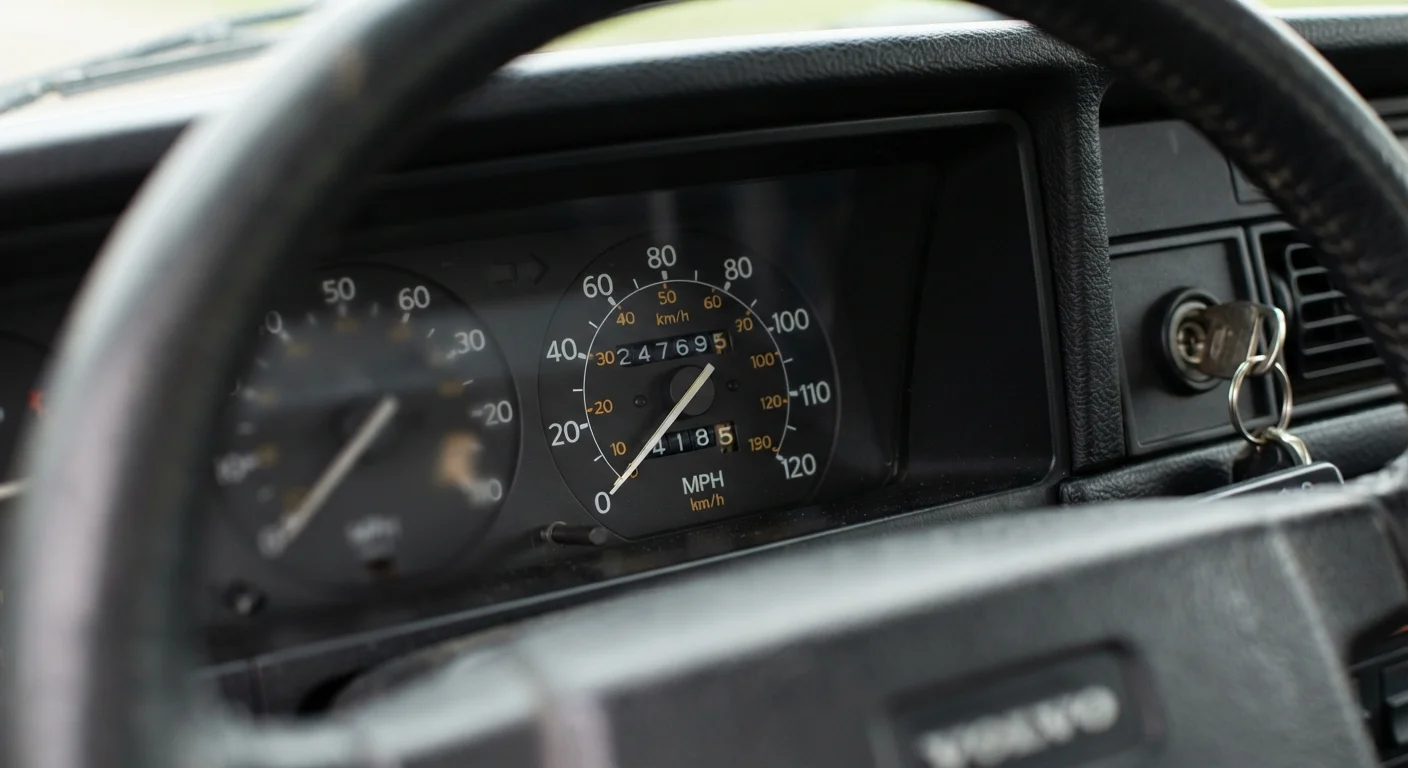
What the Odometer Actually Measures
Your odometer counts cumulative distance - every mile driven since the car rolled off the assembly line adds to that total. It doesn't reset between owners, and it doesn't distinguish between a smooth freeway cruise and a punishing urban commute. That single number is a starting point for evaluating a vehicle, but it carries important context that numbers alone can't convey.
Understanding what that reading does and doesn't tell you is foundational whether you're buying a used car, tracking your own vehicle's service needs, or comparing options. To get a fuller picture of how mileage connects to upkeep, see our guide to decoding your car's maintenance schedule.
~12,000-15,000
Average miles driven per year in the U.S.
According to the U.S. Department of Transportation Federal Highway Administration, American drivers average roughly 12,000 to 15,000 miles annually.
200,000+
Miles many modern vehicles can reach with proper care
Advances in engine design, materials, and lubricants mean well-maintained vehicles commonly exceed 200,000 miles, a threshold that was rare in earlier generations.
~450,000
Odometer fraud cases estimated annually in the U.S.
The National Highway Traffic Safety Administration has historically estimated that odometer fraud affects hundreds of thousands of vehicle transactions each year in the United States.
Why "High Mileage" Is Relative
There's no universal threshold that makes a car unreliable. The significance of an odometer reading depends heavily on several factors that the number itself can't capture.
Type of Miles Driven
Not all miles are created equal. Highway driving - sustained speeds with minimal braking and acceleration - places less stress on an engine and drivetrain than stop-and-go city traffic. A car that has spent most of its life commuting on an interstate may be in better mechanical shape than a lower-mileage vehicle that spent years in urban gridlock.
Maintenance History
A car with 150,000 miles and a complete, documented service record - regular oil changes, timely fluid replacements, and replaced wear items - can outlast a 70,000-mile car that was neglected. Regular oil change intervals and fluid maintenance are among the most direct predictors of engine longevity.
Vehicle Make and Design
Some engines and platforms are simply engineered for longer service lives. Certain models have well-documented histories of reaching 200,000 to 300,000 miles with proper care. Others show wear-related issues earlier. Researching a specific model's reliability track record adds important context to any odometer number.
When Low Mileage Can Be Misleading
A low odometer reading can feel reassuring - but it sometimes masks a different kind of wear. Vehicles that sit unused for months or years develop their own problems: rubber seals dry out, brake components corrode, and fluids degrade without being circulated by regular driving. An older car with suspiciously low mileage deserves scrutiny, not just relief.
Watch for signs that a vehicle history report might surface: inconsistent service records, gaps in ownership, or an odometer reading that doesn't align with the car's visible wear patterns. Odometer fraud - the illegal practice of rolling back a car's mileage - remains a risk in some used car transactions. Under federal law, sellers are required to provide an odometer disclosure statement when a vehicle changes hands.
What High-Mileage Vehicles Actually Need
Once a vehicle crosses the 100,000-mile mark, certain components deserve closer attention - not necessarily because they've failed, but because they're reaching the end of typical service intervals. Timing belts (where applicable), coolant, transmission fluid, and suspension bushings are common focus areas. Dashboard warning lights that appear at higher mileage are worth taking seriously rather than dismissing. Our explainer on what dashboard warning lights are actually telling you can help you interpret what you're seeing.
For a more detailed breakdown of what changes after the 100,000-mile milestone, see our article on how maintenance needs shift for high-mileage vehicles. The right maintenance approach - not the odometer reading alone - determines how much useful life remains in a vehicle.
Always Request a Vehicle History Report
Before evaluating any used vehicle based on its odometer, pull a vehicle history report using the car's VIN (Vehicle Identification Number). These reports can surface odometer discrepancies, accident history, and ownership gaps that the seller may not volunteer. A pre-purchase inspection by an independent, qualified mechanic adds a further layer of protection.
Frequently Asked Questions
Traditionally, anything over 100,000 miles has been considered high mileage. However, modern vehicles with solid maintenance records often continue performing reliably well past that threshold. Context - including the make, model, and service history - matters more than the number itself.
Generally, yes. Highway driving involves steady speeds with less stop-and-go stress on the engine, transmission, and brakes. A car with 80,000 highway miles may be in better mechanical shape than one with 50,000 city miles.
Odometer fraud is illegal under federal law in the United States. Electronic odometers are harder to manipulate than older mechanical ones, but tampering still occurs. Always request a vehicle history report when evaluating a used car.
The U.S. average is roughly 12,000 to 15,000 miles per year. A car driven significantly more than this annually may show more wear at a given age; one driven far less may have age-related issues like dry seals or old fluids regardless of mileage.
Not necessarily. Vehicles that sit unused for extended periods can develop problems - dried-out seals, stale fuel, corroded brake components, and degraded rubber parts. Low mileage needs to be weighed alongside maintenance history and storage conditions.
Most mechanics and manufacturers suggest increasing attention to wear-prone components around the 75,000-100,000-mile range. Timing belts, coolant, transmission fluid, and suspension components often need inspection or replacement in this window.
The content provided on our blog site traverses numerous categories, offering readers valuable and practical information. Readers can use the editorial team’s research and data to gain more insights into their topics of interest. However, they are requested not to treat the articles as conclusive. The website team cannot be held responsible for differences in data or inaccuracies found across other platforms. Please also note that the site might also miss out on various schemes and offers available that the readers may find more beneficial than the ones we cover.