

How the Three Buckets Actually Work
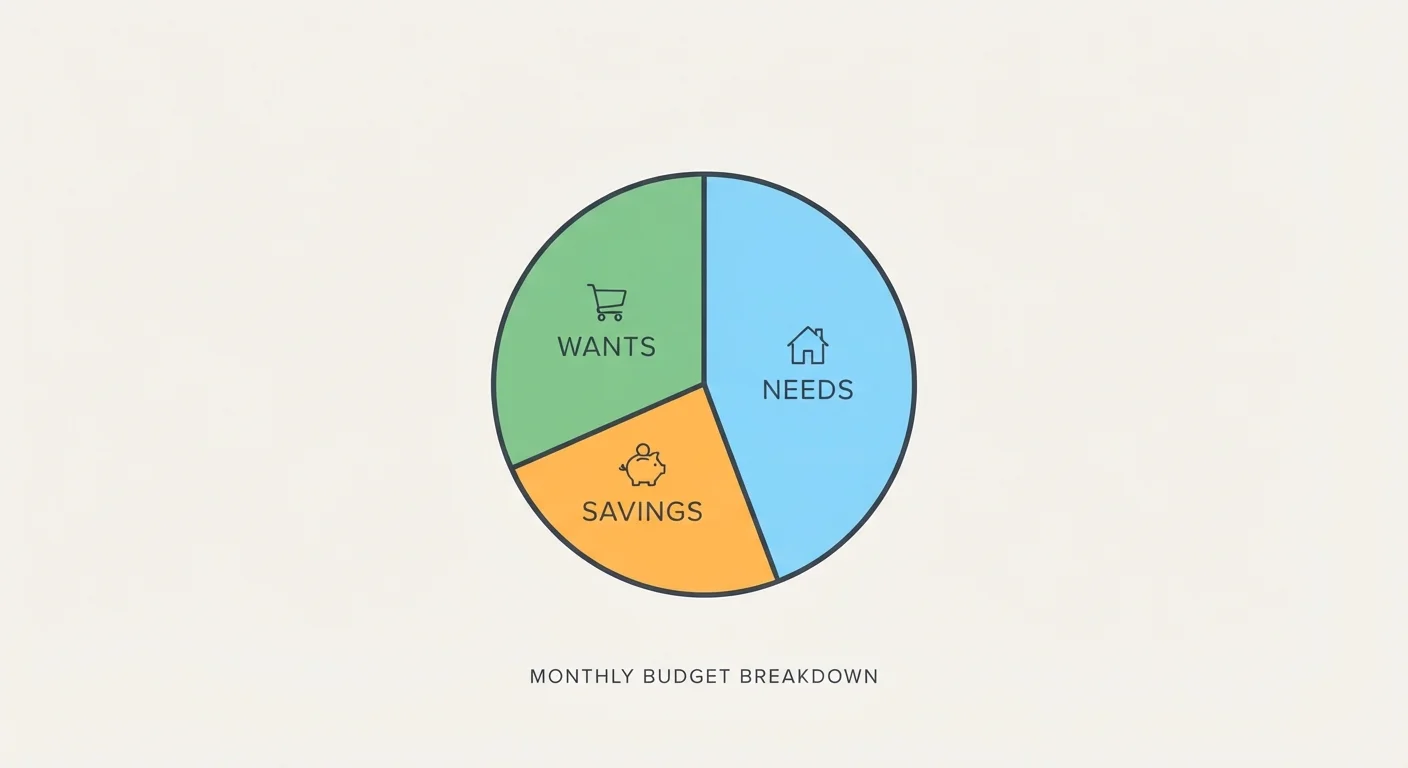
The 50/30/20 rule organizes spending into three broad categories, each applied to your monthly after-tax income. Here is what each bucket covers in practice.
50% - Needs
Needs are non-negotiable expenses: housing, utilities, groceries, transportation required for work, minimum payments on debts, and essential insurance. The test is simple - if skipping it would directly threaten your housing, health, or ability to earn income, it is a need. Gym memberships, streaming services, and restaurant meals do not qualify, even if they feel essential.
30% - Wants
Wants are the discretionary spending that improves your quality of life but is not strictly required. Dining out, entertainment, travel, clothing beyond the basics, hobby supplies, and app subscriptions all belong here. This category tends to be where most budget overruns happen because small purchases accumulate invisibly.
20% - Savings and Debt Repayment
This bucket does the long-term financial work. It covers contributions to an emergency fund, retirement accounts (such as a 401(k) or IRA), and any debt payments above the required minimum. If you have high-interest credit card debt, financial educators generally suggest prioritizing it aggressively within this 20% before turning attention to investing.
34%
Americans with no monthly budget
A survey by the National Foundation for Credit Counseling found roughly one-third of U.S. adults do not maintain any kind of monthly budget, highlighting how common it is to spend without a plan.
30%+
Income spent on housing by renters
The U.S. Department of Housing and Urban Development defines households spending more than 30% of gross income on housing as "cost-burdened," a threshold millions of American renters exceed.
~$1,000
Median emergency savings many Americans lack
Federal Reserve data has consistently shown that a significant share of U.S. adults would struggle to cover an unexpected $400-$1,000 expense, underscoring why the savings bucket matters most.
When the 50/30/20 Rule Works Well
This framework earns its popularity for a reason. It is fast to apply, easy to remember, and flexible enough to accommodate different lifestyles. If you are new to budgeting, the three-bucket structure gives you guardrails without demanding a spreadsheet.
The rule works particularly well for:
- Middle-income earners whose housing costs are at or below regional averages.
- People who find detailed tracking unsustainable - instead of categorizing 40 line items, you monitor three.
- Dual-income households managing combined finances, where rough percentages create shared expectations without constant negotiation. For more on that dynamic, see budgeting as a couple.
Start With a Spending Audit First
Before reshuffling your budget to match the 50/30/20 targets, spend one month simply tracking where your money actually goes. Most people find that their wants category is larger than expected and their savings rate lower. Knowing your real baseline makes the framework far easier to apply accurately.
Where the Framework Falls Short
No single rule fits every financial situation, and the 50/30/20 split has genuine limitations worth acknowledging before you commit to it.
High-Cost Housing Markets
In cities where a modest one-bedroom apartment routinely consumes 35-45% of take-home pay by itself, the 50% cap on needs is mathematically impractical once you add utilities, groceries, and transportation. If you live in a high-cost area, consider using the rule as a directional guide rather than a hard ceiling.
Low Incomes
When income is very low, needs alone can exceed 50% - sometimes significantly. Forcing a 30% wants allocation when you are struggling to cover rent and groceries is neither realistic nor appropriate. In that case, survival budgeting takes priority over percentage targets.
Aggressive Financial Goals
If you are trying to pay off significant debt quickly, save for a house down payment on a short timeline, or build a six-month emergency fund rapidly, 20% toward savings may not be enough. Temporarily compressing the wants bucket to 15% or 10% while redirecting the difference to savings is a reasonable adaptation.
For a side-by-side look at how this method stacks up against others, the budgeting methods comparison is a useful next step.
Putting It Into Practice
Starting with the 50/30/20 rule takes three steps:
- Calculate your monthly net income. Add all take-home pay after taxes and standard deductions. If your income varies, use a conservative baseline figure.
- Calculate your three targets. Multiply your net income by 0.50, 0.30, and 0.20 to get dollar amounts for each category.
- Audit your current spending against those targets. Pull last month's bank and credit card statements and sort every transaction into needs, wants, or savings. Most people find this first audit clarifying - and occasionally sobering.
From there, the goal is not perfection in month one. It is closing the gap between where you are and where each bucket should be over the next few months. If you want a more detailed walkthrough of building a realistic spending plan, the guide on building a monthly budget goes deeper on the mechanics.
This article is for general informational and educational purposes only. It does not constitute personalized financial advice. For guidance specific to your financial situation, consider consulting a licensed financial professional.
Frequently Asked Questions
It uses net income - the amount you actually take home after taxes, health insurance premiums, and other payroll deductions. Using net income gives you a realistic picture of what you have available to spend and save each month.
Needs are expenses required to live and work: rent or mortgage, utilities, groceries, transportation to work, insurance premiums, and minimum debt payments. If you could not reasonably function or maintain employment without it, it is a need.
You are not alone - housing costs in many U.S. cities routinely exceed the 50% threshold on their own. In that case, the strict split will not work without modification. Consider adjusting percentages, increasing income, or reducing other need categories where possible.
Yes, but it requires more effort. Base your budget on a conservative estimate of your monthly income - such as your lowest recent month. In higher-earning months, direct the surplus to savings or debt payoff rather than expanding wants spending.
It can be a solid start. Minimum debt payments fall under needs, while extra payments above minimums come from the 20% savings and debt repayment bucket. If you carry high-interest debt, temporarily reducing the wants category to funnel more toward repayment is a sensible adjustment.
The 50/30/20 rule is broad and low-maintenance, making it easier to stick to. Zero-based budgeting assigns every dollar a specific job each month, offering more precision but requiring more time. See <a href="/your-money/budgeting-basics/budgeting-methods-compared-which-framework-fits-your-life">how both approaches compare</a> to decide which suits your habits.
The content provided on our blog site traverses numerous categories, offering readers valuable and practical information. Readers can use the editorial team’s research and data to gain more insights into their topics of interest. However, they are requested not to treat the articles as conclusive. The website team cannot be held responsible for differences in data or inaccuracies found across other platforms. Please also note that the site might also miss out on various schemes and offers available that the readers may find more beneficial than the ones we cover.