

Why Food Spending Gets Away From Travelers
Food is the most variable line item in any travel budget - and the one most travelers underestimate when planning. Unlike flights or lodging, which are booked in advance, food spending happens in dozens of small, easy-to-rationalize moments across every single day. A coffee here, a convenience store snack there, one meal at a waterfront restaurant because you were tired and it was close - these decisions compound quickly.
If you're still building out your overall trip numbers, the travel budget guide covers how to set a realistic food allowance before you book anything. The practices below assume you already have a number in mind and want to stay inside it without eating badly.
Book accommodations with kitchen or kitchenette access whenever possible.
Even preparing one or two meals per day in your own space can dramatically reduce food spending. Breakfast and lunch are easy to assemble from grocery staples, freeing your restaurant budget for dinners that actually matter to you.
Eat your largest meal at midday instead of in the evening.
Many restaurants, especially in Europe and Latin America, offer a fixed-price lunch menu (often called a prix fixe or menu del día) that includes multiple courses at a fraction of dinner pricing. The food is frequently identical to what's served at dinner.
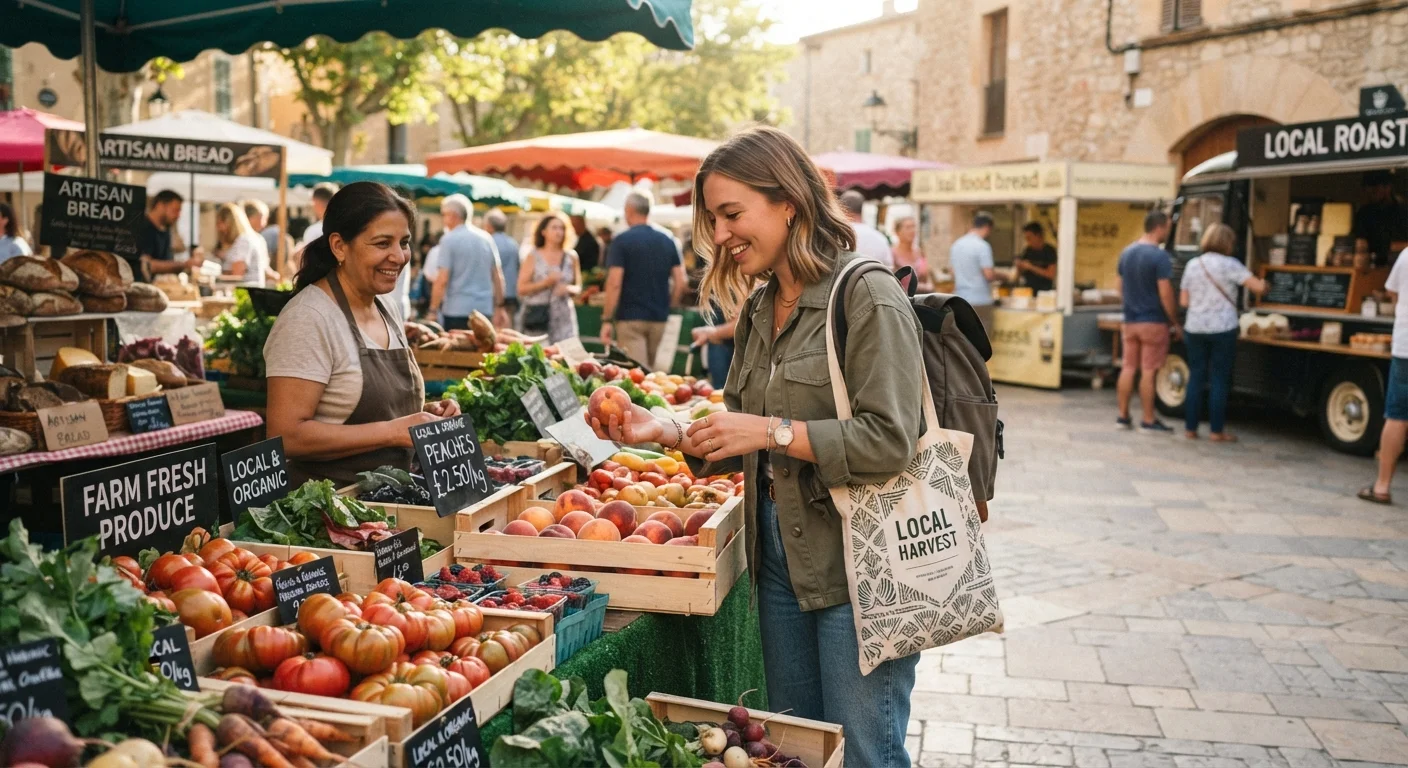
Shop at local grocery stores, farmers markets, and food halls rather than tourist-area shops.
Prices near major tourist attractions are almost always inflated. A short walk to a neighborhood supermarket or a morning visit to a local market yields fresher ingredients at everyday prices paid by residents.
Follow street food and counter-service spots popular with locals, not tourists.
The most authentic and affordable food in any destination is rarely found in spots with laminated menus and photos of every dish. Busy local counters signal fresh turnover and fair pricing because the customer base won't tolerate otherwise.
Set a daily food budget before you arrive and track it in real time.
Food is one of the easiest travel expenses to underestimate because individual purchases feel small. Without a daily ceiling, snacks, drinks, and impulse restaurant stops compound quickly. Knowing your number keeps each spending decision grounded.
Carry portable, non-perishable snacks from home or a grocery store to avoid desperation spending.
Hunger in an airport, on a long transit, or between meals in an unfamiliar area leads to overpriced convenience purchases. Having a backup of nuts, dried fruit, or granola bars in your bag eliminates that pressure entirely.
Smart Habits That Keep Costs Down Without Sacrifice
Eating affordably while traveling isn't about deprivation - it's about being deliberate. The travelers who spend the least on food while eating the most satisfying meals tend to share a handful of consistent habits: they shop like locals, eat on local schedules, and spend their restaurant budget intentionally rather than reactively.
For travelers who want to plan every food decision before departure, the pre-trip planning checklist includes food-budget steps alongside all other pre-departure preparation.
Staying Safe While Eating Smart
Food Safety While Traveling
When eating at markets or street stalls, look for vendors with high turnover and food cooked fresh to order - these are generally reliable signals of safe preparation. In destinations with different tap water standards, use bottled or filtered water for drinking and be cautious with raw produce rinsed in local water. When in doubt about food safety at a specific destination, check guidance from the CDC Travelers' Health portal or your destination country's health authority before you go.
Eating local and affordable doesn't mean taking unnecessary risks. The same judgment calls that apply at home - choosing vendors with visible food handling, avoiding items that look like they've been sitting out - apply on the road. When you're traveling to destinations with specific dietary considerations, checking resources like the balanced plate guide can help you maintain nutritional basics even when your eating routine is disrupted by travel schedules.
Managing your broader finances safely while abroad is equally important. The guide to keeping finances safe while traveling covers how to protect your money from common pitfalls like ATM skimming and currency conversion traps - all of which can quietly erode the food budget you've worked to protect.
This article provides general travel and budgeting information for educational purposes. Food safety conditions vary by destination; always verify current health advisories through official sources such as the CDC Travelers' Health portal or your country's travel health authority before your trip.
The content provided on our blog site traverses numerous categories, offering readers valuable and practical information. Readers can use the editorial team’s research and data to gain more insights into their topics of interest. However, they are requested not to treat the articles as conclusive. The website team cannot be held responsible for differences in data or inaccuracies found across other platforms. Please also note that the site might also miss out on various schemes and offers available that the readers may find more beneficial than the ones we cover.