

Why Simplicity Is the Point
Nutrition science can feel overwhelming - macros, glycemic indexes, micronutrient targets. But decades of public health research keep returning to a straightforward conclusion: the overall pattern of what you eat matters more than any individual food or nutrient. If you're new to thinking structurally about meals, our introduction to nutrition basics is a helpful starting point before diving in here.
The plate method - a visual framework popularized in part by the USDA's MyPlate initiative - turns that research into something anyone can apply at any meal without logging, weighing, or calculating. It won't be perfect every time, and it doesn't need to be. For a broader view of how eating habits connect to other daily routines, see our whole-person habits guide.
What you will need
This Is General Information, Not Medical Advice
The guidance in this article is intended for general educational purposes only. Individual nutritional needs vary based on age, health status, activity level, and medical history. If you have a specific health condition, dietary restriction, or concern about your eating habits, please consult a registered dietitian or qualified healthcare provider before making significant changes to your diet.
How to Build the Plate: Step by Step
The following steps walk through a practical approach to portioning a balanced meal. These are guidelines - not prescriptions - and they're designed to flex across cuisines, budgets, and household sizes. Once you've stocked your kitchen with the right basics, our aisle-by-aisle grocery reference can help you shop with this framework in mind.
Fill half your plate with non-starchy vegetables and fruit
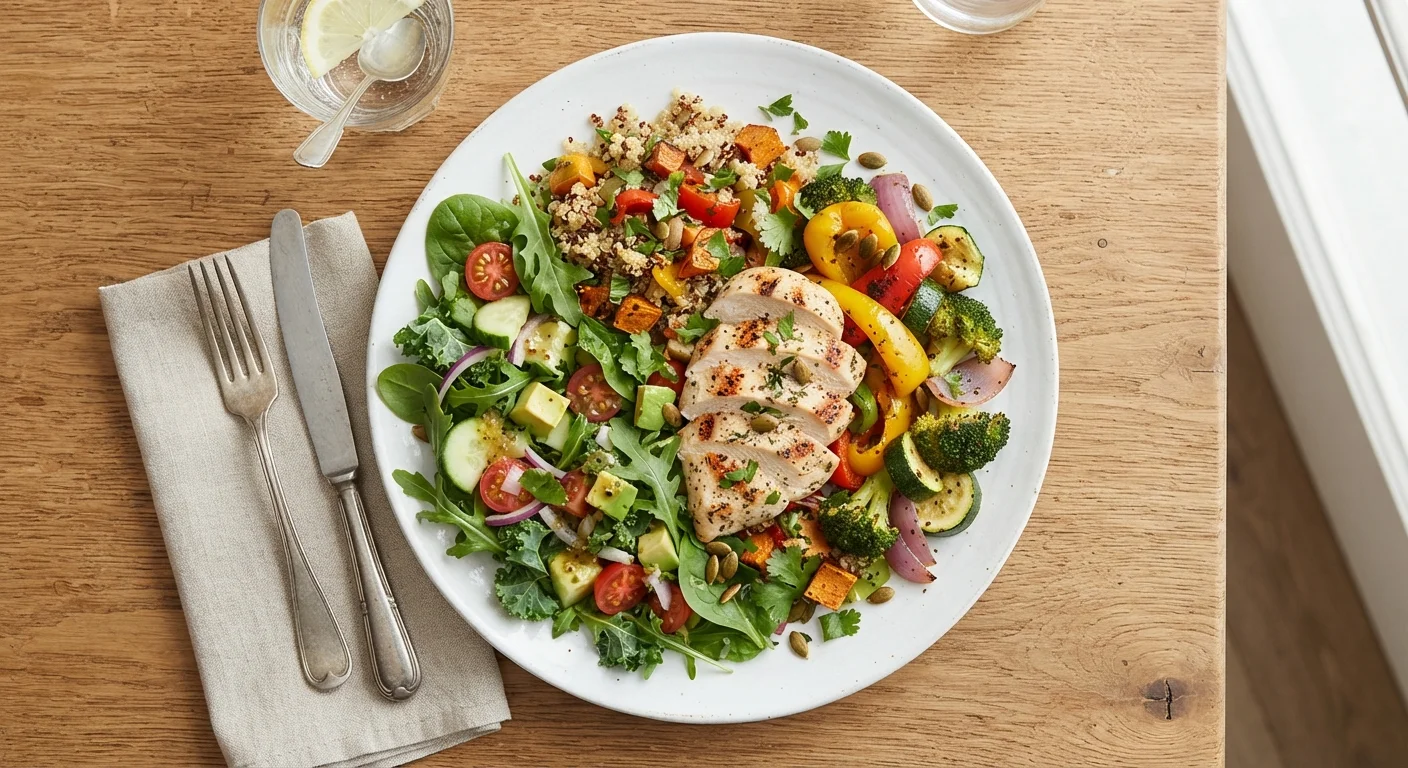
Start by covering roughly half your plate with vegetables - leafy greens, roasted broccoli, sliced peppers, cucumbers, tomatoes, or whatever you have on hand. Fruit can fill part of this space, though vegetables generally offer more fiber and fewer natural sugars per serving. This half is your foundation: it delivers fiber, micronutrients, and volume that helps you feel satisfied without excess calories.
Variety matters more than any single superfood. Rotating colors - dark greens, oranges, reds, purples - naturally broadens the range of nutrients you consume over time.
Dedicate a quarter of the plate to lean protein
Reserve approximately one quarter of your plate for a protein source. Good options include poultry, fish, eggs, legumes (beans, lentils, chickpeas), tofu, or lower-fat cuts of meat. Protein supports muscle maintenance, keeps you fuller longer, and plays a central role in virtually every metabolic process.
Legumes are particularly versatile - they contribute both protein and fiber simultaneously, which makes them one of the most nutrient-dense choices you can put on a plate.
Fill the remaining quarter with whole grains or starchy vegetables
The last quarter of your plate goes to an energy-providing carbohydrate. Choose whole grain options - brown rice, quinoa, whole wheat bread, oats, or farro - over refined versions when possible. Starchy vegetables like sweet potatoes, corn, or peas also fit well here.
Whole grains retain their bran and germ, meaning more fiber, B vitamins, and minerals compared to refined grains. They also digest more gradually, which supports steadier energy levels across the day.
Add a source of healthy fat in modest amounts
Healthy fats don't need their own section of the plate, but they should be present. A drizzle of olive oil over vegetables, a small serving of avocado, a handful of nuts on the side, or fatty fish as your protein all count. Dietary fat supports the absorption of fat-soluble vitamins (A, D, E, and K) and contributes to lasting satiety.
The goal is inclusion in reasonable amounts - not avoidance, and not excess. Most people don't need to measure fats precisely; awareness is enough.
Choose water or low-sugar beverages as your drink
What you drink alongside a meal matters. Sugary beverages - sodas, sweetened teas, fruit drinks - add calories and sugar without contributing meaningful nutrition. Water, sparkling water, unsweetened coffee or tea, and low-fat milk are solid defaults for most adults.
Staying consistently hydrated also supports digestion and can reduce the tendency to mistake thirst for hunger between meals.
Eat slowly and without distractions when possible
How you eat influences how much you eat. Eating at a moderate pace gives the body time to register fullness signals - research suggests this process takes roughly 15-20 minutes from when eating begins. Removing screens and distractions during meals encourages more awareness of hunger and satiety cues.
This isn't about ritualistic mindfulness; it's a practical strategy. Distracted eating is consistently associated with larger portion sizes and reduced meal satisfaction in behavioral nutrition studies.
Use Your Hand as a Portion Guide
When a plate or measuring tools aren't available, your hand is a surprisingly reliable reference. A palm-sized amount works for protein, a cupped hand for grains or starches, and two open hands for vegetables. This method scales naturally to your body size and travels well - useful whether you're cooking at home or eating well on the road.
Making It Work in Real Life
The plate method is a default, not a rulebook. Mixed dishes like stir-fries, soups, grain bowls, and tacos don't always divide neatly - and that's fine. The proportional logic still applies: think about whether the overall dish skews heavily toward grains or protein, and adjust neighboring elements accordingly.
Avoid the All-or-Nothing Mindset
Treating every meal as a pass-or-fail test is one of the most common barriers to lasting nutritional change. Research consistently shows that rigid dietary perfectionism tends to backfire, leading to cycles of restriction and overindulgence. Aim for balance across the week, not flawless execution at every single sitting.
Consistency is the real goal. Research on dietary adherence suggests that people who maintain a generally nutritious pattern - while allowing flexibility - tend to do better long-term than those who follow strict plans. If keeping meals balanced also fits within a household budget, the research comparing eating schedules may help clarify which approach makes sense for your lifestyle.
This article is for general informational and educational purposes only and does not constitute medical or dietary advice. Consult a qualified healthcare provider or registered dietitian for guidance specific to your individual health needs.
The content provided on our blog site traverses numerous categories, offering readers valuable and practical information. Readers can use the editorial team’s research and data to gain more insights into their topics of interest. However, they are requested not to treat the articles as conclusive. The website team cannot be held responsible for differences in data or inaccuracies found across other platforms. Please also note that the site might also miss out on various schemes and offers available that the readers may find more beneficial than the ones we cover.