

Why This Problem Is So Often Misunderstood
Litter box avoidance is among the most frequently cited reasons owners surrender cats to shelters - yet in many cases, the problem is both diagnosable and treatable. The core challenge is that the behavior looks identical whether the cause is a bladder infection or a dislike of the litter brand. Without a proper evaluation, owners frequently address the wrong problem entirely.
Cats are also poor communicators of pain and discomfort. They do not whimper or seek comfort the way dogs often do. A cat quietly eliminating in a corner may be in significant distress, or may be reacting to a litter box that was moved last week. Both look the same from the outside. For a deeper look at how cats signal discomfort, see our guide on signs of pain in cats and dogs that are easy to overlook.
The most important first step - regardless of what you suspect - is a veterinary exam when the behavior is new or sudden.
Male Cats and Urinary Blockage: Act Quickly
A male cat straining to urinate and producing little or no urine may have a life-threatening urethral blockage. This is a veterinary emergency requiring immediate care. Do not wait to see if it resolves on its own - urinary blockages can become fatal within 24 to 48 hours without treatment.
Medical Causes to Rule Out First
Several common health conditions can directly cause or contribute to litter box avoidance:
- Urinary tract infections (UTIs): Inflammation makes urination painful and urgent, and a cat may not reach the box in time - or may associate the box itself with pain.
- Feline idiopathic cystitis (FIC): A stress-sensitive bladder condition causing straining, frequent small urinations, and sometimes blood in the urine.
- Bladder stones or crystals: Can obstruct or irritate the urinary tract, causing urgency and discomfort.
- Kidney disease: Increases urine volume, which may overwhelm a cat's ability to reach the box consistently.
- Diabetes or hyperthyroidism: Both increase thirst and urination, and a previously reliable cat may start having accidents.
- Arthritis: High-sided boxes, boxes in difficult locations (up stairs or in a cold basement), or boxes that require jumping can become physically inaccessible for an aging or arthritic cat.
- Constipation or gastrointestinal pain: May cause a cat to associate the box with discomfort and avoid defecating there.
A urinalysis, physical exam, and sometimes bloodwork can identify most of these conditions quickly. Treatment alone often resolves the litter box behavior without any additional intervention.
~10%
Cats affected by urinary tract problems annually
Feline lower urinary tract disease (FLUTD) is one of the most common reasons cats visit the veterinarian, according to veterinary health data.
Top reason
Litter box issues as a cause of cat surrender
Behavioral research and shelter intake data consistently identify elimination problems as among the leading reasons owners relinquish cats.
Over 50%
Of cats with house-soiling have a medical component
Veterinary behaviorists note that in clinical practice, a meaningful proportion of cats presented for elimination problems have an underlying or contributing health condition.
Behavioral Causes and Environmental Triggers
When a veterinarian confirms the cat is medically healthy, the focus moves to behavior and environment. Behavioral causes typically fall into a few categories:
Box Setup and Maintenance
Cats are fastidious. A box that is not scooped daily - or not cleaned thoroughly on a regular basis - becomes aversive. A general rule is one box per cat, plus one, placed in quiet, accessible locations throughout the home. Learn more about foundational setup in our guide to setting up a safe, comfortable space for a new cat.
Substrate and Box Aversion
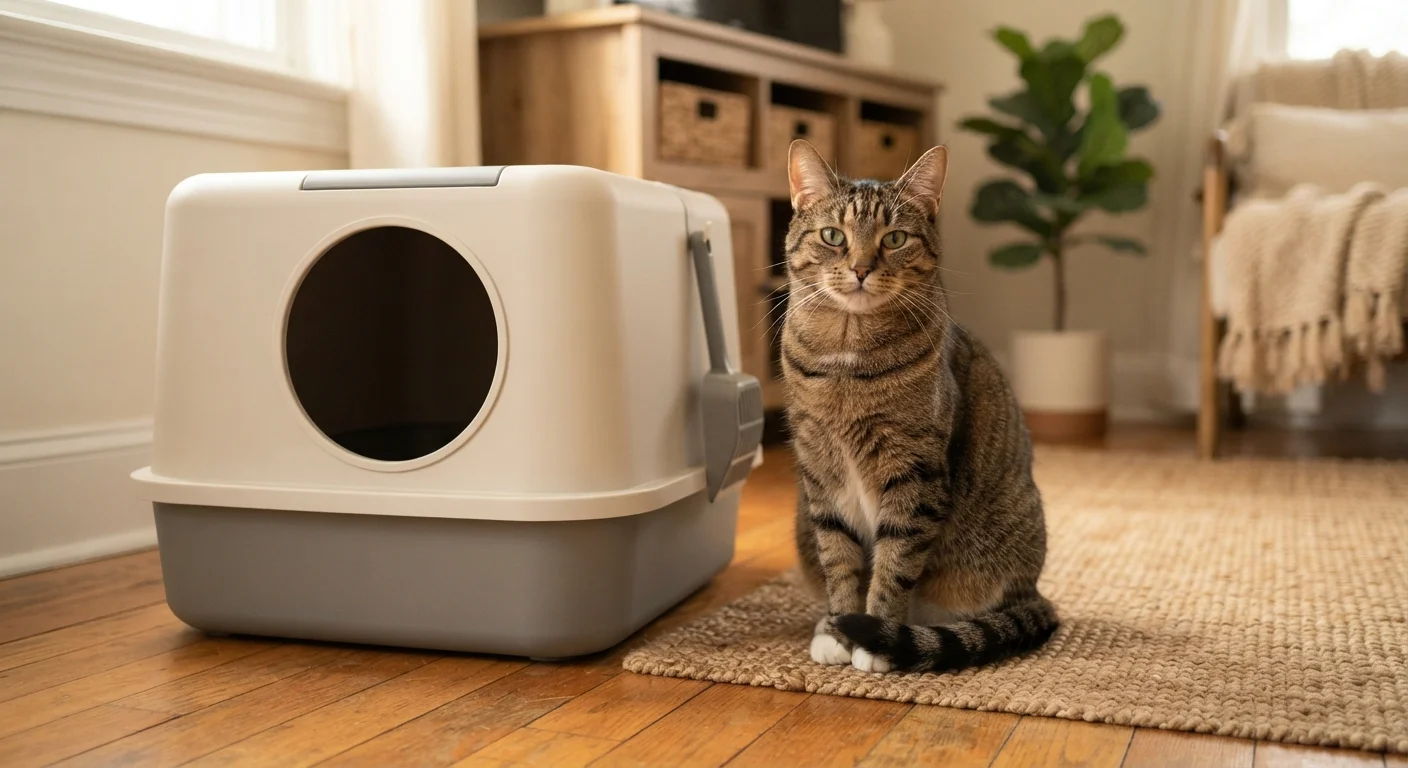
Cats may develop a dislike of the litter texture, scent, or box style. Covered boxes trap odors that owners cannot smell but cats find overwhelming. Switching to an unscented, clumping litter in an open box frequently resolves substrate aversion.
Stress and Household Change
Moving, new pets, changes in the owner's schedule, or construction noise can all trigger stress-related elimination. Feline idiopathic cystitis, mentioned above, is itself stress-sensitive - meaning behavioral and medical causes can overlap. Understanding how cats actually learn and communicate can help owners address the environment more effectively.
Urine Marking vs. Inappropriate Elimination
Spraying - depositing small amounts of urine on vertical surfaces - is a form of territorial communication, not a litter box problem per se. It is far more common in unneutered males but can occur in any cat under social stress. The intervention differs significantly from that for standard elimination issues.
How to Respond: A Practical Framework
Approaching litter box problems systematically produces better outcomes than guessing:
- Start with a vet visit whenever the behavior is new, sudden, or accompanied by signs of straining, blood, or distress. Do not skip this step.
- Audit the litter setup: Count boxes, evaluate cleanliness, check location accessibility, and note whether anything changed recently.
- Identify recent stressors: New pets, new people, rearranged furniture, or even a new cat visible through a window can all trigger behavioral responses.
- Clean soiled areas thoroughly with an enzymatic cleaner. Residual scent marks will draw the cat back to the same spot.
- Do not punish. Cats do not connect scolding or physical correction to a past elimination event. Punishment adds stress, which often worsens the behavior.
- Work with your veterinarian or a veterinary behaviorist if the problem persists after basic adjustments. Prescription anti-anxiety medications and pheromone diffusers are sometimes appropriate tools under professional guidance.
The pet care essentials framework - covering housing, routine, and daily needs - provides a useful broader context for creating an environment where behavioral problems are less likely to arise in the first place.
This article is for informational and educational purposes only and is not a substitute for professional veterinary advice. Always consult a licensed veterinarian regarding your cat's health and behavior concerns.
Frequently Asked Questions
A sudden change almost always warrants a vet visit first to rule out medical causes such as a urinary tract infection, bladder stones, or kidney disease. If the cat gets a clean bill of health, the focus shifts to environmental or behavioral stressors like a new pet, a moved box, or a change in litter type.
The general guideline is one box per cat, plus one extra. A single-cat household should have at least two boxes, ideally in different locations. This reduces competition, gives cats options, and minimizes the impact of one dirty box discouraging use.
Yes. Arthritis, for example, can make stepping over a high-sided box painful, leading a cat to eliminate nearby. Urinary pain or constipation may also cause a cat to associate the box itself with discomfort and avoid it. Any suspected pain should be evaluated by a veterinarian.
No - punishment is counterproductive and can worsen the problem. Cats do not connect punishment with past actions and may instead become fearful or more stressed, which can escalate elimination issues. Positive reinforcement and addressing root causes are far more effective approaches.
Research and veterinary behaviorist experience generally support unscented, clumping clay litter as the most widely accepted type among cats. Strongly scented litters can be aversive to cats' sensitive noses, even if they appeal to owners. Experimenting with litter type can resolve substrate aversion issues.
See a vet promptly if your cat is straining to urinate, producing little or no urine, crying in the box, has blood in the urine, or has stopped using the box suddenly. Male cats in particular can develop life-threatening urinary blockages that require emergency care.
The content provided on our blog site traverses numerous categories, offering readers valuable and practical information. Readers can use the editorial team’s research and data to gain more insights into their topics of interest. However, they are requested not to treat the articles as conclusive. The website team cannot be held responsible for differences in data or inaccuracies found across other platforms. Please also note that the site might also miss out on various schemes and offers available that the readers may find more beneficial than the ones we cover.