

Why the Setup Matters More Than You Might Think
Cats are territorial animals with a strong need for environmental predictability. Unlike dogs, who typically adapt quickly through social bonding, cats orient primarily to place. When a cat arrives in an unfamiliar home with no established territory, the resulting stress can suppress appetite, disrupt litter box habits, and produce defensive behaviors that owners sometimes misread as aggression or bad temperament.
Getting the environment right before your cat arrives - not after - is the most effective thing you can do to support a smooth transition. The steps below are drawn from animal behavior principles used by shelters and veterinary behaviorists to help cats decompress safely.
What you will need
If you're also thinking longer term about whether your cat will spend time outdoors, understanding the health trade-offs between indoor and outdoor lifestyles is worth reviewing early.
Step-by-Step: Creating Your Cat's Space
Work through these steps in order - ideally completing the physical setup the day before your cat comes home.
Litter box
Provides a designated elimination area; one box per cat plus one extra is the general guidance.
Hiding box or covered bed
Gives the cat a secure retreat to decompress, which is critical in the first days.
Scratching post
Allows the cat to express natural scratching behavior and mark territory without damaging furniture.
Pheromone diffuser
Releases synthetic calming pheromones that can reduce anxiety in a new environment.
Interactive wand toy
Encourages play and bonding while letting the cat engage its predatory instincts safely.
Cat tree or wall-mounted shelf
Provides vertical space for the cat to survey the environment from a safe height.
Choose and prepare a base room
Select a quiet, low-traffic room - a spare bedroom or a bathroom large enough to feel comfortable - as your cat's starting space. Remove any loose cords, toxic houseplants, or small objects that could be swallowed. Ensure windows have secure screens. This room will be the cat's entire world for the first several days, so it needs everything they require without overwhelming them.
Set up the litter box correctly
Place the litter box in a corner that offers privacy but is not directly next to the food and water bowls - cats instinctively avoid eliminating near their eating area. Fill it with two to three inches of litter. For a single cat in a confined base room, one box is sufficient at this stage. As the cat gains access to more of the home, follow the general rule of one box per cat plus one additional.
Position food, water, and a hiding spot
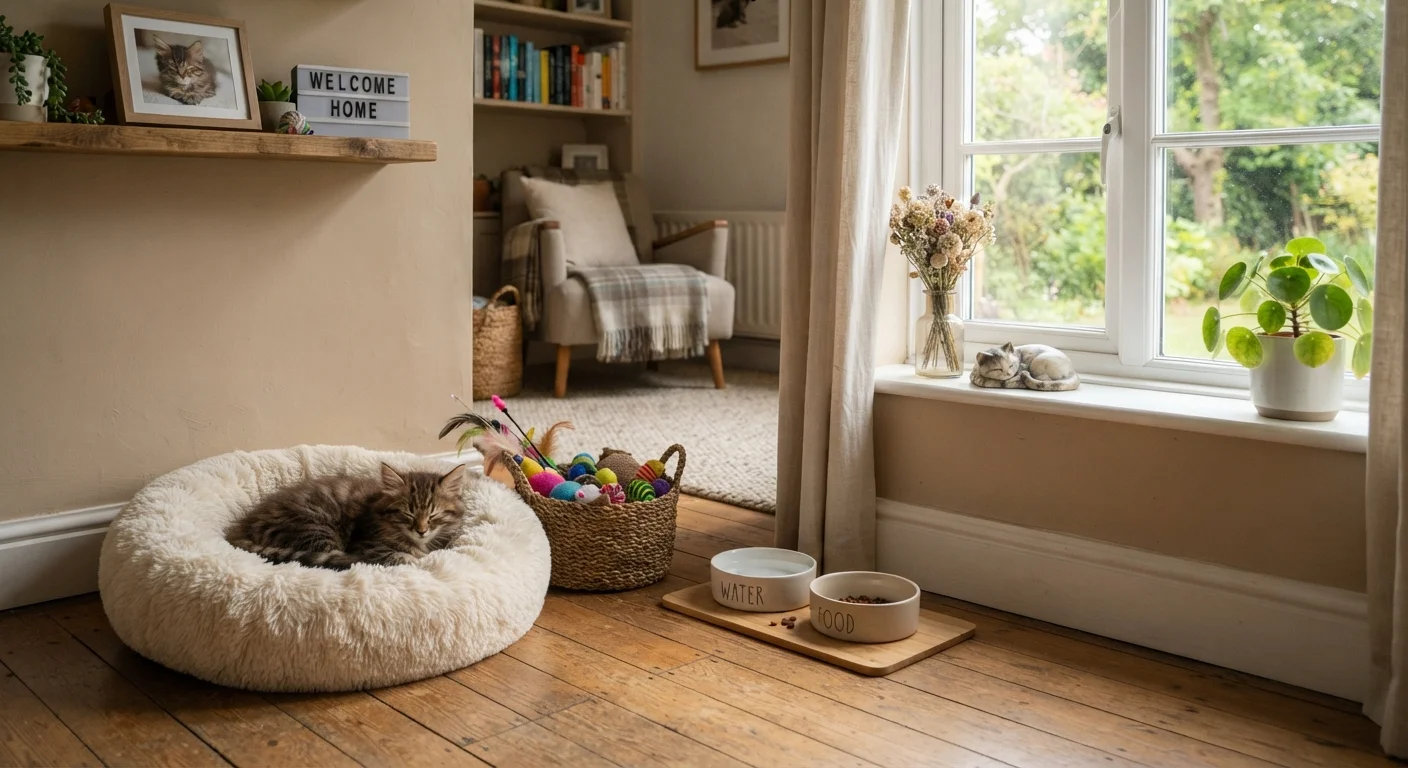
Place food and water bowls on opposite sides of the room from the litter box. Many cats prefer running or still water; a simple bowl works for the transition period. Set up a hiding spot - a covered bed, an open carrier with a soft blanket inside, or even a cardboard box with a cut-out entrance - in a corner at floor level. Do not force the cat out of this space; access to a retreat is what allows cats to self-regulate stress.
Add a scratching surface before the cat arrives
A scratching post or horizontal pad should be in the base room from day one. Scratching is not destructive behavior - it is a normal way cats stretch muscles, maintain claws, and deposit scent markers. Placing the post near the hiding spot or sleeping area is strategic, as cats often scratch immediately after waking. Sisal-covered posts or corrugated cardboard pads tend to be well accepted.
Allow the cat to explore at their own pace
When you bring the cat home, place the carrier on the floor of the base room, open the door, and step back. Let the cat emerge when ready - this may take minutes or hours. Sit quietly in the room and allow the cat to investigate you on their terms. Avoid direct eye contact initially; slow blinking signals non-threatening intent. Resist the urge to introduce the rest of the home for at least three to seven days, or until the cat is consistently relaxed and approaching you voluntarily.
Gradually expand access to the rest of the home
Once the cat is eating, using the litter box, and showing relaxed body language - ears forward, tail loosely carried, willingness to play - begin opening access to one additional room at a time. Keep the base room available as a retreat throughout this process. Ensure each new area has been checked for hazards: unsecured cabinets, accessible trash, and open toilet lids are common risks. If you have other pets, follow a structured introduction plan rather than allowing free-roaming access immediately.
Common Mistakes to Avoid
Hazard-Proof Before the Cat Arrives
Cats investigate by climbing, chewing, and squeezing into tight spaces. Before bringing your cat home, secure or remove electrical cords, check that all window screens are firmly in place, and confirm that any houseplants are non-toxic to cats. Common household plants including lilies, pothos, and philodendrons can cause serious harm if ingested. Your veterinarian or a reputable animal poison control resource can help you assess plant safety.
One of the most frequent missteps is giving a new cat unrestricted access to the entire home immediately. Even a confident cat benefits from a staged introduction; a shy cat can become so overwhelmed that recovery takes weeks rather than days.
Another common issue is inconsistent litter box maintenance. Cats are fastidious, and a box that is not scooped at least once daily may be rejected in favor of a cleaner alternative - often somewhere you would not choose. Litter box avoidance has both behavioral and medical dimensions, so early good habits reduce the risk of problems developing.
Finally, resist forcing interaction. Picking up or cornering a cat that is still acclimating erodes trust and can set back bonding by days. Let the cat set the pace of contact - it pays off significantly in the weeks that follow. Understanding how animals learn and what they need from day one gives new owners a strong foundation beyond just setup.
Vertical Space Reduces Anxiety
Once your cat begins exploring beyond the base room, providing at least one elevated surface - a cat tree, a cleared shelf, or a window perch - gives them a way to observe the environment from a position of safety. Cats that have high vantage points tend to show fewer signs of chronic stress and are generally more confident with new stimuli over time.
The content provided on our blog site traverses numerous categories, offering readers valuable and practical information. Readers can use the editorial team’s research and data to gain more insights into their topics of interest. However, they are requested not to treat the articles as conclusive. The website team cannot be held responsible for differences in data or inaccuracies found across other platforms. Please also note that the site might also miss out on various schemes and offers available that the readers may find more beneficial than the ones we cover.