

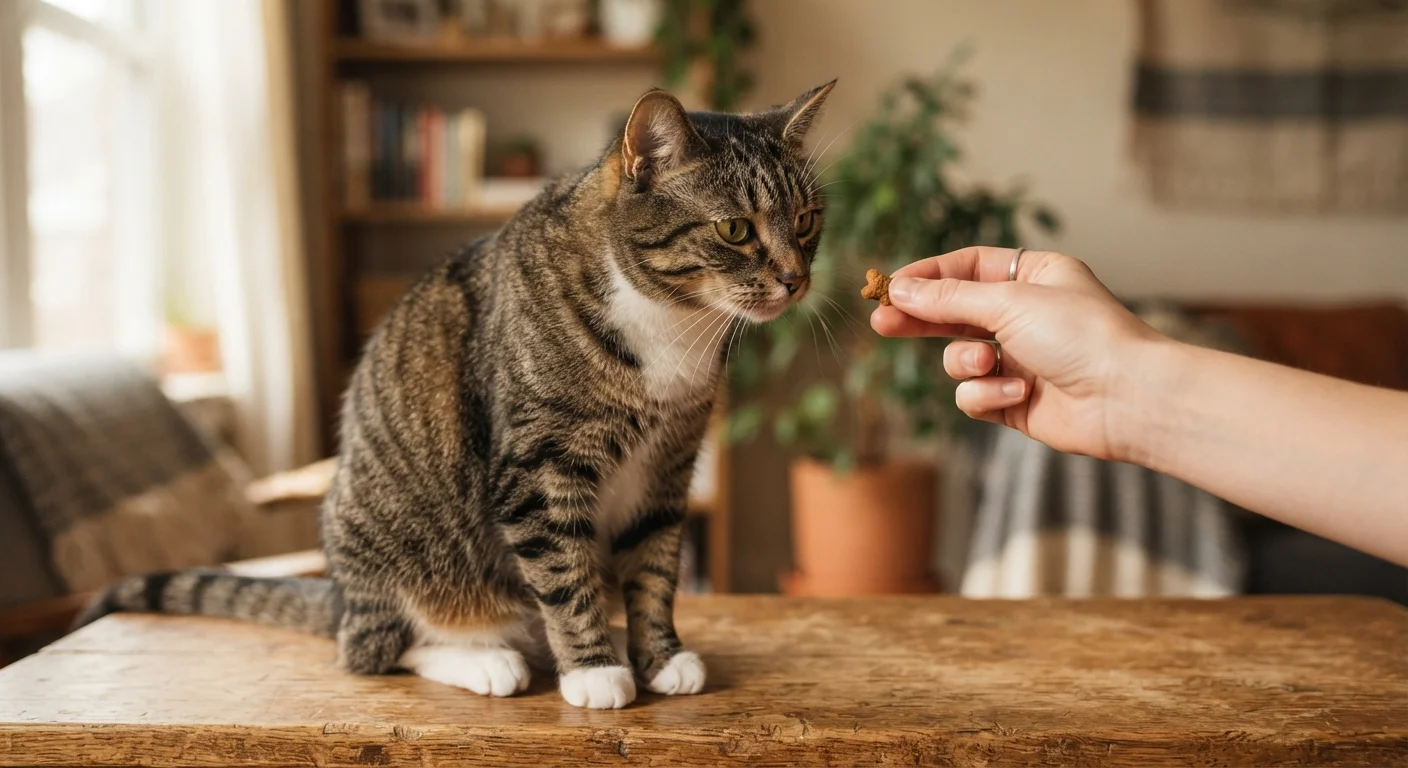
Why Cat Training Gets Such a Bad Reputation
Ask most cat owners whether their cats can be trained, and a significant number will say no - or at least shrug with resignation. Dogs sit on command; cats, the thinking goes, simply do what they want. This perception is understandable, but it is not accurate. It has also prevented many owners from ever attempting training, which means they miss out on an activity that strengthens the bond between cat and human while addressing real behavioral challenges.
The roots of this myth run deep. Cats were not domesticated primarily as working partners the way dogs were, and they tend to be less visibly eager to please. But motivation is not the same as capability. Research into feline cognition confirms that cats can learn through association, form habits, and respond to consistent cues - they simply respond to different incentives than dogs do, and they require approaches matched to their nature.
If your goal is better communication and trust with your cat, correcting a few foundational misconceptions is the most important first step. The myths below are the ones that most reliably derail owners before they even begin. See our guide to training fundamentals for new pet owners for a broader look at the principles that apply across species.
The Most Damaging Myths About Cat Training
These misconceptions range from assumptions about cat intelligence to misunderstandings about how cats experience consequences. Correcting them changes not just whether you try to train your cat, but how you approach it.
Myth
Cats can't be trained - they're too independent to follow cues.
Fact
Cats learn through operant conditioning just as other animals do; independence is a temperament trait, not a barrier to learning.
Independence describes how a cat seeks social interaction, not how its brain processes cause and effect. Cats form behavioral associations readily - they learn which counters lead to food, which sounds precede feeding time, and which behaviors produce attention. That same mechanism is what training harnesses. The difference from dogs is motivational: cats typically need a reward they genuinely value, and they are more sensitive to session length and pressure. Match the approach to the animal, and learning follows.
Myth
Punishment is the most effective way to stop unwanted cat behavior.
Fact
Punishment is largely ineffective with cats and often worsens behavior by creating fear and eroding trust.
For punishment to modify behavior, it must occur within a very short window of the behavior itself, be consistent every single time, and be strong enough to deter without causing harm - conditions that are nearly impossible to meet humanely in a home setting. More importantly, cats do not reliably associate a delayed or indirect consequence with a specific action. What they do register is that their owner is a source of unpleasant experiences, which damages the relationship and can cause stress-related problems such as hiding, aggression, or increased anxiety. Redirecting the cat to an acceptable alternative and rewarding that behavior is consistently more effective.
Myth
Older cats can't learn new behaviors - training is only for kittens.
Fact
Adult and senior cats can learn new cues and modify existing behaviors; the process may simply require more patience and repetition.
While kittens do have developmental windows during which socialization is particularly impactful, the capacity to form new associations through reinforcement does not disappear with age. Many cats learn new behaviors successfully well into their adult years. Older cats may have more established habits that take longer to shift, and some may have lower energy or motivation during sessions, which means shorter sessions with high-value rewards become even more important. Age should not be treated as a reason to abandon training before trying.
Myth
If a cat doesn't respond to treats, training won't work.
Fact
Cats vary in what they find rewarding; play, tactile praise, and access to preferred locations can all function as effective reinforcers.
Food is the most commonly used reinforcer because it is convenient and widely motivating, but it is not the only option. Some cats are highly motivated by a favorite toy or a specific type of play interaction. Others respond well to brief petting in a preferred spot. Identifying what your individual cat values most - and reserving that reward specifically for training contexts - is more important than defaulting to treats. Cats who appear indifferent to training are often simply indifferent to the specific reward being offered.
Myth
Long training sessions will produce faster results.
Fact
Short, frequent sessions of two to five minutes are far more productive than extended sessions that push a cat past its engagement threshold.
Cats have a lower threshold for cognitive fatigue and overstimulation during structured activity than many owners expect. Once a cat disengages - walks away, grooms itself, or becomes distracted - the productive part of the session is over. Continuing past that point does not produce faster learning; it produces frustration on both sides. Multiple short sessions spread across the day, each ending while the cat is still engaged and rewarded, build habit far more reliably than single long attempts.
If you have encountered a specific behavior problem - such as litter box avoidance - it is worth understanding whether the cause is behavioral or medical before applying any training strategy. Our article on litter box problems in cats breaks down how to tell the difference.
What Good Cat Training Actually Looks Like
Effective cat training is built on a few consistent principles. Sessions should be short - typically two to five minutes - and scheduled when the cat is alert and mildly hungry, which makes food rewards more motivating. Each session should end before the cat disengages, because ending on a successful response reinforces the habit of participation.
Clicker training is widely used because it allows owners to mark the precise moment a behavior occurs, making the association between behavior and reward much clearer for the cat. The click acts as a bridge between the behavior and the delivery of the treat, so timing becomes more forgiving.
2-5 min
Optimal length per cat training session
Animal behavior practitioners commonly recommend keeping feline training sessions to two to five minutes to maintain engagement and end on success.
~0.5 sec
Window for effective reward timing
Behavioral science indicates rewards should follow a target behavior within roughly half a second for the clearest association to form during animal training.
Cues should be introduced one at a time, and new ones should be added only once the previous cue is reliably understood. Owners who introduce too many requests at once, or who shift to harder tasks too quickly, often interpret the cat's confusion as stubbornness. In most cases, it is simply a signal to slow down and build more repetitions at the current step.
When progress stalls, the solution is almost always to revisit the last point of reliable success rather than push through. For a detailed look at what derails training momentum, see when pet behavior training stalls.
Avoid Aversive Tools and Startling Techniques
Spray bottles, loud noises, and physical corrections are commonly suggested as training tools for cats, but they tend to produce fear rather than understanding. A cat that stops a behavior in response to a startle has not learned what to do instead - it has learned that certain contexts produce unpleasant surprises. This increases generalized anxiety and can make cats avoidant of their owners. Stick to positive reinforcement and redirection.
The content provided on our blog site traverses numerous categories, offering readers valuable and practical information. Readers can use the editorial team’s research and data to gain more insights into their topics of interest. However, they are requested not to treat the articles as conclusive. The website team cannot be held responsible for differences in data or inaccuracies found across other platforms. Please also note that the site might also miss out on various schemes and offers available that the readers may find more beneficial than the ones we cover.